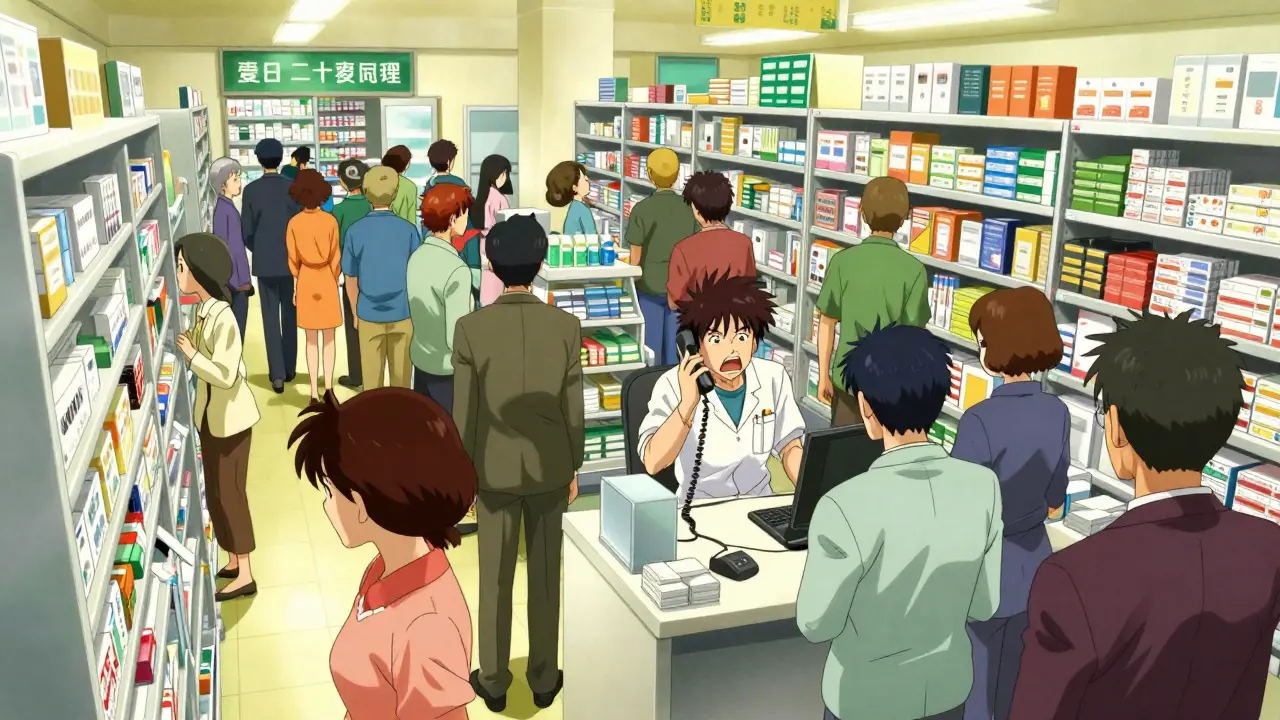
The good news is that wrong-patient errors are entirely preventable. They don't happen because staff aren't trying; they happen because humans are prone to slips when systems are weak. To stop these errors, pharmacies need to move away from relying on "being careful" and instead build a system where it's physically or procedurally difficult to give the wrong bag to the wrong person.
The Core Problem: Why Identity Mix-ups Happen
Most wrong-patient errors occur during the final few seconds of the dispensing process. It's the point where a staff member looks at a name on a bag and assumes the person standing in front of them is that patient. According to the ECRI Institute, about 22% of these mistakes happen because of "sound-alike, look-alike" names. If you have two patients named "John Smith" or "Maria Garcia" in your database, the risk of a swap skyrockets.
The Institute for Safe Medication Practices (ISMP) is a nonprofit organization dedicated to preventing medication errors and promoting safe use of medications has highlighted that these errors are among the most dangerous because they bypass the safety checks that usually happen during the filling process. By the time the drug leaves the counter, the only safety net left is the identity check.
The Gold Standard: Dual-Identifier Verification
Relying on a patient to simply say "I'm here for my meds" is a recipe for disaster. The most effective manual way to prevent errors is through a strict dual-identifier protocol. This means the staff must verify at least two pieces of information before the medication ever leaves the counter.
In practice, this usually means requesting the patient's Full Name and Date of Birth (DOB). The technician doesn't just ask "Are you Jane Doe?" (which invites a simple "yes" even if the person is confused). Instead, they ask, "Could you please tell me your full name and date of birth?" and then compare those answers against the pharmacy information system.
Data from a 2022 Pharmacy Times analysis shows that this simple shift-moving from "confirming" to "asking"-reduces wrong-patient errors by about 45%. It's a low-cost change that only requires staff training, though it can still be bypassed if the pharmacy is understaffed and rushing.
Using Technology to Kill the Error
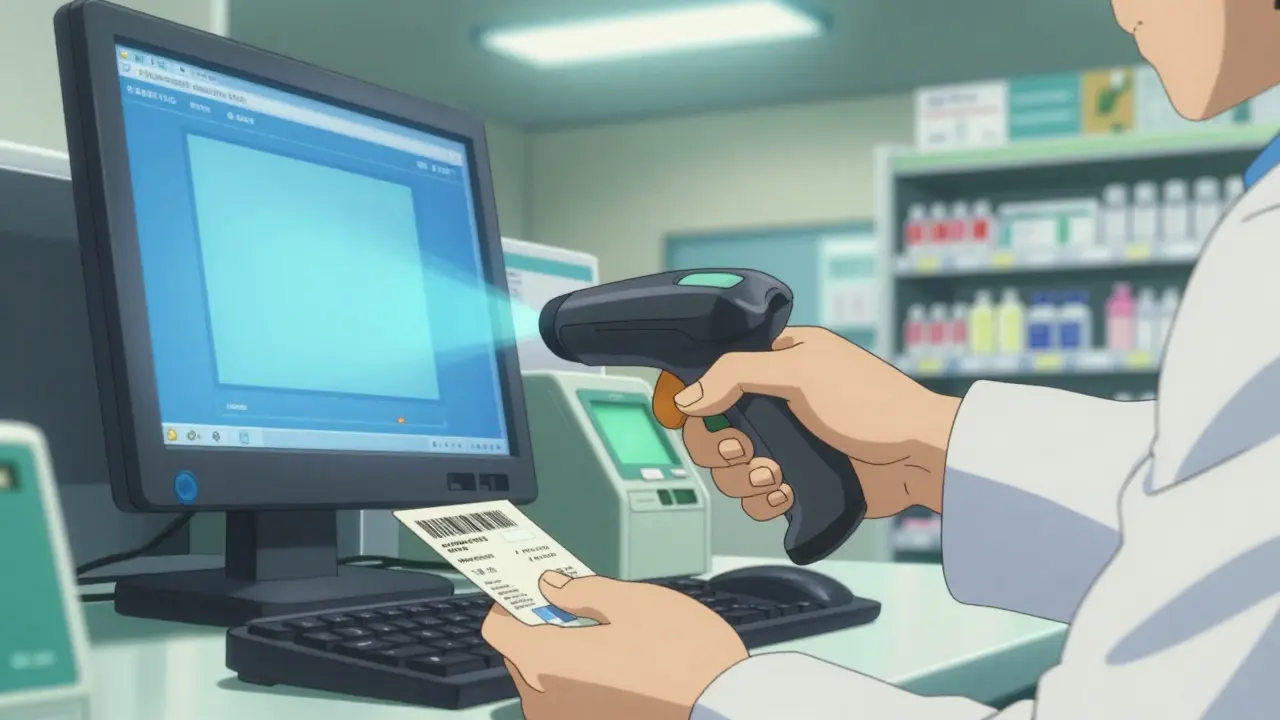
If manual checks are the first line of defense, technology is the fortress. Many pharmacies are now integrating hardware and software that make it nearly impossible to dispense to the wrong person. Barcode Scanning is the most common solution. In this setup, the patient provides an ID card with a unique barcode that must be scanned and matched to the prescription record before the system allows the transaction to close.
Walgreens saw a 63% drop in wrong-patient errors after rolling this out across 9,000 locations. For those in hospital settings, Radio Frequency Identification (RFID) tags on wristbands have pushed error reduction even further, sometimes reaching 78%. While these systems are expensive-costing between $15,000 and $50,000 per location-the cost of a single major medication error in terms of legal fees and lost revenue can be far higher.
| Method | Error Reduction Rate | Implementation Cost | Main Weakness |
|---|---|---|---|
| Manual Dual-ID (Name/DOB) | ~45% | Low (Training only) | Human fatigue/rush |
| Barcode Scanning | 63% - 78% | Medium/High | Workflow bottlenecks |
| RFID Integration | Up to 78% | High | Complexity of hardware |
| Combined Approach (Dual-ID + Barcode) | ~89% | High | Patient frustration with checks |
The Final Safety Net: Patient Counseling
Even with barcodes and DOB checks, a mistake can slip through. This is where the pharmacist's conversation with the patient becomes a literal lifesaver. When a pharmacist discusses the medication's purpose, dosage, and side effects, the patient often realizes the drug isn't theirs. "Wait, I don't have high blood pressure, why are you giving me this?"
Roughly 83% of dispensing errors are caught during this counseling phase. If a pharmacy skips this step to save time, they are removing the very last chance to prevent a patient from taking the wrong medication. A culture that prioritizes counseling over speed is a culture that prioritizes safety.
Building a Culture of Safety
No matter how many scanners you buy, technology is only as good as the people using it. The biggest threat to safety is "workarounds." When a barcode scanner is slow, a stressed technician might decide to skip the scan just this once to clear the line. This is how sentinel events happen.
The best pharmacies create an environment where any staff member-from the most senior pharmacist to the newest intern-can stop a transaction if they feel something is off. This "stop-the-line" authority is a cornerstone of high-reliability organizations. It means that if a name looks similar or a patient seems confused, the priority is verification, not velocity.
Implementing New Protocols: A 90-Day Roadmap
If you're looking to tighten up your identification process, don't change everything overnight. The Pharmacy Quality Alliance suggests a phased 90-day cycle to ensure the new rules actually stick without crashing your workflow:
- Days 1-30 (Training): Spend 4-6 hours per staff member on the new dual-identifier rules. Explain the "why"-show them the data on sound-alike names and potential harm.
- Days 31-60 (Pilot Testing): Implement the protocol at one counter or during specific hours. Monitor for bottlenecks and gather feedback from the staff on where the process slows down.
- Days 61-90 (Full Rollout): Apply the protocol across the board with strict quality assurance checks. Log every "near-miss" (when the system caught an error) to prove the value of the new process.
What are the most common identifiers used to prevent wrong-patient errors?
The industry standard is to use at least two identifiers. The most common are the patient's full legal name and their date of birth. Some pharmacies also include a prescription number or a government-issued ID to add an extra layer of certainty.
Why aren't all pharmacies using barcode scanning?
The primary barrier is cost. Implementing a full barcode system can cost between $15,000 and $50,000 per location, which is a significant burden for independent pharmacies. Additionally, some staff find that these systems create bottlenecks during peak hours.
How does e-prescribing help prevent wrong-patient errors?
E-prescribing (via CPOE systems) removes the risk of illegible handwriting. When a pharmacist can clearly read the patient's name and details, there is a 30% reduction in transcription errors, which prevents the medication from being assigned to the wrong profile in the first place.
How should pharmacy staff handle patients who are frustrated by repeated ID checks?
Staff should use patient education. By explaining that these checks are a safety measure to ensure they receive the correct medication and avoid dangerous drug interactions, most patients (about 68% according to ECRI) actually appreciate the diligence.
What is the impact of sound-alike names on dispensing errors?
Sound-alike, look-alike names are a major risk factor, accounting for roughly 22% of wrong-patient errors. This is why asking for a date of birth is critical, as it provides a unique data point that differentiates two patients with the same or similar names.
Next Steps and Troubleshooting
If you are a pharmacy manager, your first step should be a gap analysis. Look at your "near-miss" logs. If you aren't logging near-misses, start today. This data will tell you if your current errors are caused by name confusion or by staff bypassing protocols during rush hours.
For pharmacy technicians, the best thing you can do is advocate for the "stop-the-line" culture. If you feel pressured to skip a DOB check because the line is long, remind your team that a five-second delay for a birthdate is better than a lifetime of consequences for a patient who took the wrong drug.
If you are a patient, don't be annoyed when the pharmacist asks for your ID or birthdate for the third time. Be your own final safety check: always look at the label before leaving the counter and ask the pharmacist to confirm what the medication is for. This simple act of engagement is your strongest defense against a dispensing error.

Robin Walton
It's so important to remember that the people behind the counter are often incredibly stressed and overworked. A little patience from the patients goes a long way in making sure everyone stays safe!
Trey Kauffman
Oh sure, because adding a few more bureaucratic checkboxes is exactly how we solve the deep systemic failure of healthcare economics. Truly a masterclass in putting a band-aid on a gunshot wound. 🙄
Emily Wheeler
I really feel like we can look at this through a lens of collaborative care where the patient isn't just a recipient but a partner in the process, and if we can foster a genuine connection between the pharmacist and the person in front of them, the mechanical checks almost become secondary to the human element of caring for one another, which is really the heart of medicine anyway, don't you think? It's all about creating a synergy where the system supports the human and the human validates the system, and when that alignment happens, the likelihood of a mistake dropping almost to zero is a beautiful possibility that we should all strive for in every medical interaction we have throughout our lives.
Doug DeMarco
Love the focus on the 'stop-the-line' mentality! 🌟 It's such a great way to empower the newer staff members to feel like they actually have a say in safety. Keep it up everyone! 😊
Danny Wilks
While the technical implementation of RFID systems certainly presents an interesting case of logistical optimization, one cannot help but wonder if the sheer momentum of a corporate pharmacy environment tends to erode the very precision that these expensive tools are designed to uphold, especially when the human element is treated as a variable to be minimized rather than a critical component of the clinical process.
Ben hogan
Imagine thinking that a 90-day roadmap is a revolutionary concept in quality management. It's basic operational logic and presenting it as some grand strategy is just embarrassing.
Camille Sebello
I had this happen once!!! Total nightmare!!! The pharmacist was so rude about it too!!!
Ryan Hogg
This honestly triggers my anxiety just thinking about it. I can't even imagine the panic of realizing you took the wrong pill for three days. I literally can't sleep knowing how common this is.
Peter Meyerssen
The cognitive load on the technician is clearly the primary failure point here. We're talking about an asymptotic relationship between throughput and safety, and frankly, if the corporate entity doesn't prioritize the heuristic of 'safety first' over the KPI of 'speed of service,' the whole paradigm is flawed. 💅
Rakesh Tiwari
Wonderful. Let's just buy more expensive scanners and pretend that the corporate greed driving the understaffing isn't the actual problem. Truly a visionary solution. 🙄
Kelly DeVries
honestly the part about the sound alike names is so real like imagine being a john smith and just getting the wrong heart meds lol that is a total disaster waiting to happen
Suchita Jain
It is my firm belief that the lack of discipline in these establishments is a reflection of a decaying societal structure where professional standards are no longer upheld with the rigor they once were.
Simon Stockdale
Man why do these big corporate pharmacies always try to make it so complicated when we just need more people on the floor and better pay for the workers so they ain't so tired and makin mistakes left and right its just plain wrong and the gov needs to step in before some poor soul gets hurt cause of a corporate cost cuttin measure!!
kalpana Nepal
Our country does health better because we have community trust and not just machines. Machines have no soul and cannot see the truth of a person.
Lynn Bowen
It is interesting to see how different healthcare systems handle this globally, though the dual-identifier check is a very standard practice in many Western clinics.