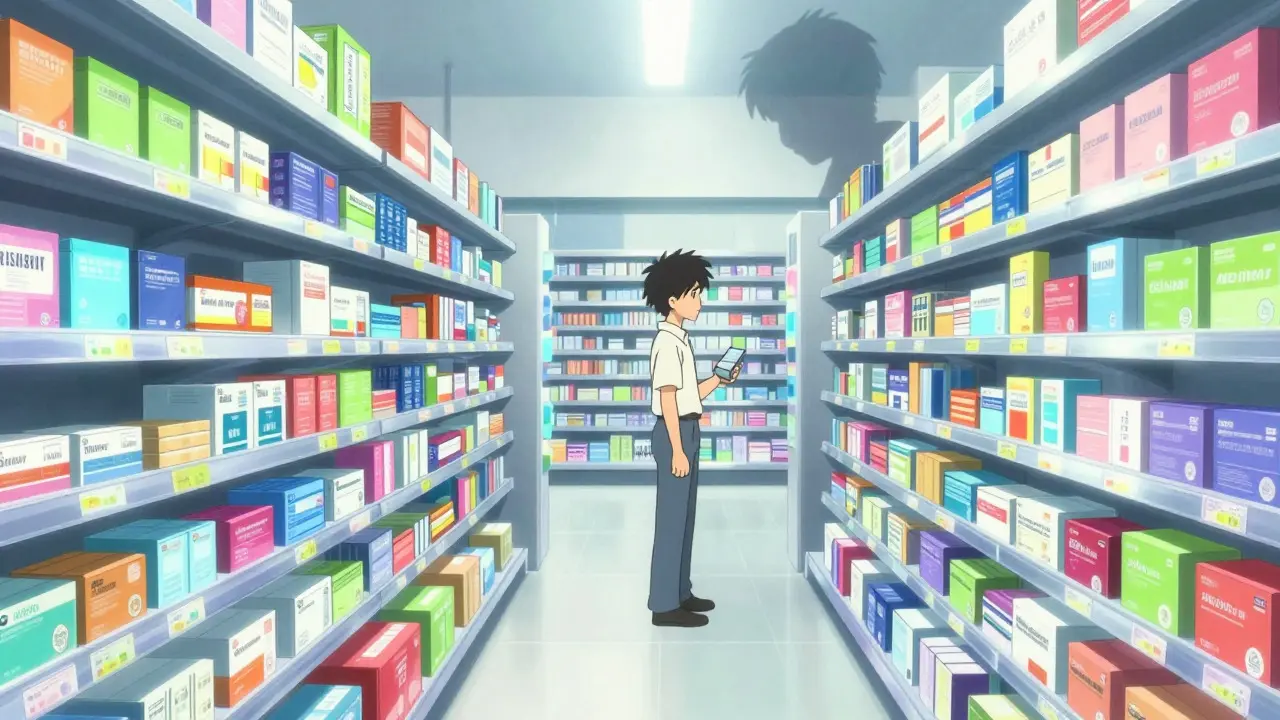
Walking down the pharmacy aisle can feel like navigating a maze of colorful boxes and confusing promises. You have a headache, a cough, or maybe some joint pain, and you just want relief. But with over 100,000 combination products available in the United States alone, picking the wrong one isn't just ineffective-it can be dangerous. Many people assume that because a medicine is over-the-counter (OTC), it is completely risk-free. That assumption leads to thousands of emergency room visits every year.
The truth is, OTC drugs are powerful pharmaceutical products. They contain the same active ingredients as prescription drugs, often at lower doses or for shorter-term use. The difference lies in how they are regulated and who decides when to take them. To stay safe, you need to treat these medications with the same respect you would give a prescription from your doctor. Here is how to navigate the pharmacy counter with confidence and avoid common pitfalls.
Decode the Drug Facts Label
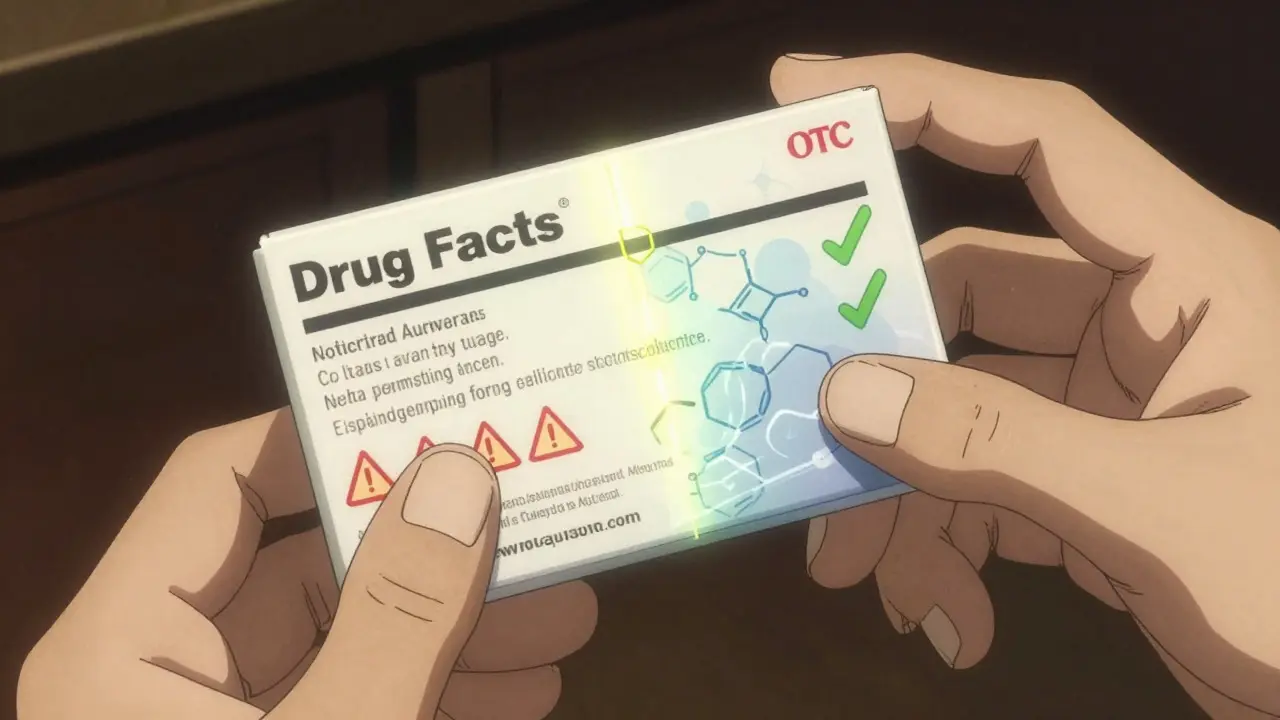
The most important tool you have is the back of the box. Since 1999, the FDA has required all OTC products to include a standardized "Drug Facts" label. This isn't just legal boilerplate; it is a roadmap to safe usage. Most people glance at the front, see a brand name they recognize, and grab it. This is where mistakes start.
Look specifically for the "Active Ingredients" section. This tells you exactly what chemical is doing the work. If you are buying a cold remedy, check if it contains acetaminophen. Why? Because you might already be taking Tylenol for a fever. Combining two products with the same active ingredient is a leading cause of accidental overdose. Troy Taylor, a registered pharmacist in Eau Claire, Wisconsin, advises consumers to "be open with your doctor about all medications you are taking, even over-the-counter medications" to avoid these dangerous overlaps.
Pay close attention to the "Warnings" section. It lists conditions under which you should ask a doctor before using the product. For example, if you have high blood pressure, many decongestants can spike your numbers dangerously. If you have liver issues, acetaminophen requires strict dosage limits. Reading this section takes less than a minute but can prevent serious health complications.
Avoid the Multi-Symptom Trap
Pharmacies love selling "multi-symptom" remedies. These boxes promise to cure your runny nose, sore throat, cough, and headache all at once. While convenient, they are often a recipe for ingesting more medicine than you need. The Ohio Department of Aging recommends picking non-prescription medications that treat only the symptoms you actually have.
If you only have a headache, buy a pain reliever. Do not buy a "cold and flu" multi-symptom pill that includes a decongestant, an antihistamine, and a cough suppressant alongside the pain reliever. You are exposing your body to unnecessary chemicals, increasing the risk of side effects like drowsiness, dry mouth, or stomach upset. Stick to single-ingredient products whenever possible. This approach gives you precise control over your treatment and makes it easier to identify which ingredient caused any adverse reaction.
| Active Ingredient | Primary Use | Key Safety Warning |
|---|---|---|
| Acetaminophen | Pain and Fever | Liver damage if exceeded; found in many combo drugs. |
| Ibuprofen | Inflammation and Pain | Stomach bleeding; avoid with certain heart/kidney conditions. |
| Pseudoephedrine | Nasal Congestion | Raises blood pressure; kept behind counter for tracking. |
| Dextromethorphan | Cough Suppressant | Dangerous when mixed with alcohol or MAO inhibitors. |
Master Accurate Dosing
Getting the dose right is critical, especially for liquid medications. The FDA warns that children aren't just small adults, so estimating doses based on size is risky. More importantly, household kitchen spoons are notoriously inaccurate. Studies show that kitchen spoons vary by up to 200% in volume. A "teaspoon" from your drawer might hold half or double the intended amount.
Always use the measuring device provided with the medication, such as a dosing cup, oral syringe, or dropper. If the bottle doesn't come with one, buy a dedicated medicine spoon at the pharmacy. Also, watch out for unit confusion. "TBSP" stands for tablespoon, while "TSP" stands for teaspoon. One tablespoon equals three teaspoons. Mixing these up can lead to a triple dose error, which is particularly dangerous for potent medications.
Consult Your Pharmacist
Your local pharmacist is an underutilized resource. They understand which medications offer the best balance of safety and effectiveness for your specific situation. Adam Singh, a retail pharmacy manager, notes that pharmacists can help you navigate confusing packaging and ingredients. This service is free and often faster than waiting for a doctor's appointment.
Tell your pharmacist everything you are taking. This includes prescriptions, supplements, vitamins, and other OTC drugs. Some combinations are hazardous. For instance, mixing alcohol with antihistamines or dextromethorphan can cause severe sedation. Taking aspirin with blood thinners increases bleeding risks. A quick conversation at the counter can catch these interactions before they become problems. Research published in PMC shows that healthcare provider recommendations play a substantial role in mitigating the risk of adverse drug events.
Special Considerations for Vulnerable Groups
Safety depends heavily on who is taking the medication. Self-diagnosis leaves room for error, particularly for vulnerable populations. The Merck Manual highlights that older adults account for 50% of adverse drug reactions despite making up only 13% of the population. Age-related changes in metabolism mean drugs stay in the system longer, increasing toxicity risks.
If you are pregnant or breastfeeding, extra caution is needed. Some common pain relievers and cold medicines can affect fetal development or pass into breast milk. People with diabetes should consult a doctor before taking decongestants, as they can interfere with blood sugar levels. Those with enlarged prostates should avoid certain antihistamines and decongestants, which can worsen urinary retention. Never assume a medication is safe without checking these specific conditions first.

Spotting Red Flags and Expiration Dates
Before you leave the store, check the expiration date. Expired medications may lose potency or, in rare cases, break down into harmful compounds. Also, inspect the packaging. If the seal is broken or the powder looks clumped, return it. Don't share medications with family members. Just because someone else had the same symptom doesn't mean they have the same underlying condition or allergies.
Be wary of products making grandiose claims. Legitimate OTC drugs stick to factual language about symptom relief. If a product claims to "cure" a chronic condition or uses vague terms like "natural detox," scrutinize it closely. The FDA regulates drugs strictly, but supplements fall under different rules. Ensure you are buying an FDA-approved drug, not an unregulated supplement masquerading as medicine.
Build a Personal Medication Checklist
To make the process easier, create a habit. Before buying any OTC med, ask yourself these questions:
- Do I know the active ingredient?
- Am I taking another drug with this same ingredient?
- Does the warning section list any of my health conditions?
- Do I have the correct measuring tool?
- Have I asked the pharmacist if this interacts with my current meds?
Taking these few minutes prevents the majority of OTC medication errors. With 82% of Americans using OTC medications regularly, mastering these practices protects your health and saves you from unnecessary trips to the ER. Treat the pharmacy counter as a partnership with your pharmacist, not just a retail transaction.
Is it safe to take multiple OTC medications at once?
It can be risky. Many OTC products contain the same active ingredients, such as acetaminophen. Taking two different brands together can lead to an accidental overdose. Always check the "Active Ingredients" label on each product and consult a pharmacist to ensure there are no dangerous interactions or duplications.
Why shouldn't I use a kitchen spoon for liquid medicine?
Kitchen spoons are not standardized. Testing shows they can vary in volume by up to 200%. Using a regular teaspoon instead of a proper dosing syringe or cup can result in giving too much or too little medication, which is especially dangerous for children or potent drugs.
What should I look for on the Drug Facts label?
Focus on three sections: "Active Ingredients" to avoid duplicates, "Warnings" to check for conflicts with your health conditions, and "Directions" for correct dosage. The FDA requires this standardized format to help consumers make informed decisions quickly.
Are natural or herbal remedies safer than OTC drugs?
Not necessarily. "Natural" does not mean risk-free. Herbal supplements can interact with prescription medications and lack the rigorous FDA testing that OTC drugs undergo. Always inform your pharmacist about any supplements you take to check for potential interactions.
When should I call a doctor instead of buying OTC meds?
If symptoms persist after a few days of OTC treatment, worsen, or are accompanied by high fever, severe pain, or unusual rashes, stop self-treating and see a doctor. OTC meds mask symptoms; they don't always treat the underlying cause, especially in complex or chronic conditions.

Gary Browne
Look, I don't care about the philosophy of it. You take the pill, you feel better. Most people just want to get back to work and stop complaining about their headaches. It's not rocket science.
charlie student
There is a certain quiet dignity in understanding what we put into our bodies isn't there? We often treat the pharmacy aisle like a candy store when it should be treated with the reverence of a library. The active ingredients are silent partners in our health journey and ignoring them is a form of self-neglect that ripples outward to affect everyone around us who relies on our well-being.
Christina Thygesen
i really appreciate this post because my mom always gets confused by all those boxes and i worry she takes too much stuff at once so thanks for breaking it down simply
Minal Aditi
Oh wow, ground breaking news here folks! Apparently reading labels is hard! Can you believe it? Some of us have to work for a living and can't spend twenty minutes decoding chemical compounds every time we get a sniffle but sure let's pretend we're all pharmacists now how exhausting must that be for you poor souls
Diane Nash
It is imperative that one considers the physiological implications of polypharmacy even in non-prescription contexts. The accumulation of acetaminophen across multiple product lines represents a significant public health oversight that requires immediate attention from the consumer base to mitigate hepatotoxicity risks effectively.
Alli Crumley
You guys are totally missing the bio-psycho-social paradigm here lol. It's not just about the liver enzymes it's about the holistic integration of your microbiome and the pharmaceutical matrix you're ingesting daily. If you aren't tracking your therapeutic index you're basically playing russian roulette with your cellular integrity 😂📉
Marc H
I mean honestly if you can't figure out which spoon is which maybe you shouldn't be in charge of dosing yourself? But sure let's blame the kitchenware industry instead of taking personal responsibility for your own damn health decisions it's hilarious really
Chris McQuaid
Actually the real issue is that the FDA allows these misleading marketing tactics to continue unchecked while pretending to protect consumers. The multi-symptom trap is designed specifically to exploit cognitive biases in decision making under stress conditions which is why most people fail to read the fine print despite repeated warnings from medical professionals over decades.