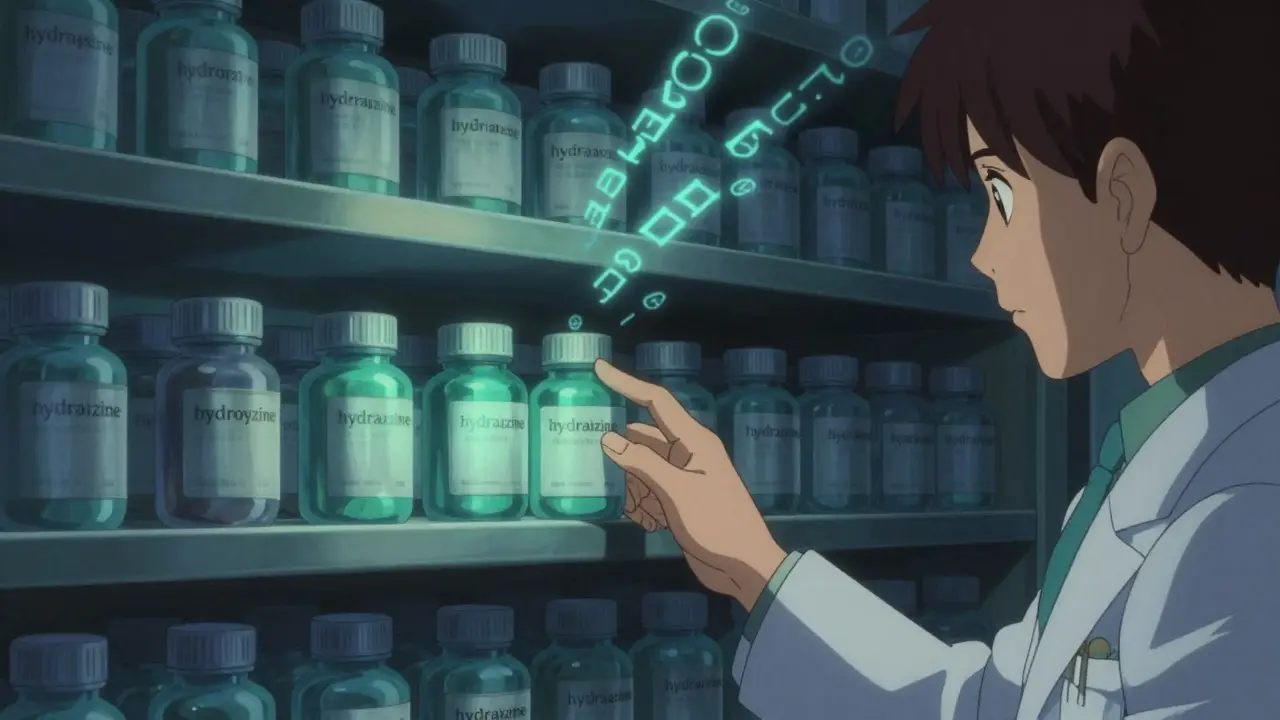
Every year, thousands of patients in the U.S. receive the wrong medication-not because of a mistake in diagnosis, but because two drugs look or sound too much alike. This isn’t rare. It’s common. And it’s happening most often with generic drugs.
When a pharmacist reaches for a bottle labeled "hydroxyzine" but grabs "hydralazine" by accident, or when a nurse hears "atenolol" over the phone and thinks it’s "albuterol," lives are at risk. These aren’t hypotheticals. They’re documented events. The Institute for Safe Medication Practices (ISMP) tracks nearly 1,000 pairs of drugs that confuse healthcare workers. And about one in four medication errors can be traced back to this problem-known as look-alike, sound-alike (LASA) confusion.
Why Generics Are the Main Culprit
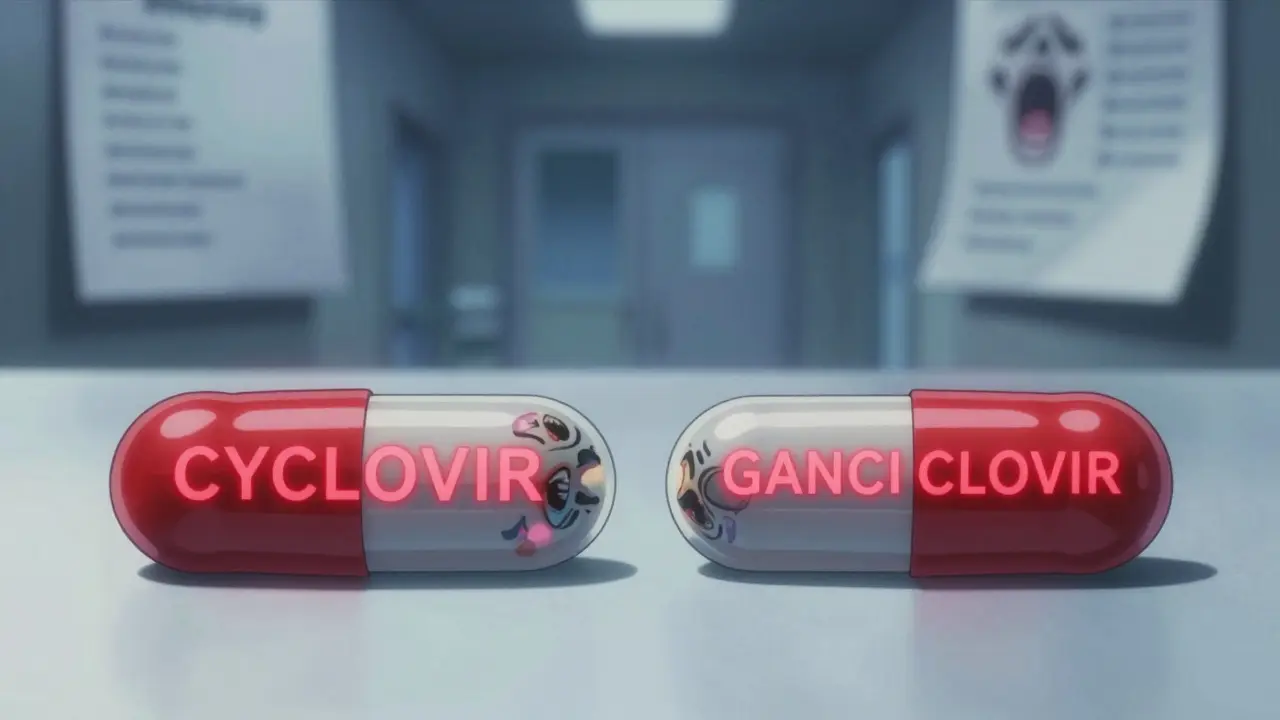
Generic drugs are essential. They make life-saving treatments affordable. But when multiple companies make the same drug, each with its own packaging, color, and shape, confusion grows. Take Valtrex and Valcyte. Both start with "val," both are used in transplant and HIV patients, and both treat viral infections. But Valtrex fights herpes, while Valcyte targets cytomegalovirus (CMV). Give a transplant patient the wrong one, and their immune system could collapse.
It’s not just brand names. Generic versions of these drugs often copy the same visual design. Pills look identical. Bottles have similar fonts and colors. Even the names are nearly interchangeable: "valacyclovir" and "valganciclovir." The only difference? A few letters. In a busy pharmacy, that’s all it takes.
How LASA Errors Happen
These errors don’t happen because someone is careless. They happen because the system is designed poorly.
Look-alike errors occur when drugs look similar. Hydroxyzine (an antihistamine) and hydralazine (a blood pressure drug) come in identical 10 mg capsules. One calms anxiety. The other lowers blood pressure. Mix them up, and a patient could crash their blood pressure-or get no relief from anxiety at all.
Sound-alike errors happen when names sound alike when spoken. Dopamine and dobutamine? Both are IV drugs used in intensive care. One boosts heart function. The other helps maintain blood pressure. Say "dopamine" over a noisy intercom, and the nurse might hear "dobutamine." The wrong drug delivered at the wrong dose can cause cardiac arrest.
According to data from the UK’s National Reporting and Learning System, over 200,000 medication incidents were reported in one year-206,485 of them involved errors, and more than 60 of those were fatal. Many of these were LASA-related.
The Human Cost
Most errors are caught before they hurt someone. But not all.
A 2022 study in the British Journal of Clinical Pharmacology found that LASA errors are responsible for roughly 25% of all preventable medication harm. In hospitals, they’re the third most common cause of adverse drug events. For children, the risk is lower in frequency-but higher in severity. A child given the wrong dose of a look-alike drug can suffer organ damage or death.
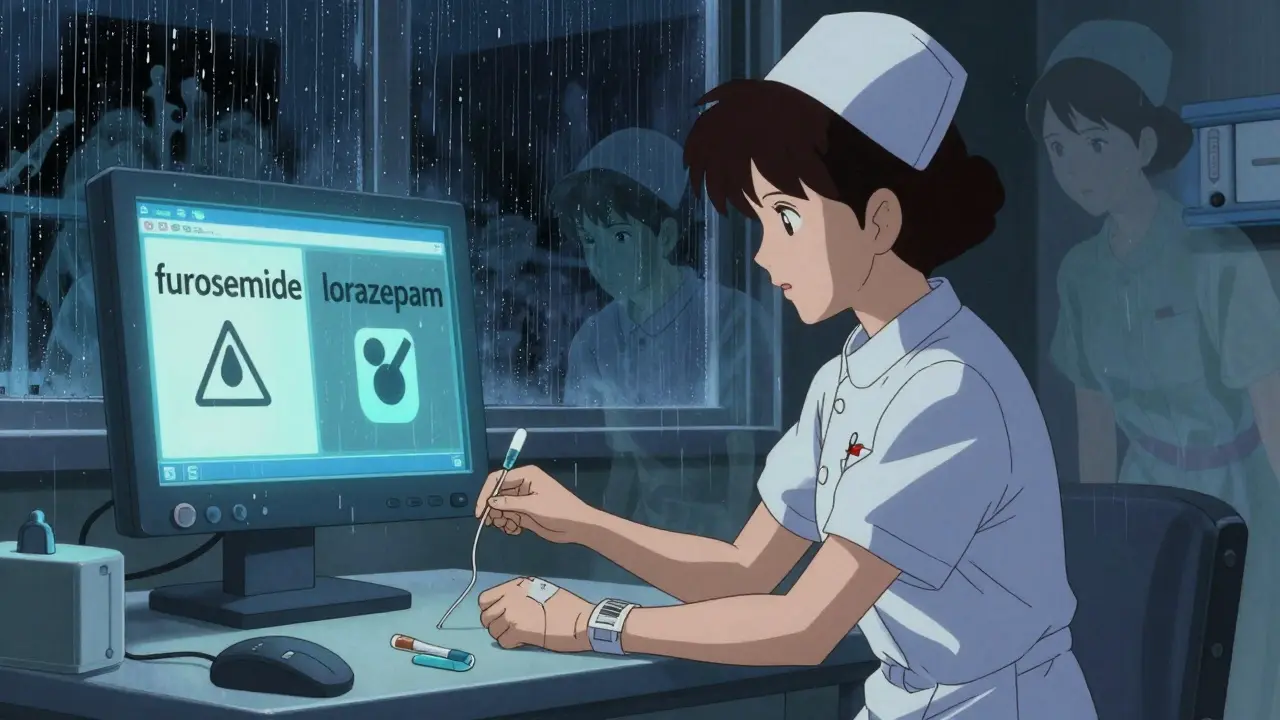
One real case from a Seattle hospital: A 72-year-old woman with heart failure was supposed to get furosemide (a diuretic). Instead, she received lorazepam (a sedative). The names look similar on paper. The bottles were stored next to each other. The nurse didn’t double-check. The patient became unresponsive. She survived, but only because the team caught it within 20 minutes.
What’s Being Done
Some hospitals are fighting back-with real results.
Tall man lettering is one of the most effective tools. It highlights differences in drug names by capitalizing the parts that differ. Instead of "prednisone" and "prednisolone," you see "predniSONE" and "predniSOLONE." This small change reduced errors by 67% in a 12-hospital system, according to a 2020 study in the Journal of Patient Safety.
Another solution? Physical separation. Keep high-risk pairs like "hydroxyzine" and "hydralazine" in completely different storage areas. No more side-by-side shelves.
Electronic health records (EHRs) now include alerts. When a doctor types "valtrex," the system pops up: "Did you mean valcyte?" Some systems even block the wrong selection entirely. A 2023 study in the Journal of the American Medical Informatics Association showed AI-powered EHRs cut LASA errors by 82% in just six months.
Barcode scanning at the bedside is another win. Nurses scan the patient’s wristband, then scan the drug. If the system detects a LASA mismatch, it stops the process. Hospitals using this method saw a 45% drop in errors.
Why It’s Still a Problem
Despite all this, LASA errors persist. Why?
First, the FDA doesn’t require generic manufacturers to match brand-name packaging. So one company’s hydroxyzine might be blue, another’s green. No standard. No consistency.
Second, many hospitals still don’t use tall man lettering. Or they use it inconsistently. A 2023 American Hospital Association survey found that Magnet-recognized hospitals (the top tier for nursing excellence) use an average of 6.2 LASA prevention strategies. Non-Magnet hospitals? Just 2.4.
Third, prescribers still write scripts by hand. A sloppy "A" looks like an "H." A rushed "D" looks like a "B." In emergency rooms, where time is tight, these mistakes slip through.
What Patients Can Do
You don’t have to wait for the system to fix itself. Here’s how to protect yourself:
- Ask your pharmacist: "Is this the same drug I’ve taken before? What’s it for?" If the pill looks different, ask why.
- Always check the label before you leave the pharmacy. Compare the name and dose to your prescription.
- If you’re on multiple drugs with similar names, ask your doctor to write out the purpose: "Hydroxyzine for anxiety" instead of just "hydroxyzine."
- Use one pharmacy. It keeps your records in one place and makes it easier to catch mistakes.
Don’t assume your provider knows. Many doctors don’t realize how many LASA pairs exist. A 2021 survey found that 40% of physicians couldn’t name even three high-risk drug pairs.
The Bigger Picture
This isn’t just about drugs. It’s about how we design care.
Dr. David Bates from Harvard Medical School says LASA errors aren’t about human error-they’re about system failure. We blame the nurse. But we don’t ask why the bottles look the same. We don’t ask why the computer lets two similar names appear side by side.
The World Health Organization calls this a global crisis. Medication errors cost the world $42 billion a year. In the U.S., 10% of hospitalized patients experience a medication error. LASA is a major part of that.
The FDA rejected 34 drug names in 2021 because they were too similar to existing ones. The European Medicines Agency now requires all new drugs to pass a name-similarity test. But in the U.S., generic manufacturers still get away with nearly identical packaging.
Change is possible. It’s just slow.
What Needs to Change
- Standardized packaging for high-risk generics. Color, shape, size-should be consistent across manufacturers.
- Mandatory tall man lettering in all EHRs and pharmacy systems.
- Real-time AI alerts during prescribing, dispensing, and administration.
- Publicly available, updated LASA lists from the ISMP, used by every hospital and pharmacy.
- Training for all healthcare workers-not just pharmacists-on LASA risks.
The goal? Reduce severe LASA errors by 50% by 2025, as the FDA’s Safe Use Initiative demands. We’ve proven it’s possible. Now we need the will.
What are look-alike, sound-alike (LASA) drugs?
Look-alike, sound-alike (LASA) drugs are medications whose names or packaging are so similar that they can be confused. Look-alike means they look alike visually-same color, shape, or label design. Sound-alike means they sound alike when spoken aloud. Examples include hydroxyzine and hydralazine, or albuterol and atenolol. These confusions lead to medication errors, sometimes with serious or fatal outcomes.
Why are generic drugs more likely to cause LASA errors?
Generic drugs are made by multiple manufacturers, each using different packaging, pill shapes, and colors. Unlike brand-name drugs, which have standardized appearance, generics vary widely. This inconsistency increases the chance that a pharmacist or nurse picks the wrong bottle. Also, generic names often share the same root (like "val-" in Valtrex and Valcyte), making them harder to distinguish.
How common are LASA medication errors?
About 25% of all medication errors are caused by look-alike, sound-alike confusion, according to the World Health Organization and multiple studies. The Institute for Safe Medication Practices tracks nearly 1,000 high-risk drug pairs. In U.S. hospitals, these errors contribute to thousands of adverse events each year, with dozens resulting in death.
Can technology help prevent LASA errors?
Yes. AI-powered clinical decision support in electronic health records can flag potential LASA mistakes before they happen. One study showed an 82% reduction in errors after implementing these systems. Tall man lettering (e.g., predniSONE vs. predniSOLONE) and barcode scanning at the bedside also cut errors by 45-67%. But these tools aren’t used everywhere-many hospitals still rely on manual checks.
What can I do as a patient to avoid LASA errors?
Always check your prescription label against what the doctor told you. Ask your pharmacist: "What is this medicine for?" If the pill looks different from before, ask why. Use the same pharmacy every time. Write down the purpose of each drug-like "hydroxyzine for anxiety"-and keep a list. Don’t be afraid to speak up if something feels off.

Chris Crosson
I work in a pharmacy and this hits home. We had a near-miss last month with hydroxyzine and hydralazine. Same capsule, same size, same font. One guy grabbed the wrong one and only caught it because the patient asked why his anxiety meds tasted like metal. We started using tall man lettering on all labels after that. Simple fix, huge difference.
Seth Eugenne
This is why I always ask my pharmacist to read the label out loud. 🙏 I don’t care if it’s awkward - I’d rather be annoying than dead. Also, I keep a little card in my wallet with my meds and what they’re for. My grandma taught me that. She lived to 92 because she never trusted the system.
Alex Arcilla
So let me get this straight - we’re telling pharmacists to read tiny labels in a 30-second window while 12 people are yelling at them, and then we’re shocked when they mix up 'valtrex' and 'valcyte'? Bro. We built a system that *wants* people to fail. It’s not incompetence. It’s design. 🤦♂️
Brandon Shatley
i never knew this was a thing. i thought mistakes were just bad luck. but now i see it’s like putting two identical-looking keys on the same ring. one opens your house, the other opens your neighbor’s. you’re gonna grab the wrong one. and then what? no one’s to blame? that’s messed up.
Grace Kusta Nasralla
It’s not just about drugs. It’s about how we treat people like cogs. We don’t see the nurse rushing. We don’t see the pharmacist with three kids and no health insurance. We just blame. And then we move on.
Stephen Alabi
It is patently evident that the current regulatory framework governing pharmaceutical nomenclature and packaging is fundamentally inadequate. The absence of standardized visual and orthographic protocols across generic manufacturers constitutes a systemic failure of public health governance.
Pat Fur
I used to be a nurse. I’ve seen this. One time, a kid got the wrong dose because 'dextromethorphan' looked like 'dextroamphetamine'. He was 8. He didn’t die. But he’ll never forget the hallucinations. We need better labels. Not more blame.
Anil Arekar
In India, we have similar issues. But we also have community pharmacists who know every patient by name. They don’t just hand out pills. They ask, 'Is this for your father’s blood pressure?' That human touch saves lives. Technology helps, but connection matters more.
Elaine Parra
This is why I don’t trust the FDA. They’re in bed with Big Pharma. Why do you think they let generics look identical? It’s profit. They want you to keep buying. They don’t care if you die. This isn’t an accident. It’s a feature.
James Moreau
I’ve been on 8 different meds in the last 5 years. I always check the bottle twice. I write the purpose on the cap with a Sharpie. Small thing. But it’s saved me twice. If more people did this, we’d cut errors in half.
J. Murphy
so like... we just need to make labels bigger? wow. groundbreaking. also why is this even a problem? people should just read better.
Jesse Hall
I work in EHRs. We rolled out AI alerts last year. LASA errors dropped 80%. It’s not magic. It’s just code that says, 'Hey, you’re about to kill someone.' Why isn’t this mandatory everywhere? 🤷♂️
Donna Fogelsong
This is all part of the Great Pharmaceutical Conspiracy. The government allows look-alike drugs so they can track you through your meds. They know what you’re taking. They know your anxiety. They know your depression. And they’re using it to control you. Don’t be fooled.
Sean Bechtelheimer
I saw this happen to my cousin. They gave her fluoxetine instead of fluvoxamine. She went into a catatonic state for 3 days. The hospital said 'human error.' I say: the system is rigged. 💀
Kevin Y.
I appreciate the thoroughness of this post. It highlights not only the technical challenges surrounding look-alike, sound-alike medications but also the profound ethical imperative to prioritize patient safety through standardized design, systemic intervention, and professional accountability. We must move beyond reactive measures toward proactive, universally enforced protocols.