Why tracking generic understanding matters more than memorization in patient education
When a patient leaves the clinic with a prescription for insulin, do they really know how to use it? Or did they just nod along while the doctor talked? Too often, patient education is treated like a checkbox: hand out the brochure, check the box, move on. But real understanding? That’s harder to measure. And it’s the difference between someone managing their condition safely and someone ending up back in the ER.
Generic understanding means the patient can apply what they learned to new situations-not just repeat what they were told. Can they explain why they need to check their blood sugar before meals, not just when the nurse told them to? Can they adjust their dose if they’re sick, even if no one gave them a step-by-step guide for that scenario? That’s the kind of understanding that saves lives. And it’s not something you get from a one-time lecture or a PDF download.
Traditional methods like asking, "Do you understand?" or handing out a quiz with multiple-choice questions don’t cut it. Patients say yes to avoid embarrassment. Quizzes measure recall, not reasoning. What we need are ways to track whether patients can actually use what they’ve learned in real life.
Direct methods: Seeing what patients can actually do
The most reliable way to know if someone understands is to watch them do it. This is called direct assessment. In patient education, that means observing real behavior, not just listening to answers.
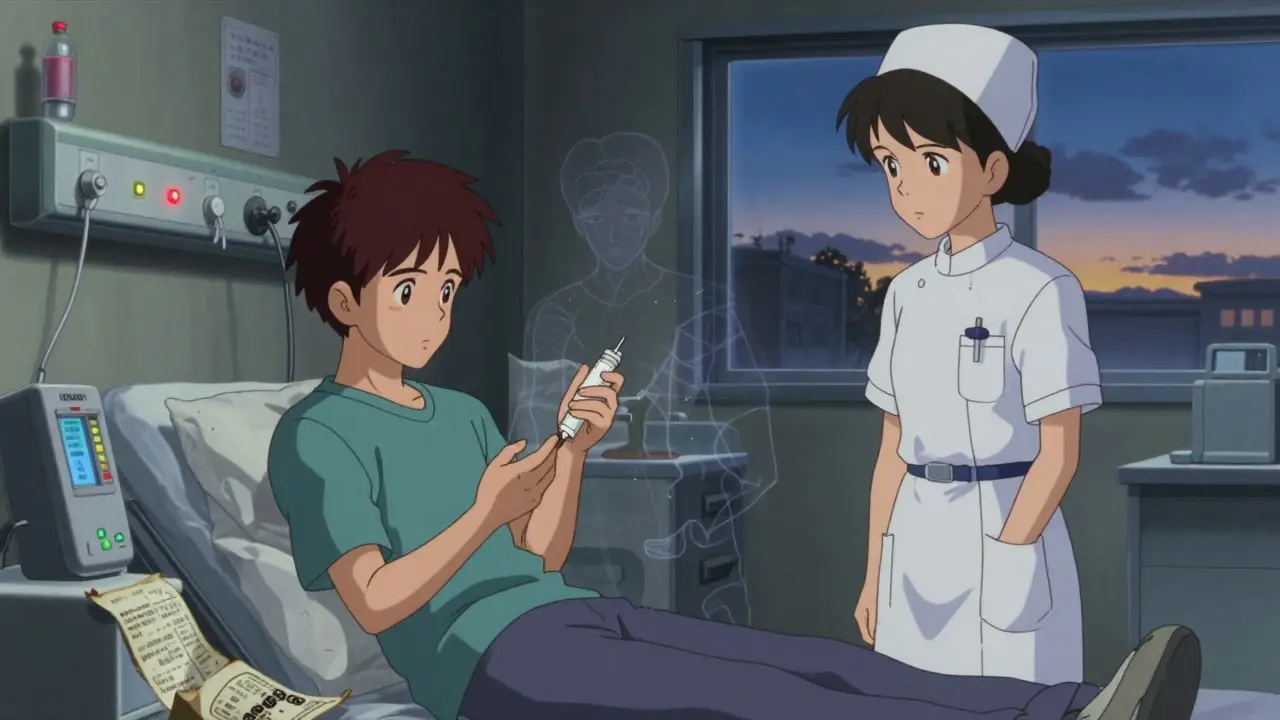
- For a diabetic patient: Have them show you how they draw up insulin, check their meter, and log the result. Don’t just ask if they know how. Watch. Do they use the right needle size? Do they wipe the vial with alcohol? Do they know what to do if the reading is off the charts?
- For someone with high blood pressure: Give them a fake blood pressure cuff and ask them to take their own reading. Then ask them to explain what the numbers mean and what they’d do if the systolic was over 180.
- For a patient on anticoagulants: Ask them to list all the foods and medications they need to avoid-and then ask them to explain why. Not just recite the list, but connect the dots.
These aren’t just observations-they’re assessments. And they give you hard evidence. A 2022 study from the Association of American Colleges and Universities found that 87% of institutions using direct assessments of student work (like patient demonstrations) saw clearer patterns in learning gaps than those relying on surveys. The same applies to patients.
One clinic in Seattle started using a simple checklist during discharge: "Can the patient demonstrate medication use? Can they explain warning signs?" Within six months, readmission rates for heart failure patients dropped by 22%. Why? Because they stopped assuming understanding. They started measuring it.
Formative assessment: Catching misunderstandings before they become problems
Most patient education happens in a rush-15 minutes before discharge, during a crowded waiting room, while the provider is already behind schedule. That’s not enough time to teach, let alone check for understanding.
That’s where formative assessment comes in. It’s not about grading. It’s about feedback. It’s asking questions early and often to see where the patient is getting lost.
Think of it like a teacher using exit tickets at the end of class. For patients, that could mean:
- At the end of a consultation: "What’s the one thing you’ll do differently tomorrow?"
- After explaining a new medication: "Tell me in your own words what this pill is for and when you’ll take it."
- Using the teach-back method: "I want to make sure I explained this clearly. Can you explain it back to me as if you’re telling your spouse?"
These aren’t fancy tools. They’re simple. But they work. A 2023 survey of community health workers found that clinics using teach-back methods reduced medication errors by 37% compared to those that didn’t. Why? Because misunderstandings get caught on the spot. A patient who says, "I take this when I feel dizzy," might not realize the medication is for daily prevention, not symptom relief. Catch that in the office, and you prevent a hospital visit later.
Formative assessment turns education from a one-way lecture into a conversation. And conversations reveal gaps that surveys and handouts never can.
Why indirect methods fail patients
Many clinics still rely on indirect methods: post-visit surveys, satisfaction scores, follow-up calls asking, "Did you find our education helpful?"
These sound good. But they’re misleading.
Satisfaction doesn’t equal understanding. A patient might love their nurse’s kindness but still not know how to use their inhaler. A survey might say, "90% of patients felt educated," but if 60% of them can’t demonstrate proper technique, you’re not helping them-you’re just making them feel better about being confused.
Alumni surveys (in education) or post-discharge questionnaires (in healthcare) often have response rates below 20%. That’s not data. That’s noise. And worse, they’re retrospective. By the time you get the feedback, the patient has already made the mistake-missed a dose, skipped a follow-up, ignored symptoms.
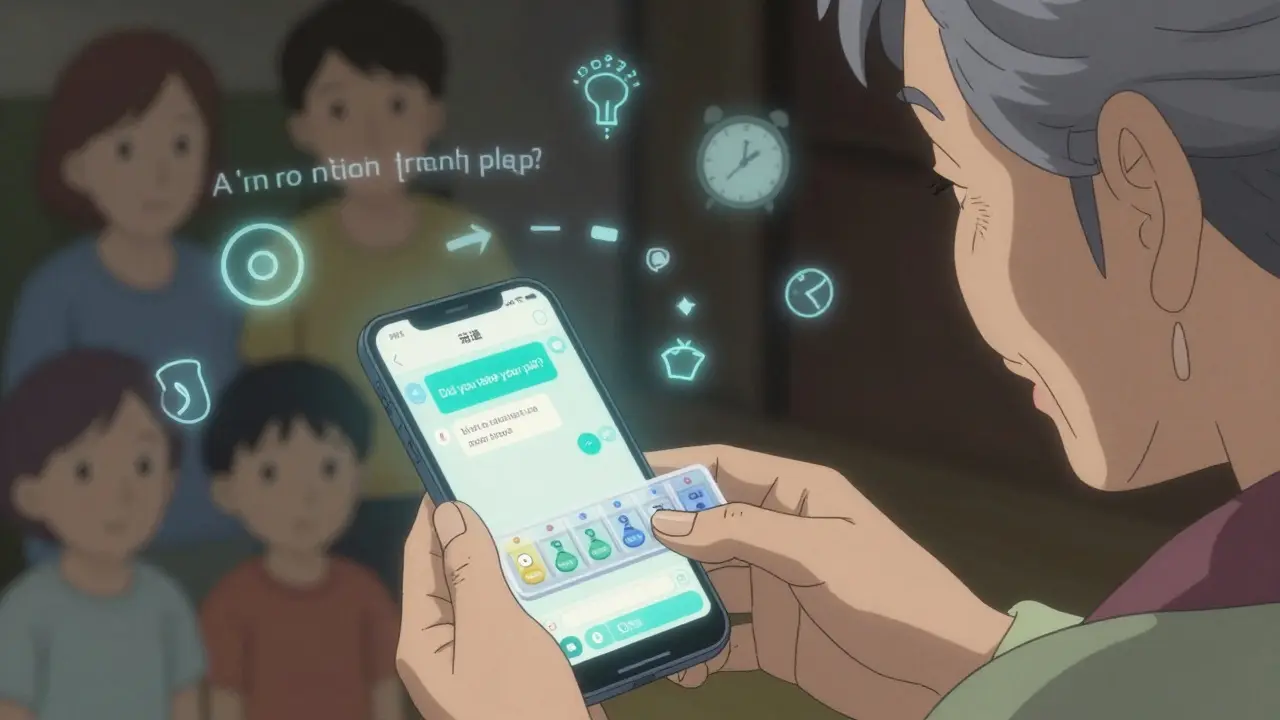
One primary care group in Oregon stopped sending out satisfaction surveys after discharge and started doing short video check-ins three days later. Patients were asked to show their medication organizer and explain their daily routine. Within a year, they identified that 41% of elderly patients were mixing up morning and night pills-not because they didn’t understand, but because the labels were too small. They redesigned the labels. Simple fix. Big impact.
Indirect methods tell you how patients feel. Direct methods tell you what they can do. For patient safety, the latter matters more.
Using rubrics to make assessment fair and consistent
Observing a patient demonstrate insulin injection is great-but how do you know if they did it right? What’s the standard?
This is where rubrics come in. A rubric breaks down a skill into clear, measurable parts. It’s not subjective. It’s objective.
Here’s a simple rubric for insulin administration:
| Criteria | Needs Improvement | Meets Standard | Exceeds Standard |
|---|---|---|---|
| Hand hygiene | No handwashing | Washed hands with soap and water | Used hand sanitizer, then washed |
| Insulin vial prep | Did not roll vial or checked expiration | Rolled vial gently, checked date | Checked date, inspected for clumps, noted date opened |
| Dose accuracy | Incorrect dose or used wrong syringe | Correct dose, correct syringe | Correct dose, confirmed with second person |
| Injection technique | Injected into muscle or skipped skin pinch | Pinched skin, injected at 90°, held 10 seconds | Pinched skin, injected at 90°, held 10 seconds, rotated site |
With this rubric, every nurse, nurse practitioner, or educator uses the same standard. No guesswork. No bias. And patients know exactly what’s expected. A 2023 LinkedIn survey of 142 healthcare educators found that 78% said rubrics improved both patient outcomes and teaching efficiency.
Start small. Pick one skill-medication use, inhaler technique, wound care. Build a rubric. Train your team. Track results.
The future: AI and adaptive feedback
It’s not just about better tools-it’s about better timing. Right now, most patient education happens in a single visit. But learning doesn’t work that way.
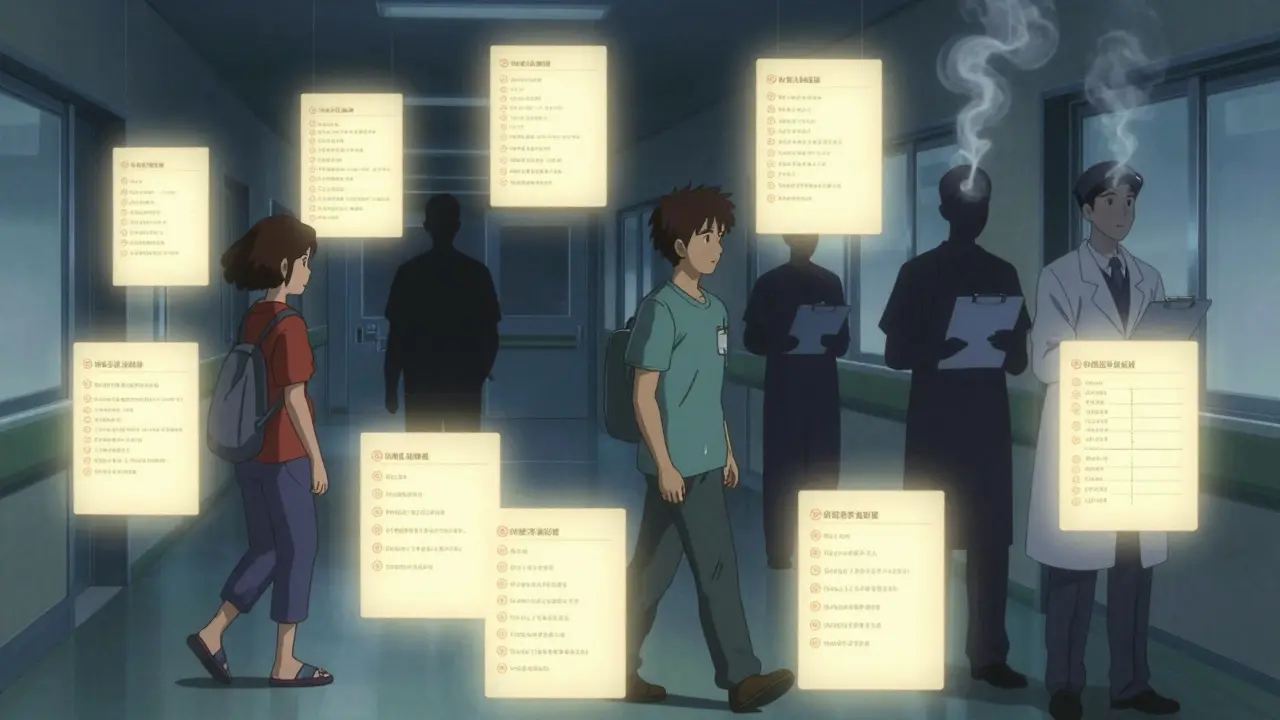
Emerging tools are starting to change that. Some clinics are testing AI-powered chatbots that ask patients daily questions: "Did you take your pill? How are you feeling? What’s your blood sugar?" Based on the answers, the bot adjusts its next message. If someone keeps saying they feel dizzy after taking their blood pressure med, the bot doesn’t just repeat instructions. It asks, "Have you checked your BP when you feel dizzy?" and suggests they log it.
These aren’t science fiction. In 2023, 58% of ed-tech leaders predicted AI-driven adaptive learning tools would become standard in healthcare education by 2027. They’ll help track understanding over time-not just in one visit, but across weeks and months.
And they’ll help with the biggest challenge: scale. One provider can’t watch every patient demonstrate every skill. But a smart app can. And it can flag when someone needs a follow-up call, a home visit, or a family member to be involved.
Where to start: Three steps to better patient education assessment
Don’t wait for a perfect system. Start with what you can do today.
- Pick one high-risk behavior to assess: medication use, inhaler technique, glucose monitoring, or wound care. Pick the one that leads to the most ER visits or readmissions.
- Use teach-back at the end of every visit. Don’t ask, "Do you understand?" Ask, "Can you show me how you’ll do this at home?"
- Create a simple rubric for that skill. Even a 3-point checklist is better than nothing. Train your team. Use it consistently.
You don’t need fancy software. You don’t need a grant. You just need to stop assuming. Start observing. Start asking. Start measuring.
Because in patient education, understanding isn’t something you tell someone. It’s something you help them show.
What’s the difference between formative and summative assessment in patient education?
Formative assessment happens during learning-it’s about feedback and improvement. For example, asking a patient to demonstrate their inhaler technique right after teaching it. Summative assessment happens after learning-it’s about evaluating final understanding. For example, checking if the patient can correctly use their inhaler during a follow-up visit three weeks later. Formative catches mistakes early. Summative tells you if the teaching worked.
Can patient education be measured with surveys alone?
No. Surveys tell you how patients feel about the education, not what they actually know or can do. A patient might say they "understood everything" but still mix up their pills or skip doses. Real understanding is shown through behavior, not answers on a form. Relying only on surveys is like judging a driver’s skill by how happy they are with their driving lesson-not by how well they parallel park.
Why is teach-back more effective than written instructions?
Written instructions assume the patient can read, understand medical terms, and remember all the steps. Many can’t. Teach-back forces the patient to explain the information in their own words, revealing gaps. If they say, "I take the pill when I feel bad," but the pill is for daily use, you catch the misunderstanding immediately. Written sheets don’t do that. They just sit on the counter.
How do I know if my assessment method is working?
Look at outcomes. If you start using teach-back and rubrics for insulin use, track whether fewer patients end up in the ER for low blood sugar. If you start checking inhaler technique, see if asthma-related hospital visits go down. Better assessment doesn’t just feel good-it should lead to fewer complications, fewer readmissions, and more confidence from patients.
Is this only for chronic conditions like diabetes or hypertension?
No. It applies to any condition where patient action affects outcomes. This includes post-surgery care, antibiotic use, mental health medication adherence, prenatal instructions, and even vaccination schedules. Any time a patient’s behavior determines success, assessment matters.
What’s next: Building a culture of assessment
Measuring understanding isn’t a one-time project. It’s a mindset. It means shifting from "Did we teach?" to "Did they learn?"
Start small. Pick one skill. Use teach-back. Build a rubric. Track results. Then do it again with another skill. Over time, you’ll see patterns. You’ll find which patients need more support. You’ll see which parts of your education process need fixing.
And you’ll stop guessing. You’ll know-because you’re measuring it.
