
Imagine standing at a pharmacy counter. The pharmacist hands you a prescription that looks nothing like the one your doctor described. It’s a different color, maybe a different shape. You hesitate. Is it safe? Is it actually the same medicine? This moment of doubt is common, but it doesn’t have to be.
This is where infographics about generics are visual education tools designed to explain the science, safety, and cost benefits of generic medications to patients and providers. These simple, visual guides bridge the gap between complex regulatory science and everyday patient understanding. They turn abstract concepts like "bioequivalence" into clear, digestible visuals that reassure patients and empower them to make confident healthcare decisions.
The Power of Visuals in Medication Understanding
We live in a world saturated with information, yet many people struggle with health literacy. Text-heavy brochures often get crumpled up or ignored. Visuals, however, stick. When it comes to generic drugs, the stakes are high because misconceptions can lead to lower medication adherence, which directly impacts health outcomes.
Research shows that visual aids significantly improve comprehension. According to Dr. Bruce Lambert, a professor at the University of Illinois College of Applied Health Sciences, patients who viewed FDA generic drug infographics were 3.2 times more likely to correctly identify key equivalence concepts compared to those who received only verbal counseling. That is a massive difference in understanding.
These tools work because they simplify complexity without dumbing down the science. They use charts, timelines, and side-by-side comparisons to show exactly how generic drugs meet strict standards. For instance, instead of just saying "generics are equivalent," an infographic might show a graph of dissolution rates, proving that the generic releases the active ingredient at the same speed as the brand-name version. This visual proof builds trust.
Key Messages in Generic Drug Infographics
Not all infographics are created equal, but the most effective ones focus on specific, critical messages. Here are the core topics these visual tools typically cover:
- Bioequivalence: Explaining that generics must contain the same active ingredient, dose, strength, and route of administration as the brand-name drug.
- FDA Approval Process: Detailing the rigorous testing required before a generic hits the market, including safety and efficacy checks.
- Cost Savings: Highlighting the financial impact. The Congressional Budget Office estimated that generic drugs saved the U.S. healthcare system $1.68 trillion between 2010 and 2019.
- Inactive Ingredients: Clarifying why pills might look different (due to dyes or binders) while emphasizing that these differences do not affect therapeutic performance.
- Patent Exclusivity: Using timelines to show when brand-name patents expire and generics become available, demystifying why some drugs have generics and others don’t.
The FDA’s "What Makes a Generic the Same as a Brand-Name Drug?" infographic is a prime example. In validation studies, 89% of test participants correctly interpreted its comparative dissolution rate graphs. In contrast, non-FDA materials achieved only 67% accuracy with similar visuals. This highlights the importance of precise, well-tested design.

Who Creates These Visual Tools?
Several organizations produce high-quality infographics about generics, each with a slightly different focus. Understanding who makes them helps you choose the right resource for your needs.
| Organization | Primary Focus | Key Strengths | Accessibility Features |
|---|---|---|---|
| U.S. Food and Drug Administration (FDA) | Regulatory science and equivalence standards | High standardization, rigorous testing, multilingual support (100% Spanish) | WCAG 2.1 AA compliant, 8th-grade reading level, screen reader alt text |
| GTMRx Institute | Comprehensive medication management (CMM) | Interactive digital elements, clinical application scenarios | Digital interactivity, but limited Spanish translation (30%) |
| BeMedWise | Patient medication safety and tracking | Integration with medication logs, practical safety tips | User-friendly design, but less comprehensive on generic specifics |
The FDA leads in accessibility and standardization. Their materials undergo patient comprehension testing with at least 30 diverse participants before publication, achieving an average comprehension score of 87%. GTMRx excels in interactive digital formats, allowing users to click through evidence and case studies, which is great for tech-savvy audiences. BeMedWise focuses on practical safety, integrating well with patient tracking tools but covering fewer generic-specific details.
Implementing Infographics in Healthcare Settings
Having great resources is one thing; using them effectively is another. Healthcare providers play a crucial role in leveraging these visual tools. Here’s how clinics and pharmacies are successfully implementing them:
- Waiting Room Displays: Print large-format versions (16 x 20 inches) for high-traffic areas. The FDA offers high-resolution PDFs optimized for professional printing.
- Patient Portals: Embed links to digital infographics in electronic health records (EHRs). Epic Systems integrated FDA infographics into their patient education module in late 2022, resulting in 450,000 views in six months.
- Counseling Aids: Pharmacists keep printed copies behind the counter to reference during consultations. At Kaiser Permanente Southern California, 78% of pharmacists regularly used FDA infographics, leading to a 63% reduction in patient refusals of generic substitutions.
- Social Media Outreach: Use shareable snippets from infographics to educate communities online. The FDA’s Stakeholder Toolkit includes sample social media posts to facilitate this.
Implementation requires minimal technical expertise. Most facilities simply download the PDFs or link to the web versions. However, staff training is essential. The FDA offers a 15-minute online training module to help healthcare professionals understand the content so they can answer follow-up questions confidently. In 2022, over 12,450 professionals completed this training.
Addressing Gaps and Future Trends
While current infographics are effective, experts note areas for improvement. Dr. Aaron Kesselheim of Harvard Medical School pointed out that some visuals oversimplify complex pharmacokinetic issues, particularly for narrow therapeutic index drugs like warfarin or levothyroxin, where small variations matter. The Institute for Safe Medication Practices (ISMP) recommends adding visual indicators for drugs requiring pharmacist notification during substitution.
Another gap is health equity. Academic analyses from UCSF (2022) found that most infographics underrepresent how generics reduce disparities in access. The FDA’s "Generic Drugs and Health Equity Handout" addresses this, noting that 34.7% of African American and 28.3% of Hispanic patients report higher concerns about generic quality compared to 22.1% of White patients. Tailoring visuals to address these specific community concerns is a growing priority.
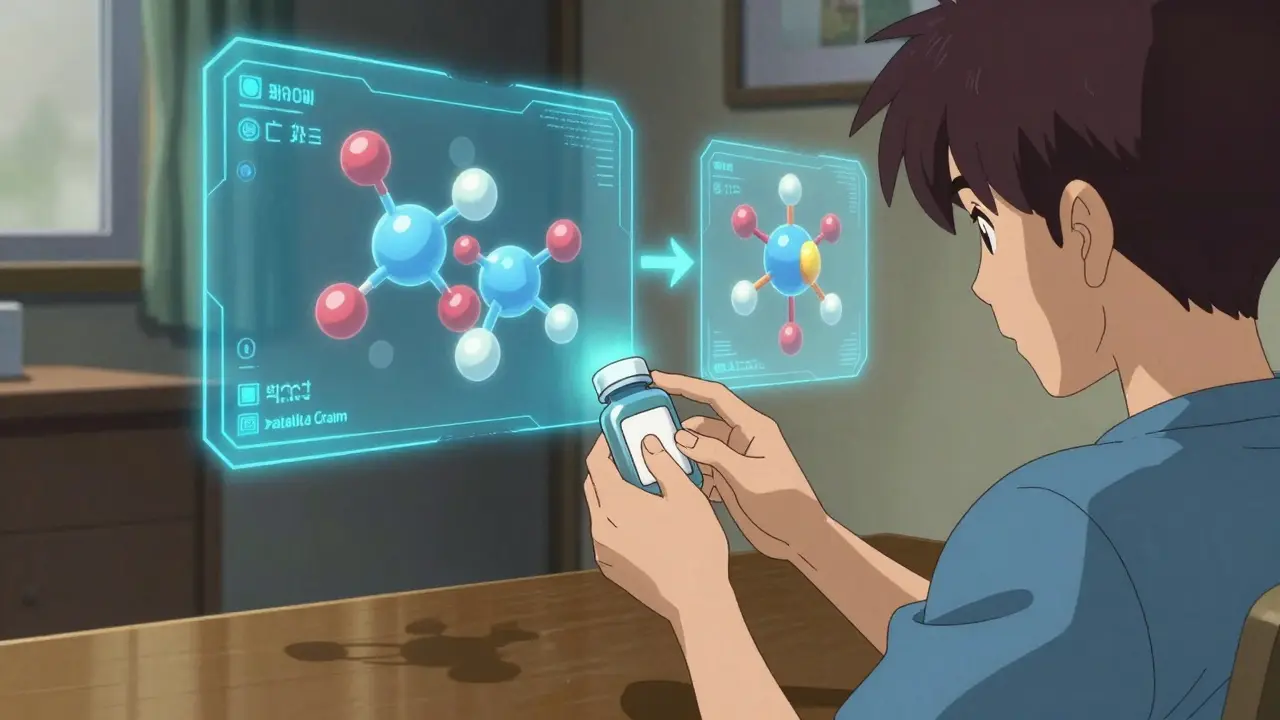
Looking ahead, technology is evolving these tools. The FDA plans to integrate augmented reality (AR) features by mid-2024, allowing patients to scan medication bottles and view 3D molecular comparisons of brand and generic versions. GTMRx has already launched interactive digital infographics that personalize complexity assessments based on a patient’s specific regimen. These innovations promise to make education even more engaging and relevant.
Why This Matters for Your Health
Generic drugs are not just cheaper alternatives; they are scientifically proven equivalents that keep healthcare affordable. As of 2023, more than 90% of prescriptions filled in the United States are for generic drugs. Yet, skepticism remains. The FDA reported that 43% of surveyed patients still expressed concerns about effectiveness in 2021.
Visual education tools combat this skepticism by providing transparent, easy-to-understand evidence. They empower you to ask better questions, trust your healthcare provider’s recommendations, and stay on track with your treatment plan. Whether you are a patient, a caregiver, or a healthcare professional, leveraging these infographics can transform confusion into confidence.
Where can I find free infographics about generic drugs?
The U.S. Food and Drug Administration (FDA) offers a comprehensive suite of free, downloadable PDF infographics on their website. These include titles like "Facts About Generic Drugs" and "What Makes a Generic the Same as a Brand-Name Drug?" They are available in English and Spanish and are optimized for both digital viewing and printing.
Are generic drug infographics suitable for patients with low health literacy?
Yes. The FDA designs its infographics to target an 8th-grade reading level, verified by Flesch-Kincaid readability tests. They also use high-contrast colors, simplified language, and visual metaphors to ensure accessibility. Patient comprehension testing confirms that 87% of users understand the key concepts presented.
Do infographics address concerns about inactive ingredients in generics?
Yes. Many infographics explicitly explain that while active ingredients must be identical, inactive ingredients (like dyes or binders) may differ. This explains why pills might look different without affecting safety or efficacy. Feedback from the FDA’s Medication Errors Reporting Program indicates that clear explanations of inactive ingredients are among the most praised aspects of these tools.
How effective are these visual tools compared to verbal counseling?
Studies show significant improvements. Research published in Patient Education and Counseling found that patients viewing FDA infographics were 3.2 times more likely to correctly identify equivalence concepts than those receiving only verbal counseling. Additionally, pharmacists using these tools reported reduced patient refusal rates for generic substitutions.
Are there interactive versions of generic drug infographics available?
Yes. Organizations like the GTMRx Institute offer interactive digital infographics that allow users to input specific medication regimens for personalized assessments. The FDA is also developing augmented reality features that will enable 3D molecular comparisons, enhancing engagement and understanding for tech-savvy users.

Cici arya Arya
so i was at the pharmacy last week and the pharmacist handed me this weird blue pill instead of the white one my doctor prescribed. i almost walked out because i thought they messed up but then she showed me this little chart on her tablet about bioequivalence. it actually made sense for once instead of just hearing 'trust me bro'. honestly if more places did this people would stop being so paranoid about generics.
rebecca torres
the fda stats are wild though like 3.2 times more likely to understand? that is huge. most patient education stuff is just a wall of text nobody reads anyway
AnneKatherine Stiekes
i totally agree with rebecca here. visuals stick way better than brochures. i keep forgetting to take my meds until i saw a simple timeline graphic showing when to take them relative to meals. makes such a difference without feeling like homework
Hailey Dunston
oh please don't act like infographics solve systemic healthcare failures. these are band-aids on bullet holes. the real issue is that patients are treated like children who can't process basic pharmacology. also the idea that 'visuals stick' is a marketing trope not science. 🙄
Daniella Renzon
hey hailey let's not be so harsh. not everyone has a degree in chemistry or even the time to read dense medical journals. if a simple picture helps someone feel safe taking their medicine that is a win right there. we should support tools that reduce anxiety not gatekeep knowledge. plus seeing the dissolution rate graph really clicked for me personally. it felt like proof rather than just words.
Emily Barnhill
while daniella makes a fair point about accessibility we cannot ignore that oversimplification can lead to dangerous complacency especially with narrow therapeutic index drugs. if you are on warfarin or levothyroxin you need to know that small variations matter. generic substitution isn't always a free pass. patients deserve nuanced information not just pretty pictures that say 'it's all the same'. this approach risks undermining informed consent by hiding complexity behind cute graphics. we need rigorous transparency not visual fluff.
Brett Webster
emily raises an excellent clinical concern regarding NTI drugs. as a pharmacist i see this tension daily. the key is that the infographics mentioned in the post specifically highlight where differences might exist in inactive ingredients. they do not claim therapeutic equivalence in every single parameter for every drug class. however i agree that provider communication must accompany these visuals. the infographic is a conversation starter not a replacement for counseling. at kaiser we saw refusal rates drop because patients felt heard and informed not patronized.
Lee Coates
typical american bureaucracy trying to fix problems with pdfs and training modules. meanwhile our system is falling apart. but sure let's print some charts. 🤡
Aditya Singh
from an indian perspective the cost savings argument is even more critical. we deal with massive out-of-pocket expenses so any tool that encourages generic use is vital. the ar feature mentioned for 2024 sounds promising for tech-savvy users but we need to ensure digital divide doesn't leave elderly patients behind. maybe low-tech printed versions should remain the gold standard for accessibility in diverse demographics.
Erin Livengood
i love the idea of augmented reality for medication bottles. imagine scanning your pill bottle and seeing a 3d molecular dance between brand and generic. it turns a mundane task into a moment of discovery. the human brain craves narrative and spatial understanding. flat infographics are good but immersive tech could bridge the trust gap entirely by making the invisible visible. it transforms skepticism into curiosity which is a powerful emotional shift.
Sherry Wheeler
yes erin that is exactly what we need! turning fear into fascination. my mom used to refuse generics because she thought they were 'cheap knockoffs'. now she asks to see the comparison charts. it empowers her. we have to meet people where they are emotionally not just intellectually. confidence is half the battle in adherence.
shreya sinha
it is morally reprehensible that we still need to justify the safety of life-saving medications through childish drawings. the pharmaceutical industry has profited from patent monopolies while patients suffer under financial strain. relying on visual aids suggests a failure in fundamental health education within our society. we should be demanding systemic reform not aesthetic distractions. the fact that 43% of patients doubt efficacy speaks to a deeper crisis of trust that no infographic can resolve alone.
Christina S.
shreya you are right that the root causes are complex but dismissing practical tools doesn't help anyone waiting at the counter right now. i am a nurse and i use these handouts constantly. they open doors for conversation. yes we need reform but we also need to care for patients today. the gtmtx interactive tools are particularly helpful for younger patients who engage better with digital content. it is not either or it is both.
Glenn Davis
american patents protect innovation. stop whining about costs. generics are a luxury not a right.