You're at the pharmacy counter, and the pharmacist asks if you want the generic version of your prescription. It's way cheaper, but a little voice in your head asks: Is this actually the same medicine? Does the lower price mean it's lower quality? It's a common worry, but the short answer is that for the vast majority of people, the difference is only in the price tag and maybe the color of the pill.
| Feature | Brand-Name | Generic |
|---|---|---|
| Active Ingredient | Standardized | Identical |
| FDA Approval | Required (Full trials) | Required (Bioequivalence) |
| Cost | Higher (Recouping R&D) | 80-85% Lower |
| Appearance | Unique/Trademarked | Different (by law) |
| Efficacy | Proven | Equivalent |
What Exactly Is a Generic Drug?
To put it simply, Generic Drugs is a medication created to be the same as an existing brand-name drug in dosage, strength, quality, and performance. They aren't "knock-offs" or low-grade versions. In the U.S., the modern path for these drugs started with the Hatch-Waxman Act of 1984, which allowed other companies to make the same drug once the original company's patent expired.
When a company creates a new drug, they get a patent that usually lasts about 20 years. This gives them a monopoly to recover the massive costs of clinical trials and marketing. Once that patent expires, other manufacturers can apply to the FDA to sell their own version. Because they don't have to repeat the expensive early research, they can sell the drug for a fraction of the cost.
The "Same" Part: How the FDA Ensures Quality
You might wonder how the government knows a generic works without doing a brand-new ten-year study. The key is something called Bioequivalence. The FDA requires generic makers to prove that their version delivers the same amount of the active ingredient into your bloodstream at the same rate as the brand-name version. Specifically, they must fall within a tight window-usually 80% to 125% of the original drug's performance.
For a drug to be approved, it must be a pharmaceutical equivalence. This means it shares the same active ingredient, dosage form (like a tablet or liquid), strength, and route of administration. If the brand-name drug is a 20mg tablet taken by mouth, the generic must also be a 20mg tablet taken by mouth.
So, why do they look different? Trademark laws actually prevent generics from looking exactly like the brand name. This is why your blood pressure pill might be blue and round from one company, but white and oval from another. The inactive ingredients-the dyes, binders, and flavorings-can vary, but they don't change how the medicine treats your condition.
Why the Price Gap Is So Massive
It's wild to think that generics often cost 80% to 85% less than the brands. To put a number on it, some analyses show average savings of around $313 per prescription. The reason is simple economics. The brand-name company spent millions on research, failed attempts, and advertising. The generic company just needs to prove the drug is bioequivalent.
The scale of this is huge. In the U.S., generics make up about 90% of all prescriptions filled. Yet, they only account for about 25% of the total money spent on drugs. This means we are getting the vast majority of our healthcare needs met while spending a relatively small portion of the budget on those specific medications.

When Should You Be Cautious?
For most people, switching is a no-brainer. If you're taking common medications for high blood pressure, diabetes, or high cholesterol, the savings add up quickly without any loss in efficacy. However, there is a small category called Narrow Therapeutic Index drugs. These are medications where a tiny change in the amount of drug in your blood can be the difference between the medicine working and it being toxic or ineffective.
Examples include Warfarin (a blood thinner) or Levothyroxine (for thyroid issues). While the FDA enforces even stricter bioequivalence rules (90-111%) for these, some doctors still prefer you stay on one specific brand. If you switch from a brand-name to a generic (or vice versa) for these specific drugs, do it under close medical supervision to ensure your levels stay stable.
Real-World Experience: What Patients Say
If you look at patient forums or survey data, the vast majority of people don't notice a difference. About 89% of consumers in large surveys believe generics are just as effective. For instance, people switching from brand-name asthma medications to generics often report identical symptom control while saving hundreds of dollars a month.
That said, a small percentage of people-around 10-14% in some community reports-do feel a difference. This is often due to those inactive ingredients we mentioned. A specific filler or dye in a generic might cause a mild allergic reaction or a different absorption rate for a very small number of people. This is rare, but it's why it's important to tell your doctor if you feel your medication isn't working as well after a switch.
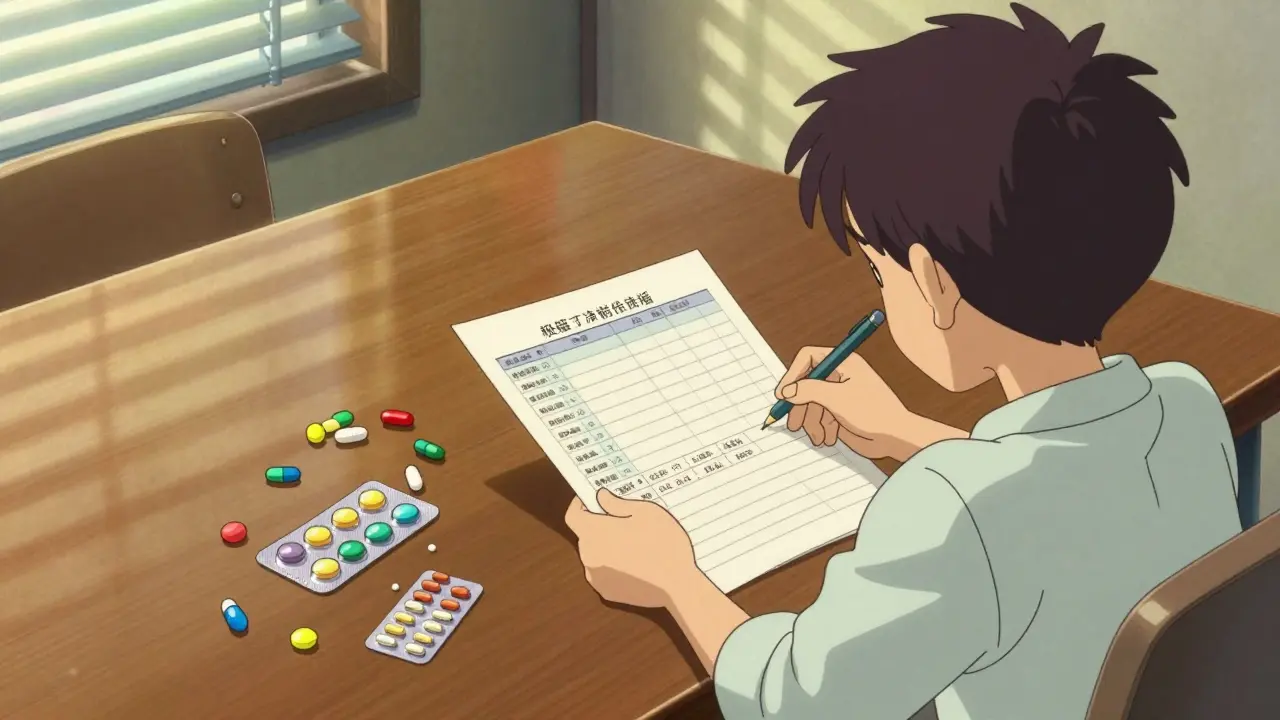
Practical Tips for Managing Your Prescriptions
Navigating the pharmacy can be confusing. Here are a few ways to make sure you're getting the best deal without risking your health:
- Ask about substitution: In 49 U.S. states, pharmacists are generally required to provide the generic unless your doctor specifically writes "Dispense as Written" (DAW) on the script. If you're unsure, just ask, "Is there a generic available for this?"
- Keep a medication log: Write down both the brand name and the generic name of your meds. This prevents confusion if your pharmacy switches manufacturers and the pill color changes.
- Check the "Orange Book": The FDA maintains a database called the Orange Book that lists all approved generic equivalents for brand-name drugs. If you're curious if a generic exists, this is the gold standard source.
- Discuss "Narrow Index" meds: If you are taking a medication for a very precise condition (like seizures or thyroid), ask your doctor: "Is it okay to switch to generic, or should I stay consistent with one version?"
Are generic drugs less effective because they are cheaper?
No. The lower price is due to lower development and marketing costs, not lower quality. The FDA requires generics to have the same active ingredients, strength, and performance as brand-name drugs.
Why does my generic pill look different from my brand-name pill?
U.S. trademark laws prevent generic drugs from looking exactly like the brand-name version. While the active medicine is the same, the shape, color, and inactive fillers (like dyes) can be different.
Can I always switch from a brand name to a generic?
Most of the time, yes. However, for "narrow therapeutic index" drugs (like certain blood thinners or thyroid hormones), you should consult your doctor first, as consistency is more critical for these specific medications.
What is bioequivalence?
Bioequivalence is the FDA standard that proves a generic drug delivers the same amount of active ingredient into the bloodstream at the same rate as the brand-name drug.
Do generics have the same side effects as brand names?
Generally, yes, because the active ingredient is the same. However, some people may react differently to the inactive ingredients (fillers or dyes) used in a generic version.
Next Steps for Patients
If you are currently taking expensive brand-name medications, your first step should be a quick conversation with your pharmacist. Ask them to check for generic alternatives. If you have a chronic condition like hypertension or diabetes, switching can save you thousands of dollars over a year.
If you've recently switched to a generic and feel "off"-perhaps your symptoms are returning or you have a new rash-don't ignore it. Document the exact name of the generic manufacturer and report it to your doctor. While rare, a different inactive ingredient might not agree with your system, and your doctor can help you find a different generic brand or move you back to the original.
