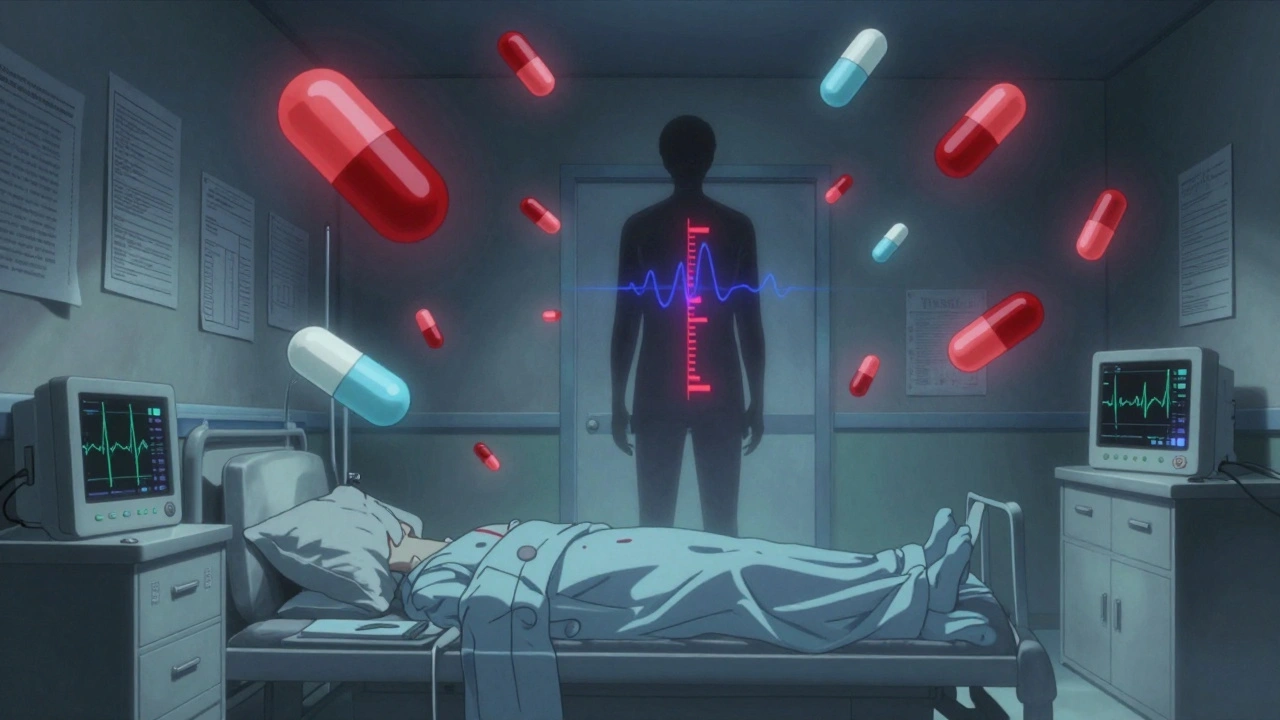
Why NTI Generics Need More Than Just a Standard Bioequivalence Study
Not all generic drugs are created equal. For most medications, a simple bioequivalence study comparing blood levels between the brand and generic version is enough to prove they work the same way. But when it comes to drugs with a narrow therapeutic index (NTI), that’s not enough. These are the medications where the difference between a safe dose and a dangerous one is razor-thin. Take warfarin, for example. A few milligrams too much can cause life-threatening bleeding. A few too little can lead to a stroke. If a generic version isn’t absolutely identical in how it’s absorbed and processed by the body, patients are at risk.
This is why bridging studies for NTI generics exist. They’re not just extra paperwork. They’re a safety net. The FDA and other global regulators require these studies because the consequences of even small differences in bioavailability are real - and sometimes deadly. Unlike standard generics, where an 80% to 125% range in blood concentration is acceptable, NTI generics must stay within a much tighter window: 90% to 111.11%. That’s less than half the allowed variation. And it’s not just about the numbers. The study designs are more complex, the costs are higher, and the failure rate is significantly greater.
What Makes a Drug an NTI Drug?
An NTI drug isn’t just any potent medication. It’s defined by five specific criteria set by the FDA. First, the gap between the lowest effective dose and the lowest toxic dose must be no more than two-fold. Second, the range of drug concentrations that work safely in the body must also be within a two-fold difference. Third, patients on these drugs usually need regular blood tests to monitor levels - think INR checks for warfarin or blood levels for phenytoin. Fourth, the drug must have low to moderate variability in how individuals process it - under 30% variation in blood levels across the same person over time. And fifth, dosage adjustments are often made in small increments, like 0.125 mg or 12.5 mg, because even tiny changes matter.
Common NTI drugs include warfarin, digoxin, levothyroxine, phenytoin, and lithium. These aren’t obscure drugs. They’re used by millions. Warfarin alone is prescribed to over a million Americans each year. Levothyroxine, used for hypothyroidism, is one of the most commonly filled prescriptions in the U.S. If a generic version of levothyroxine behaves differently - even slightly - patients can end up with symptoms like fatigue, weight gain, heart palpitations, or worse. That’s why regulators treat these drugs differently.
The Study Design: Why a Four-Way Crossover Is Non-Negotiable
Standard bioequivalence studies use a two-way crossover: patients take the brand drug once and the generic once, with a washout period in between. For NTI generics, that’s not enough. The FDA requires a fully replicated, four-way crossover design. That means each patient takes both the brand and the generic drug twice - in a random order. This design helps account for natural variations in how a person’s body absorbs the drug from day to day. It gives regulators more data points to confirm consistency.
This design isn’t just more complicated - it’s harder to run. It takes longer. More patients are needed. And dropout rates go up because subjects have to come in for multiple visits over several weeks. A typical NTI bioequivalence study lasts 12 to 18 months, compared to 6 to 9 months for standard generics. Costs jump from $1.5-2.5 million to $2.5-3.5 million. And even then, nearly 4 out of 10 NTI generic applications get rejected because the study design doesn’t meet FDA standards.
The statistical method used is called reference-scaled average bioequivalence (RSABE). It’s not a simple average. It adjusts the acceptance range based on how variable the reference drug is in the population. This prevents overly strict requirements for drugs that naturally vary more between individuals. But it’s also harder to analyze. Only about 35% of generic drug manufacturers have in-house statisticians trained to run these models. Many have to hire outside consultants, adding to the cost and delay.

Why Only 6% of Generic Approvals Are for NTI Drugs
Despite making up about 14% of all small-molecule drugs, NTI generics account for only 6% of generic approvals between 2018 and 2022. Why? Because the barriers are high. The development timeline is longer - 3 to 5 years versus 2 to 3 for standard generics. The failure rate is higher. The cost is steeper. And the regulatory scrutiny is intense.
The FDA issued 37% of its complete response letters for NTI generics due to inadequate bridging studies. That’s nearly triple the rate for non-NTI drugs. Many companies simply decide it’s not worth it. Teva Pharmaceuticals reported that the four-period crossover design requires twice as many subjects and increases study duration by 40-50%. For smaller manufacturers, that’s a dealbreaker.
Even when approved, market penetration lags. While 85% of non-NTI drugs have generic alternatives, only 42% of NTI drugs do. That means millions of patients are still paying full price for brand-name warfarin or levothyroxine, even though generics exist. The gap isn’t due to lack of need - it’s due to the difficulty of meeting the science and regulatory demands.
Regulatory Differences: FDA vs. EMA vs. ICH
The U.S. FDA leads the world in NTI generic requirements. Its 2017 guidance on warfarin set the gold standard. Other countries have followed, but not always in sync. The European Medicines Agency (EMA) now agrees that NTI drugs need tighter criteria and special study designs. Their 2022 position paper explicitly says you can’t waive these requirements just because two products look similar on paper.
The International Council for Harmonisation (ICH) is working to align global standards through its E18 guideline update, due in 2025. That’s good news for manufacturers who want to sell in multiple countries. But until then, companies must navigate different rules. A product approved in the U.S. may still need additional studies for Europe or Japan.
There’s been some pushback. The International Generic and Biosimilar Medicines Association (IGBA) suggested in 2018 that some bridging studies could be waived under certain conditions. But the FDA and EMA pushed back hard. Dr. Philip K. Robinson of the FDA’s Office of Generic Drugs stated clearly: “For NTI drugs, even minor differences in pharmacokinetics can have clinically significant consequences.” That’s not a position that’s likely to change.
The Future: Can Modeling Replace Clinical Studies?
One of the biggest questions in the field is whether we can someday replace large, expensive clinical bridging studies with computer modeling. The FDA is exploring physiologically-based pharmacokinetic (PBPK) modeling - a technique that simulates how a drug moves through the body based on its chemical properties, organ function, and metabolism pathways. In a 2022 pilot study with warfarin generics, PBPK modeling showed promising results in predicting bioequivalence without full human trials.
But the FDA is cautious. Dr. Sally Sepehrara, from the Office of Generic Drugs, said in 2023: “For the foreseeable future, robust clinical data will remain essential for NTI drug approval.” Even the most advanced models can’t fully capture how real patients respond - especially those with liver disease, kidney issues, or on multiple medications.
That said, PBPK modeling may soon be used to support - not replace - clinical studies. For example, a company could use modeling to predict which patient populations need extra testing, or to justify reducing the number of subjects in a trial. It’s not a shortcut. But it could make the process smarter and more efficient.
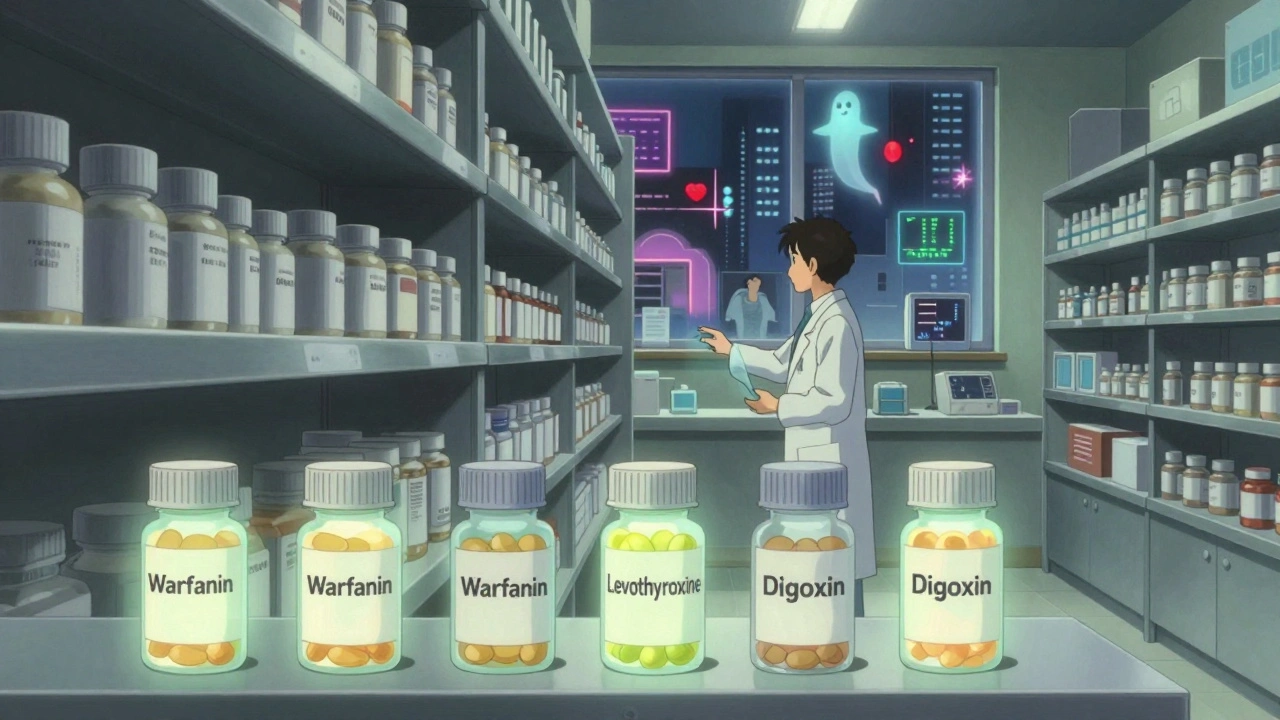
What Manufacturers Need to Know Before Starting
If you’re a generic drug company considering an NTI product, here’s what you need to do before spending a single dollar:
- Confirm the drug is truly classified as NTI by FDA’s current list - it’s now 27 drugs, up from 12 in 2023.
- Build or contract with a team that has experience in RSABE statistics and four-way crossover designs.
- Plan for a 12-18-month bioequivalence study with 30-40 subjects, not the 24-36 used for standard generics.
- Request a pre-ANDA meeting with the FDA. About 82% of companies say these meetings cut development time and costs.
- Prepare for 25-30% more documentation than a standard generic application.
Don’t underestimate the learning curve. Companies that jump into NTI development without prior experience often take 18-24 months just to get their internal processes right. The FDA doesn’t make exceptions for first-timers.
What Patients Should Know
If you’re on a brand-name NTI drug like warfarin or levothyroxine and your pharmacy switches you to a generic, you might wonder: Is this safe? The answer is yes - if it’s been approved by the FDA. Every NTI generic on the market has passed the same rigorous bridging study requirements. You should never be afraid to use an approved generic.
But here’s the catch: Not all generics are the same. The FDA has seen cases where switching between different generic versions of levothyroxine caused thyroid hormone levels to fluctuate. That’s why your doctor may recommend sticking with the same brand or generic - not because generics are unsafe, but because consistency matters. If you notice new symptoms after a switch, tell your doctor. Get your levels checked. It’s not paranoia - it’s smart management.
Why This Matters More Than You Think
The NTI generic market is worth over $78 billion globally. Yet only a fraction of that is covered by generics. That means billions of dollars are spent every year on brand-name drugs that could be cheaper. If more manufacturers could overcome the barriers, patients could save thousands. But the cost of cutting corners is too high. These aren’t just pills. They’re life-sustaining treatments for people with heart conditions, thyroid disorders, epilepsy, and more.
Regulators aren’t being overly cautious. They’re being responsible. The science behind bridging studies for NTI generics is complex, expensive, and necessary. It’s not about slowing down access - it’s about ensuring that when access happens, it’s safe. And in the world of narrow therapeutic index drugs, safety isn’t optional. It’s the only thing that matters.

Chris Park
Let me guess - the FDA's 'rigorous standards' are just a backdoor way for Big Pharma to keep generics off the market. You know what happens when you make a drug too hard to copy? The same companies that made the original get to charge $500 for a bottle of warfarin while patients bleed out in waiting rooms. This isn't science. It's rent-seeking dressed up as safety.
Inna Borovik
The data doesn't lie - NTI generics have a 40% failure rate because most manufacturers can't replicate the exact dissolution profile. It's not about conspiracy. It's about particle size distribution, excipient interactions, and gastric pH variability. You can't just swap out a filler and call it equivalent. The math is unforgiving.
Jackie Petersen
So let me get this straight - we're spending $3.5M and 18 months to approve a pill that's supposed to be CHEAPER? Meanwhile, my insurance won't cover the brand name but won't let me switch generics because 'they're not all the same.' Sounds like a scam designed to keep me broke and sick.
Annie Gardiner
I mean... isn't it wild that we treat pills like sacred artifacts? We're talking about molecules here. If your body can't handle a 10% variation in blood concentration, maybe the problem isn't the generic - it's that you're one stressor away from crashing your entire system. We're medicalizing normal human variability.
Myles White
I've worked on three NTI generic submissions, and honestly, the biggest hurdle isn't the science - it's the paperwork. Every single batch has to be tracked with full chromatographic data, stability logs, dissolution profiles across three pH levels, AND a statistical validation of RSABE models. And don't get me started on the FDA's requirement to submit raw subject-level data in CSV format with specific column headers. One misplaced decimal and you're back to square one. It's like submitting a thesis written in Esperanto to a committee that only reads Latin.
Saketh Sai Rachapudi
USA thinks it's the only one who knows how to do medicine? We in India make 70% of the world's generics and we don't need 4-way crossovers to know if a pill works. You think your $3M study is safer? My cousin took a levothyroxine from Hyderabad for 5 years and his TSH never moved. Your system is bloated. We don't need your overpriced bureaucracy to keep people alive.
joanne humphreys
I've been on levothyroxine for 12 years. I've switched between three different generics and one brand. I track my TSH every 3 months. The only time I had issues was when I switched from one generic to another without telling my doctor. Consistency matters - not because generics are unsafe, but because our bodies are finicky. I don't need a $3M study to tell me that. I just need my doctor to listen.
Clare Fox
i mean... what if we just... trusted people? like, what if we said 'here's a generic, take it, but if you feel weird, get your levels checked'? we do that for like... everything else. why is this pill so special? it's not magic. it's just a molecule. we're acting like it's a baby or something.
Akash Takyar
To all who say this is overregulation: consider this - a single milligram variation in levothyroxine can trigger atrial fibrillation in elderly patients. The cost of failure is not financial. It is human. Every patient who dies because a generic was rushed to market is a failure of our collective conscience. The science is hard because life is hard. We owe it to them to do better.
Arjun Deva
PBPK modeling? Please. The FDA is just trying to delay generics so Pfizer can keep raking in billions. They’ve been saying 'we need more data' since 2010. Meanwhile, in Canada, they approved 14 NTI generics with modeling and zero deaths. But no - we gotta do four-way crossovers because 'American standards.' Bullshit. This is protectionism with a lab coat.
Mayur Panchamia
Let’s be real - if you’re paying $3.5 million to test a pill that costs 12 cents to manufacture, you’re not protecting patients - you’re protecting your profit margin. The FDA’s 'gold standard' is just a velvet rope for Big Pharma. Meanwhile, grandma in Ohio is splitting her 25mcg levothyroxine tablets in half because the generic she got last month made her heart race. And you wanna talk about 'rigorous science'? That’s the real clinical trial - the one happening in her kitchen, with a pill splitter and a prayer.