
Blood Pressure Medication Interaction Calculator
How Weight Loss Medications Affect Your Blood Pressure
This tool helps you understand how weight loss medications interact with your blood pressure medications. Based on clinical data from the article, enter your current blood pressure and selected weight loss medication to see potential changes and recommended actions.
Your Current Blood Pressure
Weight Loss Medication
Estimated Blood Pressure Change
Recommended Actions
When you start a weight loss medication like Wegovy or Saxenda, you might not think about your blood pressure pills or your antidepressant. But these drugs don’t work in isolation. They interact - sometimes in ways that can be dangerous if you’re not watching closely.
How GLP-1 Medications Affect Blood Pressure
GLP-1 receptor agonists - including Wegovy (semaglutide), Saxenda (liraglutide), and Mounjaro (tirzepatide) - were designed to help people lose weight by slowing digestion and reducing appetite. But they also lower blood pressure. Not a little. In clinical trials, Wegovy reduced systolic blood pressure by an average of 6.2 mmHg and diastolic by 3.8 mmHg. Saxenda lowered it by about 4.1 mmHg. That’s a meaningful drop.
Here’s the catch: if you’re already taking blood pressure medication, that drop can push your numbers too low. Hypotension - blood pressure below 90/60 mmHg - happened in 12-18% of patients in the SUSTAIN-6 trial. Symptoms? Dizziness, fainting, fatigue, blurred vision. One Reddit user, "HypertensionWarrior," shared that after starting Wegovy, their lisinopril dose had to be cut in half because their blood pressure dropped to 85/55 when standing.
Why does this happen? Two reasons. First, weight loss itself reduces pressure on blood vessels. Second, GLP-1 medications slow gastric emptying by 25-35%. That means your body absorbs oral medications - including blood pressure pills - more slowly and unevenly. This isn’t just theoretical. The American Association of Clinical Endocrinologists says 30-40% of patients on GLP-1 medications need their blood pressure drugs adjusted within the first three months.
Which Blood Pressure Drugs Are Most Affected?
Not all blood pressure medications react the same way. ACE inhibitors like lisinopril and angiotensin receptor blockers (ARBs) like losartan are especially tricky. When combined with GLP-1 drugs, they increase the risk of low blood pressure and even hyperkalemia (too much potassium in the blood) by 15-22%. That’s because weight loss reduces kidney perfusion, and these drugs further affect kidney function.
Diuretics - like hydrochlorothiazide - make the situation worse. When paired with GLP-1 medications, they can amplify blood pressure drops by 25-40%. A 2023 survey of endocrinologists found that 63% routinely reduce ACE inhibitor or ARB doses by 25-50% when starting a patient on Wegovy or Saxenda.
For older adults over 65, the risk is even higher. AgelessRx data shows 22% of elderly patients experience systolic drops of more than 20 mmHg. That’s enough to cause falls, confusion, or hospital visits.
Phentermine: The Opposite Problem
Not all weight loss drugs lower blood pressure. Phentermine - an older stimulant still commonly prescribed - does the opposite. It triggers norepinephrine release, which raises heart rate and constricts blood vessels. Studies show it can increase systolic pressure by 5-15 mmHg and diastolic by 3-10 mmHg.
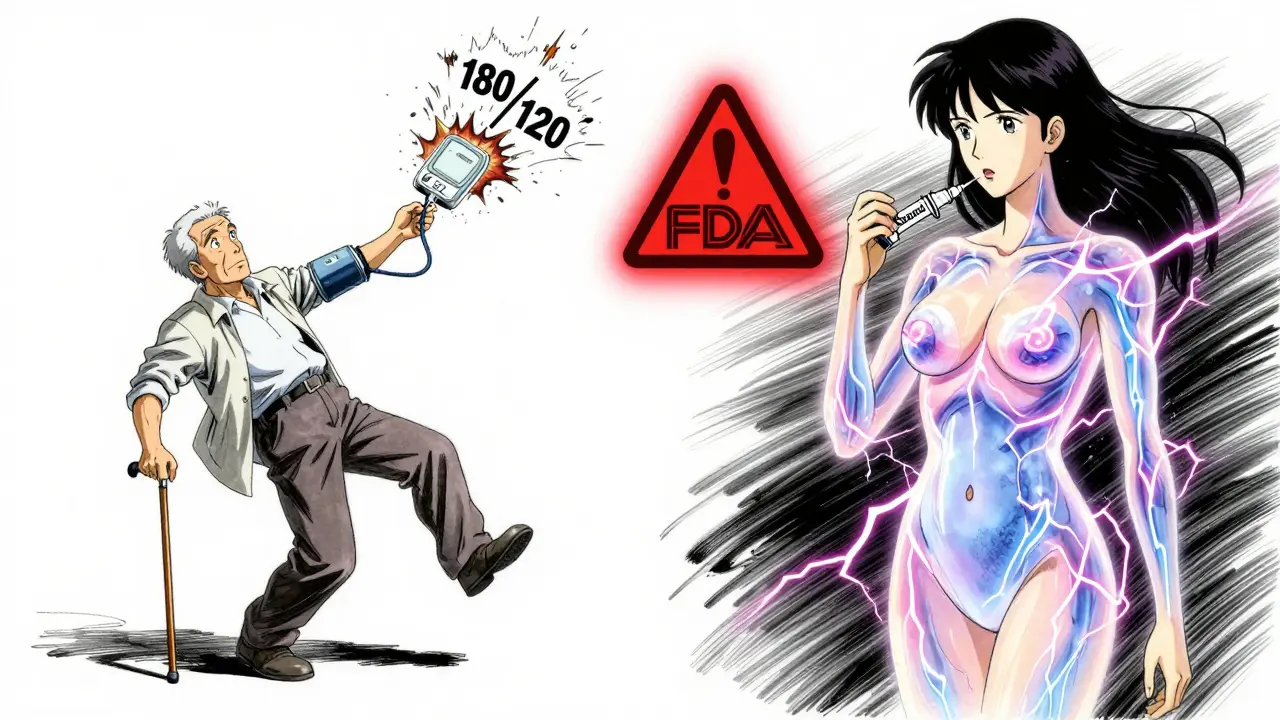
This is dangerous for the 107 million American adults with hypertension. Combine phentermine with an existing high blood pressure condition, and you’re flirting with a hypertensive crisis. The FDA warns that mixing phentermine with MAOIs - a type of antidepressant - can cause blood pressure spikes over 180/120 mmHg, sometimes exceeding 220/120. Emergency room visits from these combinations are rare but real, with CMS data showing 0.8% of non-compliant patients ended up in the ER.
Qsymia (phentermine-topiramate) is a middle ground. Topiramate lowers blood pressure slightly, so the net effect is a small drop of 2-5 mmHg systolic in 65% of users. Still, it’s not risk-free. The key is knowing what you’re taking.
Antidepressant Interactions: Less Obvious, Still Important
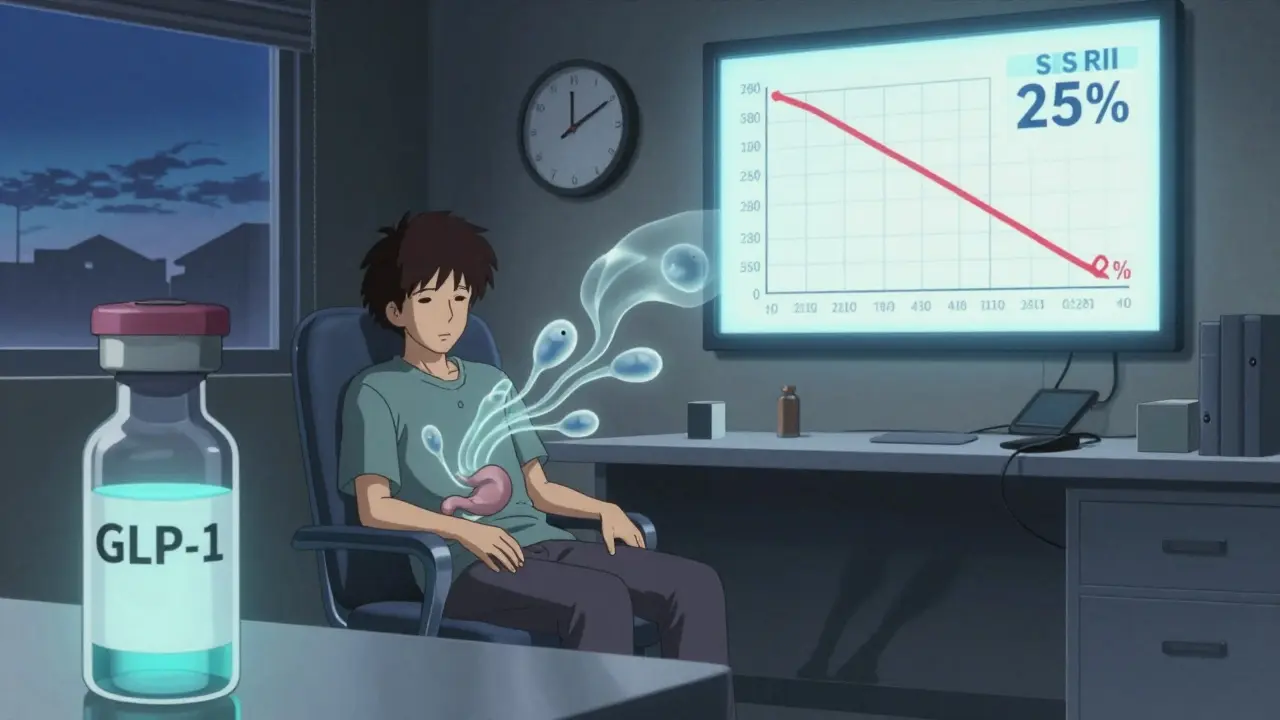
Most people don’t realize that weight loss meds can affect how well their antidepressants work. GLP-1 medications slow down stomach emptying. That means drugs absorbed in the upper GI tract - like SSRIs (sertraline, fluoxetine) - may not get absorbed as quickly or completely.
Dr. Charles Nemeroff’s research in the Journal of Clinical Psychiatry found that sertraline absorption can drop by 18-25% when taken with Saxenda. One user on Reddit, "AnxietyNoMore," noticed their depression symptoms returning after starting Saxenda. Their psychiatrist suspected poor absorption and switched them to a different form of the medication.
Studies show 8.5% of patients on both antidepressants and GLP-1 medications needed psychiatric medication adjustments. The American Psychiatric Association now recommends spacing GLP-1 doses and antidepressant doses at least two hours apart to minimize this effect. About 78% of psychiatrists surveyed are already doing this.
What You Should Do
If you’re on blood pressure medication or antidepressants and thinking about starting a weight loss drug - or already are - here’s what works:
- Get your baseline numbers. Before starting Wegovy, Saxenda, or phentermine, have your blood pressure checked and recorded. Do the same for your mood symptoms if you’re on antidepressants.
- Monitor weekly. For the first month, check your blood pressure at home 2-3 times a week. Note dizziness, fatigue, or changes in mood.
- Don’t adjust doses yourself. If your BP drops too low or your antidepressant seems less effective, talk to your doctor. Never stop or change your medication without medical guidance.
- Time your doses. Take your antidepressant at least two hours before or after your GLP-1 injection. This helps ensure proper absorption.
- Know your meds. If you’re on MAOIs, you cannot take phentermine. You must stop MAOIs at least 14 days before starting phentermine. This is non-negotiable.
What’s Changing in 2026
The market for GLP-1 medications exploded in 2023, hitting $18.7 billion. With more people using them, reports of adverse events have jumped 27% since 2021. The FDA issued a safety update in August 2023 specifically warning about hypotension in patients on antihypertensives.
New research is underway. The NIH-funded PRECISION-OBESITY trial is testing whether genetic testing can help predict who needs lower blood pressure doses. Meanwhile, Novo Nordisk updated Wegovy’s prescribing info in late 2023 to reflect that 18.7% of patients on antihypertensives experienced hypotension.
By 2025, most electronic health records will automatically flag dangerous combinations - like GLP-1 drugs with ACE inhibitors - and alert prescribers. But until then, you need to be your own advocate.
The bottom line? Weight loss medications are powerful tools. But they’re not magic. They change how your body handles other drugs. Ignoring those interactions can lead to fainting spells, hospital visits, or worsening depression. Talk to your doctor. Track your symptoms. And don’t assume your weight loss journey is separate from the rest of your health.
Can I take Wegovy if I’m on lisinopril?
Yes, but your lisinopril dose will likely need to be reduced. Studies show that combining Wegovy with ACE inhibitors like lisinopril increases the risk of low blood pressure and low potassium. Most doctors reduce the lisinopril dose by 25-50% when starting Wegovy. You’ll need weekly blood pressure checks for the first month. Never stop lisinopril on your own - even if you feel fine.
Does Saxenda make antidepressants less effective?
It can. Saxenda slows stomach emptying, which delays how quickly SSRIs like sertraline or fluoxetine are absorbed. This can reduce their effectiveness by up to 25%. If you notice your anxiety or depression symptoms returning after starting Saxenda, tell your psychiatrist. They may adjust your dose, switch to a different antidepressant, or recommend spacing your doses by at least two hours.
Is phentermine safe with high blood pressure?
It’s risky. Phentermine raises blood pressure by stimulating norepinephrine. If you already have hypertension, this can push your numbers into dangerous territory. The CDC reports 68% of people with obesity also have high blood pressure. For these patients, phentermine is often avoided unless other options have failed. If prescribed, your doctor will monitor your BP closely and may avoid combining it with stimulants or MAOIs entirely.
How long does it take for blood pressure to drop on Wegovy?
You’ll typically see a drop within the first 4-8 weeks. The biggest changes happen as you lose weight - often after losing 5-10% of your body weight. In clinical trials, systolic pressure began falling around week 4 and continued to drop through week 20. That’s why doctors recommend weekly BP checks for the first month and monthly checks through the first three months.
What should I do if I feel dizzy after starting a weight loss medication?
If you feel dizzy, lightheaded, or faint - especially when standing - check your blood pressure if you have a home monitor. If it’s below 90/60, call your doctor. Don’t drive or operate heavy machinery. You may need a dose reduction of your blood pressure medication. In older adults, dizziness can be an early warning sign of dangerous hypotension. Don’t ignore it.
Are there weight loss medications that don’t interact with blood pressure drugs?
All weight loss medications have some interaction potential. GLP-1 drugs lower BP, stimulants like phentermine raise it. Even non-prescription options like orlistat can interfere with fat-soluble vitamins and affect how your body processes other drugs. The safest approach isn’t finding a drug with zero interactions - it’s working with your care team to manage them proactively. That means regular monitoring, dose adjustments, and open communication.

Jimmy V
If you're on lisinopril and start Wegovy, don't wait for dizziness to hit. Get your BP checked at week one. I've seen too many people get rushed into weight loss meds without adjusting their antihypertensives. It's not magic-it's pharmacology. Your body isn't a spreadsheet.
Sabrina Sanches
I started Saxenda last month and my depression came back hard... like, sobbing-at-3am hard. My psych said it was absorption. We spaced my sertraline 2 hours before my injection and boom. Back to normal. Seriously. Do this. Your brain will thank you. ❤️
Sally Lloyd
I wonder how many of these 'clinical trials' are funded by Novo Nordisk. The FDA update in August? Sounds like damage control. I’ve read papers where GLP-1 drugs were linked to increased anxiety and panic attacks in 11% of users. Why isn’t that in the warning label? Someone’s making money off our fear of fat.
Kathy Leslie
I’m on Mounjaro and lisinopril. My doc cut my dose by half before I even started. I check my BP every morning. No dizziness. No fainting. Just… lighter. Like my body finally stopped fighting me. It’s not perfect, but it’s working. Take care of yourself, y’all.
Amisha Patel
I’m from India and my doctor here doesn’t even know about GLP-1 interactions. I had to print the SUSTAIN-6 trial summary and show him. He adjusted my valsartan after seeing the numbers. Maybe we need more global awareness. Not everything is US-centric.
Elsa Rodriguez
I knew this was too good to be true. First they sell you a drug to lose weight, then they tell you it messes with your blood pressure, then your antidepressants, then your kidneys... Next thing you know, they’re selling you a $12,000 monthly subscription to 'health'. Wake up. This isn't medicine. It's a pyramid scheme with a stethoscope.
Serena Petrie
So phentermine raises BP. GLP-1 lowers it. Cool. So just don’t take both. Done.
Buddy Nataatmadja
I’m Indonesian and we don’t even have access to these drugs here. But I read everything I can. The fact that people in the US are getting this level of care-while we’re still fighting for basic insulin-is wild. This isn’t just about weight. It’s about who gets to be healthy.
mir yasir
The empirical evidence presented herein is commendable, yet it remains constrained by its reliance on Western clinical paradigms. One must consider the pharmacokinetic variance inherent in non-Caucasian populations, particularly with regard to CYP450 enzyme polymorphisms prevalent in South Asian cohorts. The cited 25% absorption reduction may not be universally applicable.
Stephanie Paluch
My mom’s on lisinopril and started Wegovy last year. She got dizzy and fell. Hospital. They found her BP was 84/52. Now she takes her med at night, and her SSRI in the morning. We’re all good. But man. I wish someone had told us this before. 💔🙏
tynece roberts
i started saxenda and my anxiety got way worse like i was having panic attacks at the grocery store. i thought it was me. then i read this post. turned out my sertraline wasn’t being absorbed. my dr switched me to fluoxetine and we spaced the doses. now i’m fine. i feel like a genius. also i lost 28 lbs. win win? 🤷♀️
Hugh Breen
This is why we need universal health literacy. People think weight loss meds are just 'take this pill and shrink.' No. It’s a full-body recalibration. I’ve coached 37 people through this. Every single one needed a med adjustment. The system isn’t broken-it’s just asleep. Wake it up. 🙌
Byron Boror
The FDA is caving to Big Pharma. If you’re taking blood pressure meds and lose weight, your body adjusts. That’s biology. Not a crisis. Stop overmedicating people. We don’t need 18.7% of patients 'adversely affected'-we need them to eat less and move more. Simple. American healthcare is a joke.
Lorna Brown
It’s fascinating how we treat the body as a collection of isolated systems. Blood pressure, mood, digestion-all interconnected. Yet we prescribe in silos. The real issue isn’t the drug interaction. It’s that our medical model refuses to see the whole person. We’re treating symptoms, not systems. This post? It’s a microcosm of a broken paradigm.
Rex Regum
You people are being manipulated. The '12-18% hypotension' stat? That’s not a side effect-it’s a feature. They want you dependent. If your BP drops too low, you go back to the doctor. More visits. More tests. More prescriptions. This isn’t medicine. It’s a financial engine disguised as wellness. Wake up. They’re not helping you. They’re monetizing your vulnerability.