
When people hear about vitiligo treatment, they often assume depigmentation and phototherapy go together. They don’t. In fact, they’re opposites. One tries to bring color back. The other removes what’s left. Mixing them doesn’t make sense - and no reputable dermatologist recommends it.
What Vitiligo Really Is
Vitiligo isn’t just a skin stain. It’s an autoimmune condition where your body attacks its own melanocytes - the cells that make pigment. This leads to white patches on the skin, often starting around the eyes, mouth, hands, or armpits. About 1 in 50 people worldwide have it, with higher rates in South Asia. It doesn’t hurt. It doesn’t spread like an infection. But it changes how people see themselves.
There are two main types: segmental (one side of the body, moves fast) and non-segmental (symmetrical, spreads slowly). Most people have the non-segmental kind. And if more than 80% of your skin is white, doctors might talk about depigmentation. But that’s a last-resort option - not a combo with light therapy.
Phototherapy: The Real First-Line Treatment
If you have vitiligo covering more than 5% of your body, phototherapy is where you start. Not creams. Not pills. Light. Specifically, narrowband ultraviolet B (NB-UVB) at 311-313 nm. It’s the gold standard. Why? Because it works without poisoning your body.
Here’s how it actually works: the light doesn’t just zap pigment into your skin. It calms down the immune attack on melanocytes. It wakes up dormant ones hiding in hair follicles. And over time, those follicles start pushing out new color. It’s slow. It’s boring. But it’s the most proven method we have.
Studies show that after 6 months of twice-weekly NB-UVB sessions, about 37% of people get at least half their color back. After a year? That jumps to over 56%. For the face and neck? Up to 80% repigmentation. For hands and feet? Maybe 15%. That’s the harsh truth - some areas just don’t respond well.
Why Depigmentation Isn’t Combined With Phototherapy
Depigmentation is a totally different path. It’s for people who’ve lost 80% or more of their skin color. Instead of trying to bring back pigment, doctors use a strong topical cream - monobenzone - to bleach the remaining pigmented areas. The goal? Make your skin one even shade. It’s permanent. It’s irreversible. And it’s only considered when repigmentation isn’t possible.
Trying to do both at once? That’s like trying to fill a hole while digging it deeper. Phototherapy wants to restore color. Depigmentation wants to remove it. They cancel each other out. No clinical trial has ever tested this combo - because it makes no biological sense.
Some people misunderstand because they see “treatment” and assume all options are interchangeable. But vitiligo isn’t a one-size-fits-all condition. Your doctor picks the tool based on how much skin is affected, where the patches are, and what your goals are.
The Three Types of Light Therapy
Not all light is the same. There are three main types used today:
- Narrowband UVB (NB-UVB): The most common. Treatments are 2-3 times a week, 10-30 minutes each. Starts at low doses (200-700 mJ/cm²), increases by 10-20% each session. No chemicals. Minimal side effects.
- PUVA: Uses psoralen (a light-sensitizing drug) plus UVA light. Takes longer to work. Causes nausea in 1 in 5 people. Long-term risk of skin cancer is 13 times higher after 200+ sessions. Mostly replaced by NB-UVB.
- Excimer Laser (308 nm): A targeted beam for small patches (under 10% of body area). Works faster - you might see color in 8-12 weeks. But if you have patches on your back, legs, and arms? It’s not practical. You’d need hours of laser time per visit.
Most clinics now use NB-UVB. It’s safer, cheaper, and just as effective - if not better - than PUVA. The 2017 JAMA Dermatology review confirmed this: NB-UVB gives 15-20% higher repigmentation rates than PUVA after a year.
Home vs. Clinic: What Works Better?
Going to a clinic twice a week for a year is tough. Life gets in the way. Work. Kids. Traffic. A 2020 study found that 68% of people missed at least a quarter of their sessions. That’s why home units became popular.
Philips TL-01 and other FDA-cleared home devices cost $2,500-$5,000. Medicare covers 80% if you qualify. The same study showed home users had 35% better adherence. They didn’t miss as many appointments. But there’s a catch: 22% more burns. Why? People misjudge their dose. They skip the MED test (minimal erythema dose). They don’t track sessions.
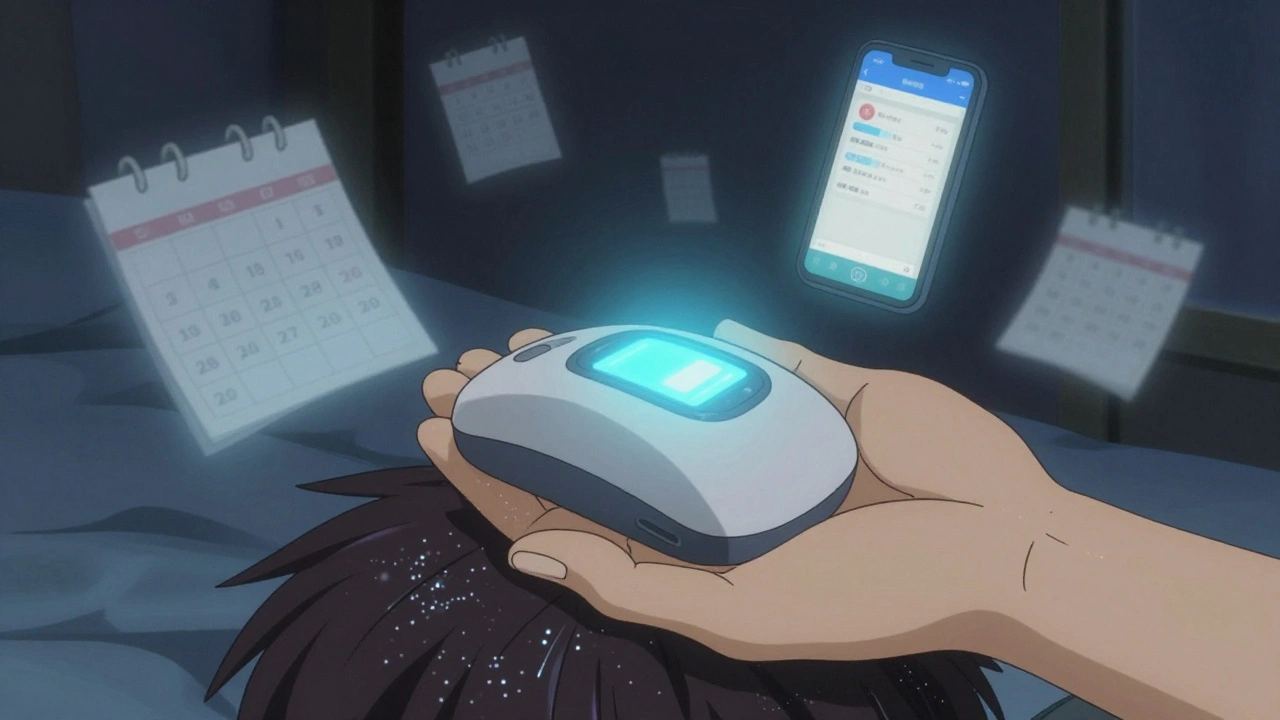
Success comes from discipline. People who use apps to log each session - like UC Davis Health patients - have 92% adherence. Those who guess their exposure? End up with red, peeling skin. Always start with a doctor’s dose. Never increase it yourself.
Combining Phototherapy With Topical Creams
Now here’s what actually works: pairing NB-UVB with topical medicines. Not depigmentation. Not oral drugs. Just creams.
Calcineurin inhibitors - like tacrolimus or pimecrolimus - are applied to patches before light sessions. They reduce inflammation right where the light hits. Mayo Clinic data shows this combo boosts repigmentation by 25-30%. It’s not magic. It’s science.
The newer option? Ruxolitinib cream (Opzelura). Approved by the FDA in 2022, it’s a JAK inhibitor that blocks the immune signal killing melanocytes. A 2023 trial showed that when paired with NB-UVB, 54% of patients got over 50% repigmentation in 6 months - compared to 32% with light alone. That’s a big jump.
Doctors are starting to use this combo more. It means fewer sessions. Faster results. Especially helpful for people who can’t commit to 100+ visits.
What Doesn’t Work - And Why
Don’t waste time on:
- Essential oils - no clinical proof
- Gluten-free diets - no link to vitiligo
- Herbal supplements like ginkgo biloba - small studies, no consistent results
- Stress-reduction alone - while stress can trigger flares, it won’t reverse the condition
These might feel helpful, but they don’t touch the autoimmune root. Phototherapy and topical JAK inhibitors do. Stick to what’s tested.

How Long Until You See Results?
Three months? Too soon. Six months? Maybe. Twelve months? That’s when real change shows up.
The 2017 JAMA review made it clear: you need at least 6 months to tell if phototherapy is working. Many patients quit at 3 months because they see nothing. That’s a mistake. Repigmentation starts deep in the hair follicles. It creeps out slowly. First, you’ll notice tiny dots of color around each hair. Then patches start to darken. It’s not dramatic. But it’s real.
One patient from UC Davis said: “After 9 months, I looked in the mirror and realized my face looked normal again. I cried.” That’s the goal. But it takes patience.
Cost, Insurance, and Access
Phototherapy is affordable compared to newer drugs. A full year of NB-UVB at a clinic costs $1,200-$2,500. Ruxolitinib cream? Over $5,000 a year. And it’s not always covered.
Insurance often limits how many sessions you can get per month. Some require prior authorization. Others cap you at 48 sessions a year. That’s not enough for most people. If your insurance denies coverage, ask your dermatologist to write a letter of medical necessity. Many get approved on appeal.
Home units are a smart investment if you’re committed. You pay upfront, but save on gas, time, and missed work. Plus, Medicare and some private insurers now cover them.
What’s Coming Next
The future of vitiligo treatment is smarter light. In October 2023, the FDA cleared the first AI-assisted phototherapy device - Vitilux AI. It uses your smartphone camera to analyze your skin tone and auto-adjusts your UV dose. In trials, it cut dosing errors by 37%.
Next up? Afamelanotide implants (under clinical trials) that boost natural pigment production. And genetic testing to predict who responds best to light therapy. Personalized treatment is coming.
But for now? NB-UVB + topical cream is your best bet. Not depigmentation. Not magic. Just science - slow, steady, and proven.
Can you combine phototherapy and depigmentation for vitiligo?
No. Phototherapy aims to restore pigment, while depigmentation removes the remaining pigment. They have opposite goals and are never used together. Depigmentation is only considered for patients with vitiligo covering over 80% of their body, where repigmentation is unlikely.
How long does phototherapy take to work for vitiligo?
You need at least 6 months of consistent treatment to see meaningful results. Most people start noticing small dots of color around hair follicles after 2-3 months. By 12 months, over half of patients achieve at least 50% repigmentation, especially on the face and neck. Hands and feet respond much slower.
Is home phototherapy as effective as clinic-based treatment?
Yes - studies show home NB-UVB units are just as effective as clinic treatments, with 78% of users achieving over 50% repigmentation compared to 82% in clinics. The bigger advantage is adherence: home users miss fewer sessions. But improper dosing can cause burns, so always follow your doctor’s initial settings and track sessions.
What’s the best phototherapy for vitiligo on the hands and feet?
Hands and feet respond poorly to all light therapies. NB-UVB still works best overall, but results are slow - often under 20% repigmentation even after a year. Combining it with topical ruxolitinib cream improves outcomes. Some dermatologists use excimer laser for stubborn patches, but it’s time-consuming. Patience and persistence are key.
Are there side effects from phototherapy for vitiligo?
NB-UVB is very safe. Common side effects include mild redness or dry skin. PUVA can cause nausea and increases long-term skin cancer risk. Home units carry a higher risk of burns if doses are misjudged. Always wear UV-blocking goggles and shield genitals. Long-term studies show no increased melanoma risk with NB-UVB, even after 15 years.
Can children get phototherapy for vitiligo?
Yes. NB-UVB is the preferred treatment for children because it’s non-systemic and doesn’t affect internal organs. Mayo Clinic data shows 85% of children with vitiligo receive NB-UVB. Treatment is adjusted for skin type and weight. Parents are trained to supervise home units. It’s safe, effective, and often more successful in kids than adults.
Does insurance cover vitiligo phototherapy?
Most insurance plans cover clinic-based NB-UVB, but often limit the number of sessions per month. Home phototherapy devices are covered by Medicare and some private insurers if you meet criteria (e.g., documented failure of topical treatments). Always get a letter of medical necessity from your dermatologist. Out-of-pocket costs can still be high - up to $1,000 a year - even with coverage.
What’s the success rate of NB-UVB for vitiligo?
After 6 months of NB-UVB, about 37% of patients get at least 50% repigmentation. After 12 months, that number rises to 56%. About 35% achieve 75% or more repigmentation. Success is highest on the face and neck (70-80%) and lowest on hands and feet (15-20%). Combining NB-UVB with topical ruxolitinib cream increases success to 54% at 6 months.
If you’re considering treatment, talk to a dermatologist who specializes in vitiligo. Don’t settle for generic advice. This isn’t a cosmetic issue - it’s a medical one with real, science-backed options. Start with NB-UVB. Add a topical cream if needed. And don’t quit before six months. Your skin will thank you.

Jack Arscott
Just started NB-UVB last week and already feel less alone. This post nailed it. 🙌
Priyam Tomar
Everyone’s acting like phototherapy is some miracle cure but half the people quit before 3 months. If you’re not willing to sit in a machine twice a week for a year, don’t bother. Just accept it and move on. 🤷♂️
Adrian Barnes
It is deeply concerning how many individuals conflate medical treatment with aesthetic preference. The notion that one can 'fix' vitiligo through light exposure reflects a profound misunderstanding of autoimmune pathology. Depigmentation is not a defeat-it is a rational, clinically validated choice for those whose disease burden exceeds therapeutic utility. To dismiss it as 'opposite' is to ignore patient autonomy and the nuanced reality of chronic disease management.
Lydia Zhang
My dermatologist said the same thing about depigmentation. No one talks about it but it’s real.
Michelle Smyth
The reliance on NB-UVB as a first-line modality is emblematic of a reductionist paradigm in dermatology-ignoring the epigenetic modulation of melanocyte stem cells and the cytokine cascades that underpin repigmentation dynamics. Ruxolitinib’s JAK inhibition is more promising, yet still fails to address the T-cell infiltration in the dermal-epidermal junction. We need targeted immunomodulation, not brute-force UV exposure.
Souvik Datta
I’ve been doing NB-UVB for 10 months. Started on my neck, now my chest is coming back. It’s slow. Some days you want to quit. But those tiny dots around your hairs? That’s your melanocytes whispering back. Don’t give up. You’re not broken. You’re healing. 💪
Patrick Smyth
My sister tried phototherapy for 2 years. Lost her job because she kept missing appointments. Now she uses monobenzone. She says she feels free. No more hiding. No more stares. No more ‘what happened to your skin?’ Please don’t romanticize this. Sometimes letting go is the bravest thing you can do.
Walker Alvey
Of course you’re supposed to combine phototherapy with creams why else would they sell them together? But you know what’s really funny? People think science is magic. It’s not. It’s just chemicals and light. You think your skin is gonna thank you? Nah. It’s just doing what it’s told. 😏
Matt Dean
Anyone else notice how every single study cited here is from the US or Europe? What about people in India or Africa? Do they even have access to this? Or is this just a rich person’s solution wrapped in science-speak?
Declan Flynn Fitness
Just got my home unit last month. Took me 3 weeks to stop being scared of it. Now I do it while watching Netflix. 2x a week. No more commute. No more awkward small talk with the nurse. The only burn I got? From my coffee mug. 🤓
patrick sui
As someone who’s studied immunology, I appreciate the clarity here. But let’s not forget the role of oxidative stress in melanocyte destruction. Antioxidants like catalase and vitamin E may not cure vitiligo, but they support phototherapy by reducing ROS damage. It’s not just light + cream-it’s a whole microenvironment we’re trying to reset.
Declan O Reilly
Just wanted to say thank you for writing this. I’m 17 and got diagnosed last year. Everyone told me to cover it up or wear makeup. But this? This made me feel like I could actually fight back. I started NB-UVB last week. I’m scared. But I’m trying. And that’s enough for today.
Irving Steinberg
So you’re telling me I have to pay $5000 for a cream that might work better than the $2000 light machine? And the insurance won’t cover it? Cool. Guess I’ll just stay white and pretend I’m a living art project 🤷♂️
Kay Lam
I’ve been living with vitiligo for over 20 years and I’ve tried everything. The truth is, there’s no one-size-fits-all. Some people get amazing results with phototherapy, others don’t. And some people, like my cousin, chose depigmentation and now they’re happier than they’ve ever been. The real issue isn’t the treatment-it’s the pressure to ‘fix’ yourself to fit into someone else’s idea of normal. You don’t have to choose between healing and acceptance. You can hold both. And that’s okay.