
Imagine waking up after a successful organ transplant, only to find your hands shaking so hard you can't hold a fork, or dealing with a crushing headache that won't quit. For many, this isn't a sign that the transplant is failing, but rather a side effect of the very medicine keeping the organ safe. Tacrolimus is a potent calcineurin inhibitor used to prevent organ rejection in kidney, liver, heart, and lung transplant recipients. While it's incredibly effective at stopping the body from attacking a new organ, it has a well-known downside: neurotoxicity. This neurological toxicity affects anywhere from 20% to 40% of patients, and the frustrating part is that it can happen even when your blood levels look perfect on paper.
Common Signs of Tacrolimus Neurotoxicity
Neurotoxicity isn't just one symptom; it's a spectrum. For most people, it starts subtly. The most frequent complaint is a fine tremor, usually in the hands. In fact, about 65-75% of people experiencing neurological side effects report this shaking. It's not just a nuisance; it can make writing a check or eating a meal surprisingly difficult.
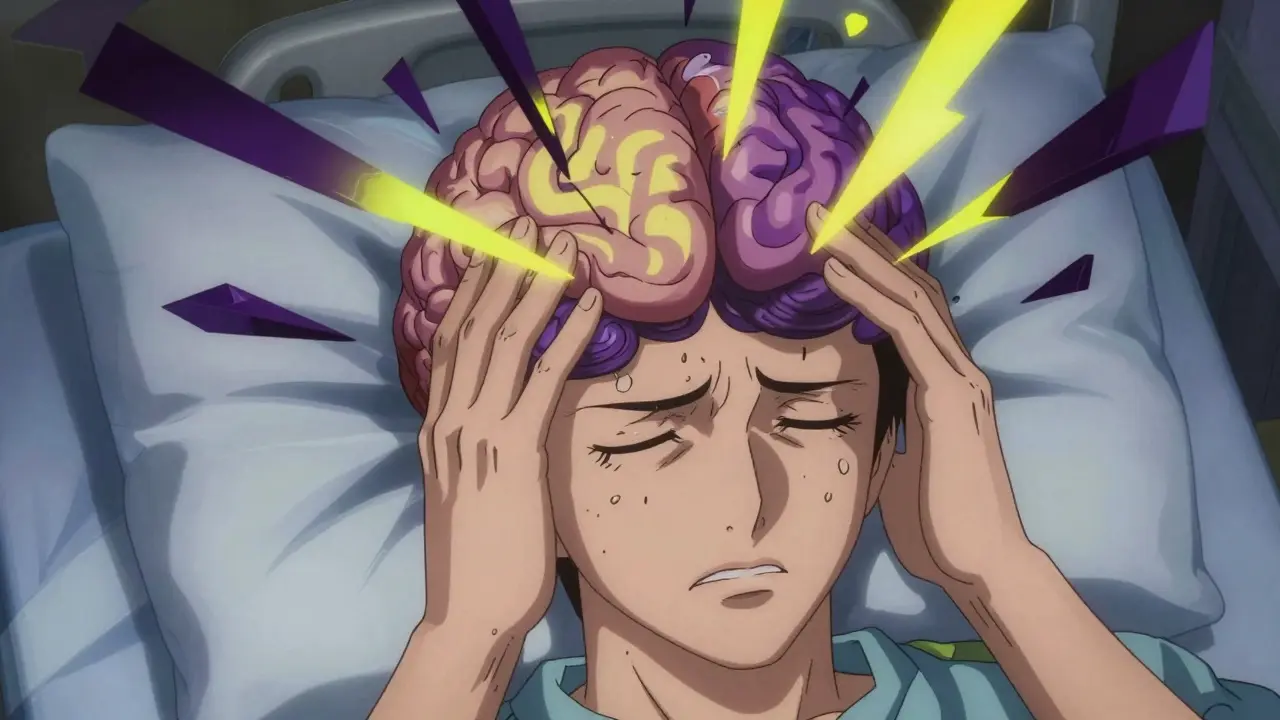
Then there are the "invisible" symptoms. Headaches are incredibly common, affecting roughly half of affected patients. Some describe them as constant and crushing. You might also experience insomnia or a "pins and needles" sensation known as paresthesia. While these are the common markers, there are rarer, more severe versions of this toxicity. In very small percentages of cases, it can lead to delirium, ataxia (loss of coordination), or even Posterior Reversible Encephalopathy Syndrome (PRES), which is a medical emergency involving brain swelling.
| Symptom | Estimated Frequency | Impact Level |
|---|---|---|
| Tremor | 65-75% | High (Affects daily activity) |
| Headache | 45-55% | Moderate to High (Persistent) |
| Insomnia/Paresthesia | 30-40% | Moderate (Sleep disruption) |
| Weakness/Somnolence | 10-20% | Moderate (Fatigue) |
| Delirium/Ataxia | 5-12% | Severe (Requires urgent care) |
Understanding Blood Level Targets
Doctors monitor Tacrolimus Trough Levels-the lowest concentration of the drug in your blood just before the next dose-to ensure the dose is high enough to prevent rejection but low enough to avoid toxicity. These targets vary depending on which organ you received.
For kidney transplant recipients, the target is usually between 5 and 15 ng/ml. For liver and heart recipients, it's typically slightly lower, ranging from 5 to 10 ng/ml. But here is the catch: tacrolimus neurotoxicity can happen even when you are right in the middle of these ranges. You might have a level of 7 ng/ml (well within the safe zone) and still experience significant tremors. This suggests that some people are simply more sensitive to the drug or have a more permeable blood-brain barrier, allowing the medication to affect the central nervous system more easily.
Why Some People React Differently
If the blood levels are "normal," why do some people get sick while others don't? The answer often lies in your genetics. Your body uses an enzyme called CYP3A5 to break down tacrolimus. Depending on your genetic makeup, you might be a "fast metabolizer" or a "slow metabolizer."
Research suggests that using genotype-guided dosing-where the doctor adjusts your starting dose based on your CYP3A5 status-can reduce the risk of neurotoxicity by about 27%. Essentially, instead of a one-size-fits-all dose, doctors can tailor the amount to how your specific liver processes the drug. Currently, this is mostly available at academic medical centers, but it's becoming a gold standard for preventing these neurological glitches.
The Organ Risk Gradient
Interestingly, the risk of neurotoxicity isn't the same for everyone. There is a clear gradient based on the organ transplanted. Liver transplant recipients seem to be the most vulnerable, with toxicity rates hitting around 35.7%. Kidney patients follow at 22.4%, then lung patients at 18.9%, and heart patients at the lowest rate of 15.2%. This variation may be due to the different physiological stresses associated with each type of surgery and the specific immunosuppressive cocktails used for those organs.
Managing Symptoms and Treatment Options
When neurotoxicity becomes unbearable, your medical team has a few levers they can pull. The first and most common step is a dose reduction. In some cases, reducing the dose even slightly (for example, from 0.1 mg/kg to 0.07 mg/kg) can make a tremor vanish within three days, all while keeping the patient in the therapeutic range.
If a dose drop doesn't work, doctors may switch the patient to Cyclosporine. While this drug is also a calcineurin inhibitor, it generally has a lower risk of neurotoxicity. However, this switch isn't without risk; some data indicates that switching to cyclosporine can increase the rate of acute rejection by 15-20%. It's a delicate balancing act between neurological comfort and organ survival.

Hidden Triggers and Risk Factors
Sometimes, the drug isn't the only culprit. Certain other medications and health conditions can "prime" your brain to be more sensitive to tacrolimus. For instance, if you have hyponatremia (low sodium levels in the blood, usually below 135 mmol/L), your risk of neurotoxicity spikes. In nearly 30% of mild cases, simply fixing the salt balance in the blood resolves the tremors without needing to touch the tacrolimus dose.
You also need to be careful with other drugs. Certain antibiotics like linezolid or carbapenems, and some antipsychotics like risperidone or olanzapine, can compound the effects of tacrolimus and increase the risk of seizures. If you are prescribed a new medication, always ask your transplant team if it interacts with your immunosuppressant.
Looking Forward: The Future of Immunosuppression
The medical community is moving toward a more personalized approach. We are seeing the rise of the TACTIC trial, which looks at combining genetic data, magnesium levels, and blood pressure control to create a personalized dosing algorithm. Even more exciting is the development of next-generation drugs like LTV-1. This compound is designed to be just as effective as tacrolimus at preventing rejection but is engineered to have limited penetration into the brain, potentially eliminating neurotoxicity altogether.
Can I have tacrolimus toxicity if my blood levels are normal?
Yes. A significant number of patients experience neurotoxicity-such as tremors or headaches-even when their tacrolimus trough levels are within the recommended therapeutic range. This is often due to individual sensitivity or differences in the blood-brain barrier.
What is the most common sign of neurotoxicity?
The most frequent symptom is a fine tremor, typically affecting the hands, which occurs in 65-75% of patients experiencing neurotoxicity. Headaches are the second most common symptom.
How is tacrolimus neurotoxicity usually treated?
Treatment typically involves reducing the tacrolimus dose or switching the medication to an alternative like cyclosporine. In some cases, correcting electrolyte imbalances, such as low sodium, can resolve the symptoms.
Does the type of transplant affect the risk of these side effects?
Yes, there is an organ-specific risk gradient. Liver transplant recipients have the highest rate of neurotoxicity (about 35.7%), followed by kidney, lung, and heart recipients.
What is CYP3A5 and why does it matter?
CYP3A5 is an enzyme that breaks down tacrolimus in the liver. Your genetic variation of this enzyme determines how quickly you process the drug. Genotype-guided dosing based on this enzyme can reduce the risk of neurotoxicity by about 27%.
Next Steps for Patients and Caregivers
If you notice new tremors or persistent headaches, don't wait for your next scheduled blood draw. Document exactly when the symptoms started and if they correlate with any other new medications or changes in diet. When speaking with your transplant team, specifically mention the term "neurotoxicity" and ask if your current blood levels are at the higher end of your target range.
For those already struggling, ask your doctor about your CYP3A5 genotype or if a slight dose adjustment is possible. Remember that these symptoms are common and manageable, and you don't have to simply "live with" the shaking or the pain.

Rauf Ronald
Spot on with the mention of sodium levels! I've seen so many people panic about their dosage when the real issue was just basic electrolyte imbalance. Always double check your labs before assuming the drug is the only villain here. Keep fighting the good fight everyone!
Del Bourne
It is truly fascinating how the CYP3A5 genotype can change the entire experience of a medication. For those of you tracking your symptoms, I highly recommend keeping a detailed daily log of your tremors and headaches. Having a concrete timeline makes it much easier for your medical team to justify a dose reduction, especially when your trough levels are technically within the target range. It takes the guesswork out of the equation and puts the focus back on your quality of life.
Darius Prorok
Everyone knows tacrolimus is just a blunt tool. The blood-brain barrier isn't a wall, it's a filter, and for some of us, that filter just doesn't work right. Simple as that.
Benjamin cusden
The mention of LTV-1 is the only part of this that actually matters. The current standard of care is archaic, relying on crude trough levels that barely correlate with actual tissue concentration. It is quite pedestrian to expect a one-size-fits-all approach to work for a complex biological system. Most clinicians simply follow the protocol without understanding the underlying pharmacokinetics, which is exactly why patients suffer through unnecessary neurotoxicity while their doctors stare at a 'normal' lab result.
Alexander Idle
Absolute nightmare!
GOPESH KUMAR
We focus so much on the chemistry of the drug that we forget the fragility of the human vessel. This whole struggle with blood levels is just a metaphor for the precarious balance of life itself. You try to save the organ, but you break the mind. It is the classic trade-off of modern medicine where we fix the part but ignore the whole. Most people just accept the tremors because they are told to, but that is where they fail to realize that quality of life is the only true metric of health.
Kathleen Painter
I just want to remind everyone that you aren't alone in this journey, and it's okay to feel overwhelmed by these side effects. It can be such a long and winding road to find the right balance, but please be patient with yourself and your body as you navigate these changes. Maybe we can all share some tips on how to handle the tremors in a way that feels natural and less stressful, because sometimes just acknowledging the struggle together makes the whole process feel a lot more manageable and less scary for those who are just starting their post-transplant life.
Windy Phillips
Typical... people just ignore the warning signs until it's too late!!! It's almost exhausting to watch people struggle with something so clearly documented... if they just listened to their bodies instead of trusting a piece of paper, they'd be fine!!!
jack hunter
why trust the doctors anyway they just want u to stay on the meds so they can keep charging for the follow ups... the whole idea of a gold standard is just a way to make us feel safe while we shake like leaves. its all a big game of guess work and we are the ones paying for it with our brains.
Jitesh Mohun
Stop whining about the tremors and just get the genetic test done like the post says. its not rocket science just ask for the cyp3a5 check and stop complaining about things you can fix with one blood test
Nikhil Bhatia
Too much reading but basically just lower the dose if you shake. Simple.