When you pick up a generic pill at the pharmacy, you expect it to work just like the brand-name version. But how does the FDA make sure that generic drug doesn’t lose its strength, break down, or become unsafe over time? The answer lies in stability testing-a rigorous, science-driven process that every generic drug must pass before it hits the shelf.
Why Stability Testing Matters for Generics
Stability testing isn’t just paperwork. It’s the backbone of patient safety. If a drug degrades, it might not work as intended. Worse, it could produce harmful impurities. The FDA requires generic manufacturers to prove their product stays stable under real-world conditions-heat, humidity, light, and time-just like the brand-name drug it copies.This isn’t optional. Under the Hatch-Waxman Act of 1984, which created the Abbreviated New Drug Application (ANDA) pathway, generic companies don’t need to repeat all the clinical trials done by the original maker. But they do have to prove their version behaves the same way over time. That’s where stability data comes in. Without it, the FDA won’t approve the drug.
What the FDA Actually Requires
The FDA’s expectations are detailed in guidance documents like Q1A(R2) and the 2018 ANDA Stability Q&A. Here’s what you need to know:- Three batches minimum: You can’t test just one batch. You need three, each made at pilot scale under current Good Manufacturing Practices (cGMP). These batches must represent the actual production process.
- Real-time and accelerated conditions: Long-term testing happens at 25°C ± 2°C and 60% ± 5% humidity-the conditions you’d expect in a typical medicine cabinet. Accelerated testing is done at 40°C ± 2°C and 75% ± 5% humidity to predict how the drug will degrade faster.
- Testing schedule: For products with a shelf life of 12 months or more, you test every 3 months in year one, every 6 months in year two, and then annually until the end of the proposed expiration date.
- What you test: It’s not just potency. You check for physical changes (color, texture), chemical degradation (impurities), microbial contamination, and even how well the dose delivers (like whether an inhaler still sprays correctly).
And here’s a key point: the container you use matters. If your pill comes in a blister pack, your stability tests must use the exact same packaging. Changing the bottle or seal after testing invalidates the data.
How Generic Stability Testing Differs from Brand-Name
You might think generics get a free pass because they copy existing drugs. They don’t. Both types must meet the same standards. But here’s the difference:- Brand-name companies have to figure out how their drug degrades from scratch. They run forced degradation studies-pushing the drug to its limits to map out every possible breakdown product.
- Generic manufacturers don’t need to do that. They can rely on the brand’s published degradation pathways. But they must prove their version follows the same pattern.
This saves time and money, but it doesn’t lower the bar. The FDA still expects full, independent data from the generic maker. You can’t just say, “The brand does it this way, so we will too.” You have to show it.
Common Reasons Generic Applications Get Rejected
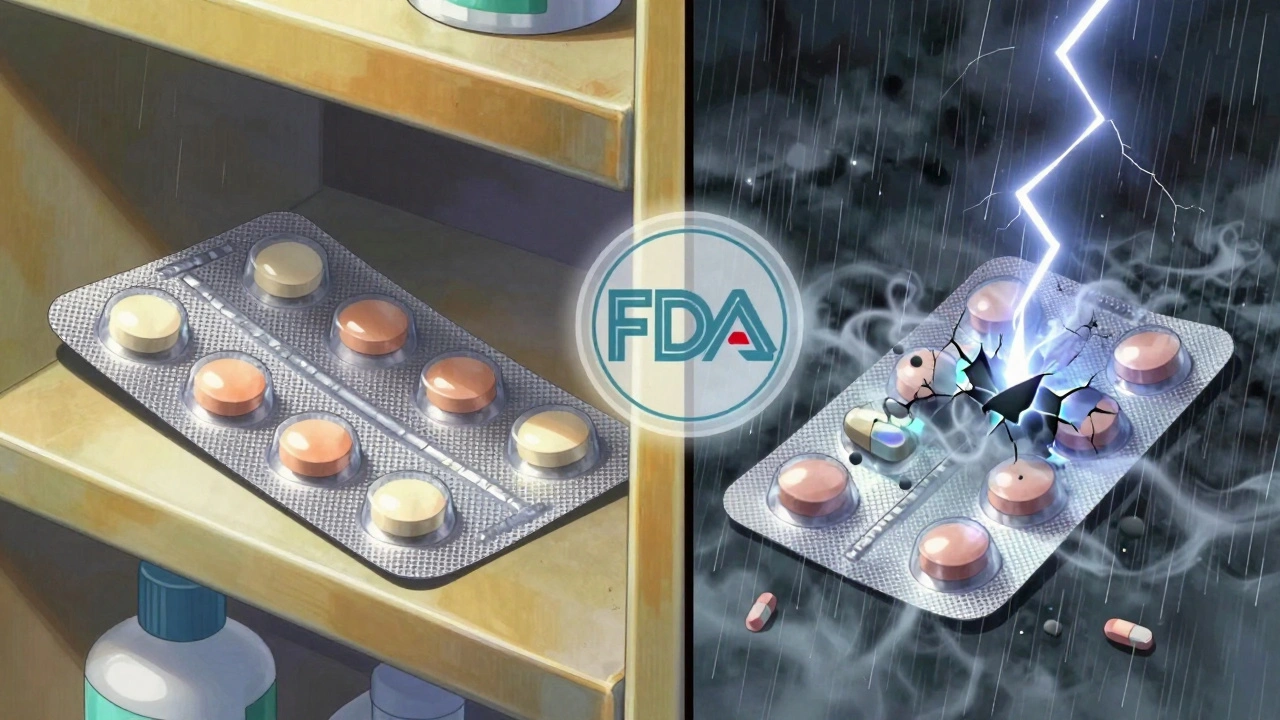
Stability issues are the #1 reason ANDAs get delayed. In 2019, nearly 35% of Complete Response Letters from the FDA cited stability deficiencies. Here’s what goes wrong most often:- Missing or vague protocols: If your test plan doesn’t clearly say how you’ll measure each attribute, the FDA will reject it. You need to reference specific USP chapters like <1151> and <1010>.
- Inadequate sampling: Not testing enough time points. Skipping months. Not testing all strengths or container sizes unless you’ve scientifically justified bracketing or matrixing.
- Unvalidated methods: Your lab’s testing method must prove it can detect degradation products accurately. If it can’t, the data is useless.
- Environmental control failures: Stability chambers must hold exact conditions. FDA inspections found 63% of generic manufacturers had temperature excursions above ±2°C. Even small shifts can ruin data.
One company we know lost six months on their ANDA because their stability chamber logged a 4.7°C spike during a power outage-and they didn’t have real-time alerts set up.
What’s Changing in 2025 and Beyond
The FDA isn’t standing still. In June 2025, they released a draft guidance proposing major updates:- 24-month stability data: Right now, you submit 6 months of long-term data and 6 months of accelerated data. Starting soon, you’ll need 24 months of real-time data for new applications. This means longer development times and higher costs.
- Quality by Design (QbD): You’ll need to build stability into the drug’s design from day one-not test it as an afterthought. That means understanding how ingredients, manufacturing steps, and packaging interact over time.
- Nanomaterials and biosimilars: New drug forms like nanoparticles or biosimilars require extra stability testing. Biosimilars, for example, now need 12 months of comparative data against the reference product under multiple conditions.
- Blockchain for data integrity: The FDA is piloting blockchain systems to verify stability data in real time. This could cut down on fraud and errors, but it also means manufacturers will need new digital infrastructure.
These changes aren’t coming to make life harder. They’re coming because the science has evolved. And because patients deserve drugs that are safe, even after sitting on a shelf for two years.
Costs and Challenges for Generic Manufacturers
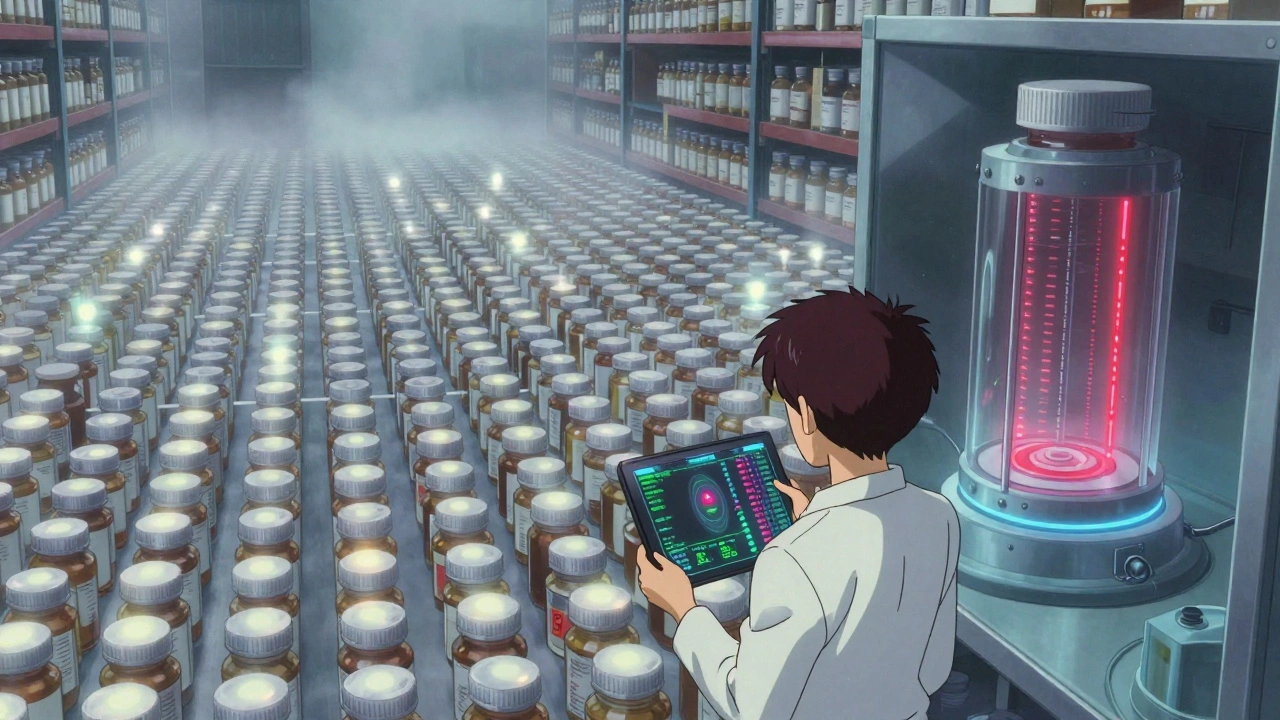
Stability testing isn’t cheap. According to Tufts Center for the Study of Drug Development, it averages $487,500 per ANDA-about 18.7% of total development costs. For small companies, that’s a huge burden.Indian manufacturers, who make up 40% of U.S. generic approvals, accounted for 63% of all stability-related rejections in 2022. Why? Many lack the automated monitoring systems, trained staff, or capital to meet modern standards.
But there’s hope. Companies that invest in automated environmental monitoring, pre-submission meetings with the FDA, and bracketing strategies (testing only a subset of strengths or sizes based on scientific justification) cut their deficiency rates by over 40%.
What Generic Companies Should Do Now
If you’re developing a generic drug, here’s your action plan:- Start early: Stability studies take years. Don’t wait until you’re ready to file your ANDA.
- Use validated methods: Make sure your lab’s tests are proven to detect degradation products. Don’t assume your HPLC method is good enough.
- Monitor your chambers: Install real-time temperature and humidity sensors with alerts. Document every deviation.
- Submit a clear protocol: Spell out every test, every time point, every specification. Reference USP standards explicitly.
- Consider QbD: Even if it’s not mandatory yet, designing for stability from the start will save you time later.
The bottom line: stability testing isn’t a hurdle-it’s the foundation of trust. Patients rely on generics to save money. The FDA relies on your data to protect them. Get it right, and you’re not just getting approved-you’re building a reputation for quality.
Do generic drugs need the same stability testing as brand-name drugs?
Yes. Both generic and brand-name drugs must meet the same FDA stability standards under ICH Q1A(R2). The difference is that brand-name companies develop degradation profiles from scratch, while generics use the brand’s data as a reference-but they must still prove their own product behaves the same way under testing conditions.
How long do stability studies take before an ANDA can be submitted?
You need at least 6 months of accelerated data (40°C/75% RH) and 6 months of long-term data (25°C/60% RH) to submit an ANDA. But full approval requires ongoing testing. The FDA expects you to continue long-term studies after approval to confirm the expiration date.
Can I test fewer batches or strengths to save money?
Yes, but only under specific conditions called bracketing or matrixing. Bracketing means testing only the extreme strengths in a range (e.g., 10mg and 100mg) and assuming the middle strengths behave the same. Matrixing means testing different batches at different time points. Both require scientific justification and FDA approval.
What happens if my stability data shows degradation?
If degradation exceeds limits, you must either shorten the expiration date, change the packaging, reformulate the product, or withdraw the application. The FDA will not approve a drug that degrades into unsafe impurities or loses potency too quickly.
Are there any shortcuts for older generic drugs already on the market?
For products with decades of proven safety and no formulation changes, the FDA may accept limited stability data under certain circumstances. But new ANDAs for those same drugs still require full testing. Any change in manufacturer, process, or packaging triggers a full stability review.
What’s Next for Generic Drug Stability
The future of generic drug approval is clearer, but more demanding. With new rules on 24-month data, QbD, and digital verification, manufacturers can’t afford to treat stability testing as a compliance checkbox. It’s a core part of product development.Companies that invest in better equipment, training, and early FDA engagement will get approved faster. Those who cut corners will keep getting rejected-and lose market share.
For patients, this means safer, more reliable medicines. For manufacturers, it means higher costs-but also higher credibility. In the end, stability testing isn’t just about meeting rules. It’s about proving you care enough to get it right.

nikki yamashita
Finally, someone explains why my generic blood pressure pill doesn’t turn into soup in my bathroom cabinet. Thanks for breaking this down-seriously, most people have no idea what goes into these things.
sandeep sanigarapu
From India, we see this daily. Many small labs struggle with chamber calibration. One wrong temperature spike and six months of work gone. FDA’s new 24-month requirement? Tough, but fair. Quality can’t be rushed.
Donna Anderson
omg i had no idea stability testing was this intense!! like, i just grab the cheap pill and go… but now i get why some generics get pulled. scary stuff!!
Laura Weemering
It’s not just about potency-it’s about existential integrity. The pill, in its container, is a silent testament to human precision-or its collapse. When humidity creeps in, it doesn’t just degrade chemically… it degrades symbolically. The pharmaceutical sublime, reduced to a blister pack.
And yet, we demand it be cheap. We demand it be everywhere. We demand it be perfect. But we don’t fund the chambers. We don’t train the technicians. We don’t audit the logs. We just… take it.
So when the 4.7°C spike happens-when the power fails, and the data is corrupted-we scream fraud. But who’s the real fraud? The manufacturer? Or the system that expects perfection without investment?
QbD isn’t a buzzword-it’s a moral obligation. To design stability into the molecule, into the packaging, into the supply chain… that’s not compliance. That’s reverence.
And yet, we treat it like a checkbox. Like a tax. Like something to be outsourced to the lowest bidder. The FDA isn’t being harsh. They’re the last priest standing in a temple we stopped worshipping.
Blockchain? That’s not tech-it’s grief. A digital tombstone for data we can no longer trust.
Patients deserve more than chemistry. They deserve dignity. And dignity costs money. And money? We’d rather spend it on avocado toast.
Rob Purvis
Just to clarify: bracketing isn’t a loophole-it’s a statistical necessity. If you test the highest and lowest strengths, and the excipients behave linearly across the range, you’re not cutting corners. You’re applying science. But you’ve got to document it like your license depends on it… because it does.
And yes, USP <601> and <61> are non-negotiable. If your protocol doesn’t cite them, the FDA will return it with a red stamp that says ‘unprofessional’.
Reshma Sinha
As someone working in a lab that’s had 3 ANDAs rejected for stability issues-this is gospel. We upgraded our sensors last year. Installed real-time alerts. Now we’re on track for approval. It’s not magic-it’s just doing the damn thing right.
Nathan Fatal
Reshma’s right. The real win isn’t just approval-it’s credibility. Once you get a clean ANDA, your reputation precedes you. The FDA starts taking your submissions seriously. That’s worth every dollar spent on environmental monitoring.
And for the record: no, you can’t just copy the brand’s stability protocol. You need your own data, your own batches, your own validation. The FDA doesn’t care if it’s ‘the same’-they care if you proved it.
Levi Cooper
Why are we letting foreign labs make our medicine? 63% of rejections come from India? That’s not a coincidence-that’s a national security risk. We should be making these pills here. With American workers. Under American standards.
Adam Everitt
the whole thing is kinda wild when you think about it… we trust a tiny pill to keep us alive… but the system that checks it? full of human error, broken sensors, and paperwork nightmares. we’re literally banking our health on a thermometer in a closet.