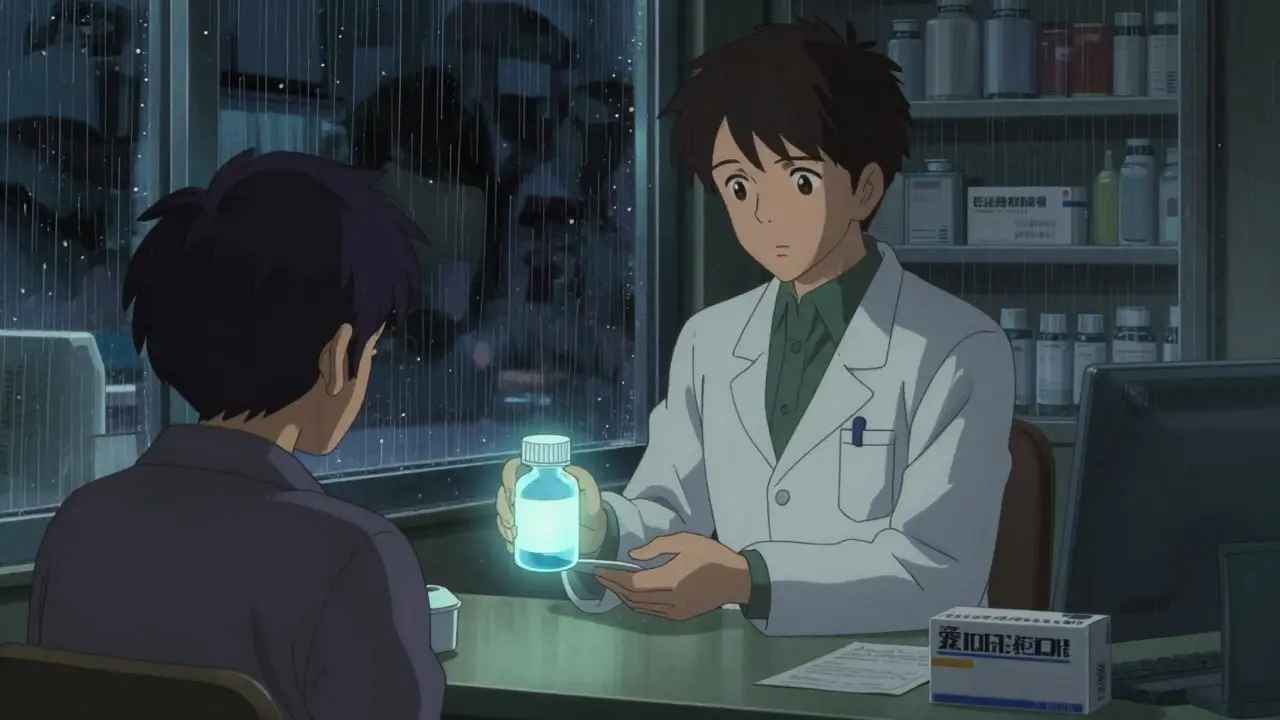
Every time you pick up a prescription, there’s a good chance the pill in your hand isn’t the brand-name drug your doctor wrote on the slip. It’s probably a generic. And in most states, you never had to say yes to that swap.
This isn’t a glitch. It’s the law. In 43 states and Washington, D.C., pharmacists are allowed to substitute generic drugs for brand-name ones without asking you first. That’s called presumed consent. You didn’t sign anything. You didn’t get a call. You didn’t even get a heads-up until you got to the counter - and even then, the label might be the only clue.
It’s not about cutting corners. It’s about saving money. Generic drugs work the same as brand-name ones. They have the same active ingredients, the same strength, the same way they’re absorbed by your body. The FDA says they’re interchangeable. But they cost 80% less on average. That’s how the U.S. healthcare system saves nearly $2 billion a year just from pharmacist substitutions.
But here’s the catch: not every state treats this the same. And not every drug is safe to swap without asking.
How Presumed Consent Works - And Where It Doesn’t
Presumed consent means the law assumes you’re okay with a generic unless you say otherwise. Pharmacists don’t need to ask for permission at the time of dispensing. But they do have to follow rules.
First, the drug has to be rated “A” by the FDA’s Orange Book. That’s the official list of therapeutically equivalent drugs. If it’s rated “A,” the FDA says it’s just as safe and effective as the brand. Most common pills - like lisinopril for blood pressure, metformin for diabetes, or atorvastatin for cholesterol - are A-rated.
But 7 states - Alaska, Delaware, Hawaii, Maine, Maryland, New Mexico, and West Virginia - plus D.C., require explicit consent. That means the pharmacist must ask you: “Do you want the generic?” before switching. If you say no, they have to give you the brand.
In the other 43 states, the pharmacist can swap without asking. But 31 of those states still require them to notify you after the fact. That notification might come on the prescription label, in a printed sheet, or through a digital message. It’s not always obvious. You might not even notice it unless you’re looking for it.
When Substitution Is Mandatory - And When It’s Not
Some states go further than presumed consent. In 19 states, including California, Texas, and Illinois, pharmacists are legally required to substitute generics whenever possible. They don’t get to choose. If a generic exists and isn’t blocked by the prescriber, they must dispense it.
That’s called mandatory substitution. It’s designed to push costs down even harder. But it doesn’t always lead to more substitutions than presumed consent. A 2019 study in Health Economics found that whether substitution is mandatory or just allowed doesn’t change how often it happens. The real driver is whether the pharmacist can assume you’re okay with it - which is why presumed consent states have higher generic use rates.
Generic dispensing rates in presumed consent states average 92.3%. In states that require explicit consent, it’s only 87.1%. That’s a 5% gap - and for a drug that costs $300 a month, that’s $15 in savings per prescription, per patient, per refill.
The Dangerous Exceptions: Narrow Therapeutic Index Drugs
Not all drugs are created equal. Some have what’s called a narrow therapeutic index - meaning the difference between a dose that works and a dose that harms is tiny. A little more or less in your bloodstream can mean the difference between control and crisis.
These are the drugs you don’t want swapped without your knowledge:
- Antiepileptic drugs (like phenytoin, carbamazepine, valproate)
- Warfarin (blood thinner)
- Levothyroxine (thyroid hormone)
- Lithium (for bipolar disorder)
- Cyclosporine and tacrolimus (organ transplant drugs)
In 15 states, including Tennessee, Hawaii, and New York, pharmacists are legally prohibited from substituting these drugs without explicit consent. Some states even require the prescriber to write “Dispense as Written” or “Do Not Substitute” on the prescription.
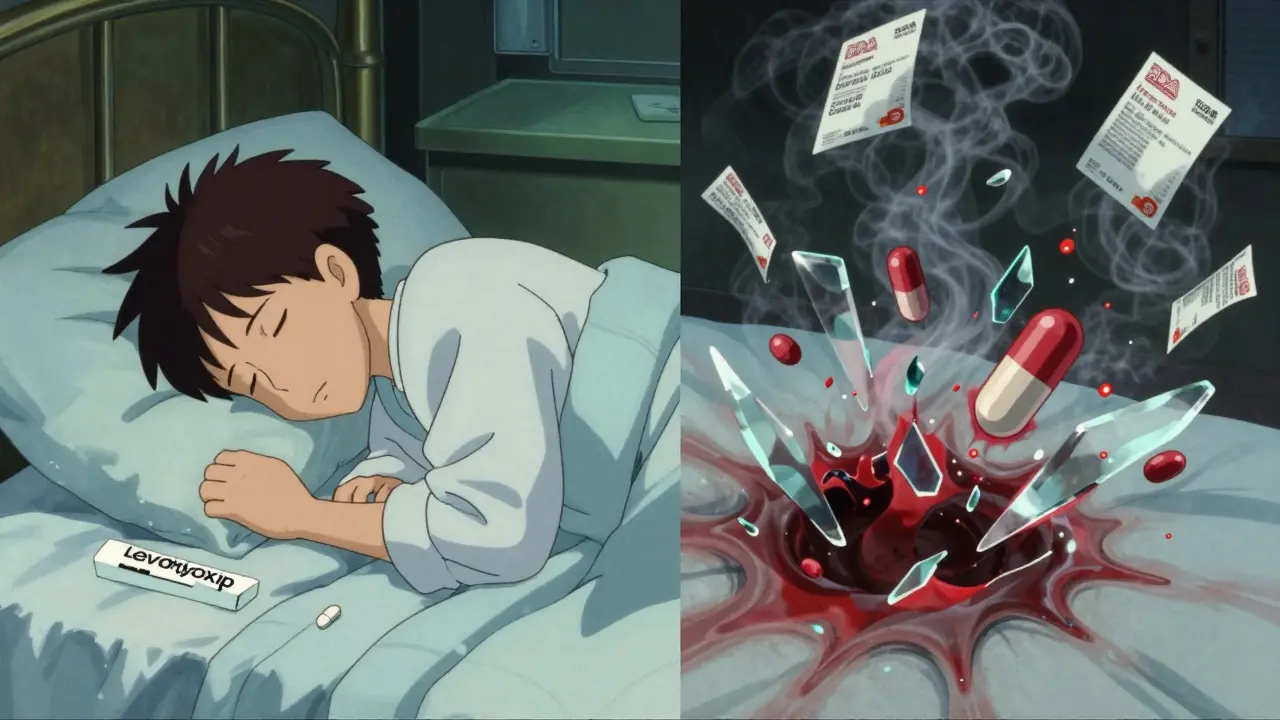
Why? Because there’s real evidence of harm. Between 2018 and 2022, the American Epilepsy Society documented 178 cases of breakthrough seizures linked to generic switches. In one case, a patient had been stable on brand-name phenytoin for 12 years. After a generic switch, her seizures returned. It took three months and three hospital visits to get back to the brand. She was lucky - others weren’t.
Even the FDA admits that while generics are bioequivalent, they’re not always bioidentical. The inactive ingredients - fillers, dyes, coatings - can affect how a drug is absorbed. For most people, it doesn’t matter. For a small percentage, it does.
Biosimilars: The Next Frontier
Now imagine a drug that’s not just a chemical copy - it’s made from living cells. That’s a biosimilar. Think insulin, rheumatoid arthritis drugs, or cancer treatments like adalimumab.
Unlike small-molecule generics, biosimilars aren’t exact copies. They’re “highly similar.” The FDA says they’re safe, but the body’s immune system can react differently. That’s why substitution rules are stricter.
Only 46 states allow automatic substitution of interchangeable biosimilars. Four states - North Carolina, Oklahoma, Pennsylvania, and Texas - ban it entirely. In most other states, the pharmacist must get your permission, even if the drug is rated interchangeable.
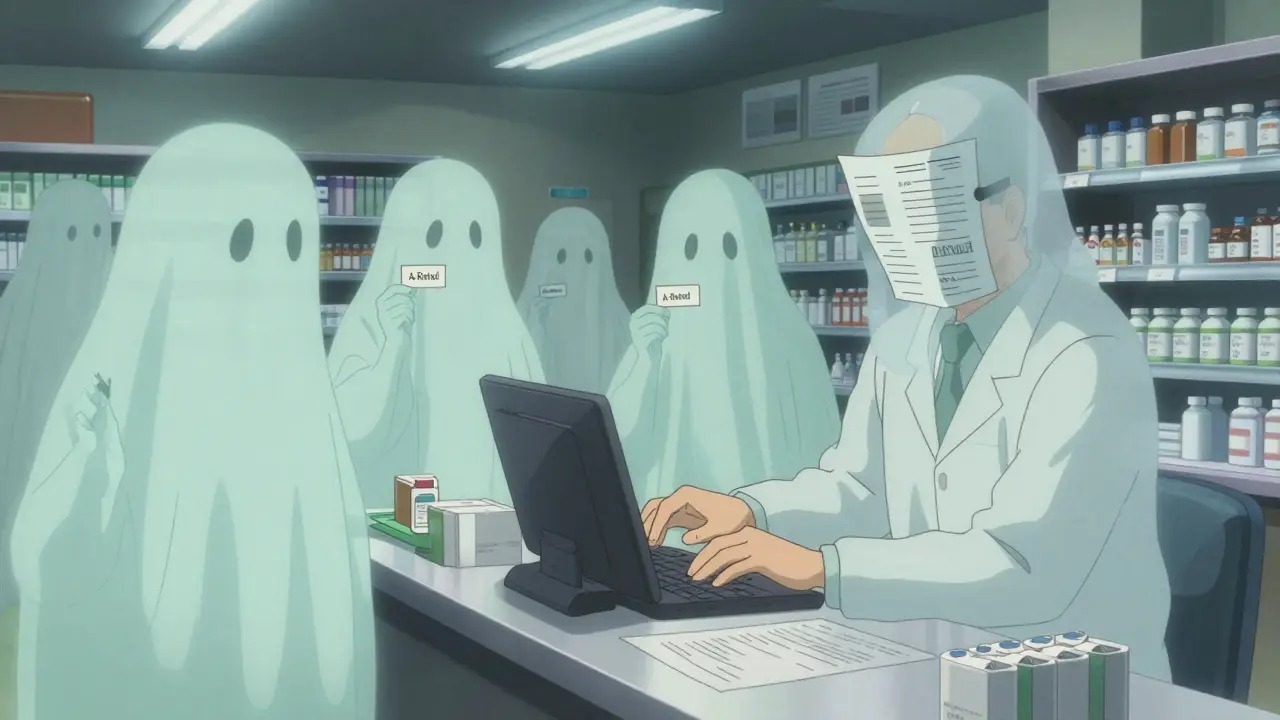
And here’s the kicker: many pharmacists don’t even know if a drug is a biosimilar. The label doesn’t always say. The prescription system doesn’t flag it. That’s why 2023 saw a surge in pharmacist complaints about confusion in the pharmacy.
What You Can Do - And What Pharmacists Wish You Knew
You don’t have to accept a substitution you didn’t agree to. Here’s how to take control:
- Check your prescription label. If the name doesn’t match what your doctor wrote, ask: “Was this switched?”
- Look for a sticker or insert that says “Substituted for [brand name].” That’s the legal notification.
- If you’re on a narrow therapeutic index drug, tell your pharmacist: “I don’t want any substitutions.” Ask them to note it in your file.
- Ask your doctor to write “Dispense as Written” on your prescription. It’s legal, and it stops the swap.
- If you notice side effects after a switch - fatigue, dizziness, seizures, bleeding - call your pharmacist and doctor immediately. Don’t wait.
Pharmacists aren’t trying to trick you. Most of them want you to save money. But they also know the risks. In a 2023 survey, 78% of pharmacists in presumed consent states said they’re confident in the system - but 41% said they struggle with special rules for high-risk drugs.
One pharmacist in Ohio told Reddit: “95% of patients don’t care. But the 5% who do? They lose trust in the whole system.”
The Bigger Picture: Savings vs. Safety
Presumed consent laws save the U.S. healthcare system an estimated $1.68 trillion over the last decade. Generic drugs make up 90% of all prescriptions but only 15% of drug spending. That’s a massive win for Medicare, Medicaid, and private insurers.
But the cost isn’t just financial. It’s psychological. Patients who feel like they weren’t consulted report lower trust in their care. That’s why states like New York and California are now requiring electronic notifications - so there’s a digital trail you can access later.
Experts agree: presumed consent works for most drugs. But for a small group of high-risk medications, it’s too risky. The American College of Clinical Pharmacy says: “Presumed consent should not apply to drugs where small variations can cause harm.”
The future? A tiered system. The National Academy for State Health Policy is pushing for a model where most drugs can be swapped automatically - but the high-risk ones require your permission. That’s already happening in 12 states. More will follow.
For now, the system is a patchwork. You’re not wrong to be cautious. You’re not being difficult. You’re just paying attention - and that’s exactly what the system should encourage.
Frequently Asked Questions
Can my pharmacist switch my brand-name drug without telling me?
In 43 states and Washington, D.C., yes - they can switch your brand-name drug to a generic without asking you first. But 31 of those states require them to notify you after the fact, usually on the prescription label or with a printed notice. In the remaining 7 states and D.C., they must ask you before switching.
Are generic drugs really as good as brand-name ones?
For most drugs, yes. The FDA requires generics to have the same active ingredient, strength, dosage form, and route of administration as the brand. They must also be absorbed into your bloodstream at the same rate and to the same extent. But for a small number of drugs - like antiseizure meds or blood thinners - even tiny differences in how they’re made can affect how your body responds.
What should I do if I think a generic made my condition worse?
Stop taking it and call your doctor and pharmacist immediately. Keep the original bottle and packaging. Ask your pharmacist to confirm whether a substitution occurred. If you’re on a narrow therapeutic index drug, your doctor can write “Dispense as Written” on future prescriptions. Report the issue to the FDA’s MedWatch program - your experience helps improve safety.
Can I request the brand-name drug even if a generic is available?
Yes - you can always ask for the brand. In states with presumed consent, the pharmacist must honor your request. In mandatory substitution states, the pharmacist can still give you the brand if you pay the difference in price. Your doctor can also write “Do Not Substitute” on the prescription to prevent any switches.
Why do some states require consent and others don’t?
It’s a mix of history, politics, and pharmacy lobbying. States with stronger patient advocacy groups tend to require consent. States with high generic use and lower drug costs favor presumed consent. There’s no federal standard, so each state sets its own rules - which is why it’s so confusing for patients and pharmacists alike.
Next Steps: What to Do Right Now
If you’re on a chronic medication - especially for epilepsy, thyroid, heart disease, or mental health - check your last few prescriptions. Did the name change? Did you get a notice? If not, call your pharmacy and ask if substitutions are allowed for your drug.
Ask your doctor: “Is this a drug that should never be switched?” If the answer is yes, get them to write “Dispense as Written” on the prescription. Keep a copy of that note in your phone or wallet.
Download your state’s pharmacy board website. Most have free PDF guides listing which drugs can’t be substituted. Keep it handy. You’re not being paranoid - you’re being informed.

Lynsey Tyson
I never realized pharmacists could swap my meds without telling me. I thought I was just getting cheaper pills, not being experimented on. That’s wild.
My grandma’s thyroid med got switched last year and she went from fine to dizzy and tired for weeks. No one told us until we asked.
Now I check every label like a hawk. Seriously, why isn’t this more common knowledge?
Edington Renwick
Oh please. This isn’t a crisis. It’s capitalism. You want brand-name drugs? Pay for them.
Everyone else is saving hundreds a year because you’re not the center of the universe.
Also, if your body can’t handle a generic, you’re probably allergic to money.
Grow up.
Allison Pannabekcer
There’s a real balance here. Most generics are totally fine-like, 95% of the time you won’t even notice.
But for people on warfarin or epilepsy meds? That’s not just a switch, it’s a gamble with their life.
I work in a pharmacy and we’ve had patients cry because they didn’t know their seizure med got swapped.
It’s not about distrust-it’s about dignity. You deserve to know what’s going into your body.
And honestly? A simple sticker on the bottle or a text alert would fix 90% of this.
Why make people dig for info? We’re not in the 90s anymore.
Also, biosimilars are a whole other beast. I’ve seen pharmacists confused too.
It’s not their fault-systems aren’t built for transparency.
Let’s fix the tech, not blame the patients who care.
And yes, I’ve told my doctor to write ‘dispense as written’ on my lithium script.
Worth the extra $20. Peace of mind is priceless.
And if you’re on one of those narrow index drugs? Don’t wait until you’re in the ER to ask.
Be proactive. Your body will thank you.
And pharmacists? We see you trying. We’re just as frustrated as you are when the system fails.
Sarah McQuillan
Oh so now we’re letting the government control our medicine? Next they’ll tell us what toothpaste to use.
China’s behind this. I know it. The generics are all made in labs that don’t even have running water.
And the FDA? Totally bought off.
My cousin’s cousin’s neighbor had a heart attack after a generic switch-she died in the parking lot of CVS.
And no one talks about it because Big Pharma doesn’t want you to know.
Wake up.
They’re putting poison in your pills and calling it ‘savings’.
Also, why do you trust a computer to decide what’s safe for your body?
It’s not science-it’s control.
And don’t get me started on biosimilars. Those are alien drugs.
They’re made with… cells. From animals. I’m not kidding.
Don’t be a sheep. Say NO to the swap.
Write it on your arm if you have to.
LOL. I’m not even joking.
Send this to 10 people. Or else.
:-(
Aboobakar Muhammedali
India also does this but we call it generic substitution and everyone knows it's coming
My aunt takes blood thinner and she always asks for brand name
Pharmacist just smiles and says 'yes madam' and gives it
No drama
But here in US it feels like a conspiracy
Maybe because we don't talk about medicine like we talk about food
Simple thing
Just ask
And if you're scared
Write it down
And keep it
Simple
Peace
anthony funes gomez
Presumed consent as a legal construct is a de facto utilitarian heuristic applied to pharmaceutical distribution-optimized for aggregate cost-efficiency under the assumption of bioequivalence as a sufficient condition for therapeutic equivalence.
But bioequivalence ≠ bioidenticality.
The pharmacokinetic variance in inactive excipients-particularly in high-surface-area, low-solubility compounds-can induce clinically significant inter-individual variability in absorption kinetics.
Especially in drugs with a narrow therapeutic index (NTI), where the therapeutic window is <1.5x the minimum effective concentration.
Thus, the current regulatory framework is statistically sound but clinically negligent for NTI drugs.
And the FDA’s Orange Book rating system is fundamentally flawed-it does not account for formulation variance across manufacturers.
It’s a regulatory fiction.
And the fact that pharmacists are legally mandated to substitute without consent in 43 states? That’s not policy-it’s institutionalized negligence.
Also, biosimilars are not generics.
They’re complex biologics with inherent heterogeneity.
Automatic substitution without clinician or patient consent? That’s not innovation.
That’s recklessness dressed in administrative jargon.
And no one’s talking about the liability implications.
Who’s responsible when a patient has a breakthrough seizure?
The pharmacist?
The prescriber?
The state board?
The manufacturer?
It’s a legal black hole.
And we’re all just clicking ‘accept’ on the terms of service.
And we wonder why trust in healthcare is collapsing.
Laura Hamill
They’re lying to you. I know it. The pills are different. They make you sleepy. They make you cry. They make you forget your own name.
And they’re watching you through the bottle. The label has a chip. I saw it.
My cousin’s ex-boyfriend works at a pharmacy and he said they put tracking stuff in the generics.
It’s to control the poor.
And the FDA? They’re in cahoots with the big pharma CEOs.
They’re all billionaires who drive Ferraris.
And your thyroid? It’s a robot now.
Don’t trust the label.
Don’t trust the pharmacist.
Don’t trust the doctor.
Call your senator.
Or else.
:-(
Alana Koerts
This article is just a long list of obvious things wrapped in fluff.
Everyone knows generics are cheaper.
Everyone knows some drugs are sensitive.
So what?
You’re not educating anyone.
You’re just rehashing FDA guidelines.
And that ‘pharmacist in Ohio’ quote? That’s not a quote. That’s a made-up soundbite.
Where’s the source?
Also, ‘$1.68 trillion saved’? That’s a made-up number with no citation.
Lazy writing.
And you call this journalism?
Pathetic.
pascal pantel
Let’s be real. The entire system is rigged. The FDA’s bioequivalence standards are laughably loose.
For NTI drugs, the allowed variance is 20%-that’s not ‘equivalent’-that’s a gamble.
And the states that require consent? They’re outliers.
Why? Because they’re politically weak.
Meanwhile, Texas and California force substitution because they’re trying to cut Medicaid costs.
They don’t care about your seizures.
They care about their budget line.
And pharmacists? They’re just cogs.
They don’t have time to explain.
They’re running 10 scripts a minute.
So you get what you get.
And if you’re lucky, you’ll notice the label change before your heart stops.
That’s not healthcare.
That’s roulette with your life.
And the fact that you’re surprised? That’s the problem.
You’ve been asleep for 20 years.
Wake up.
And stop pretending this is about savings.
It’s about power.
And you’re powerless.
Gloria Parraz
I just want to say-you’re not alone.
If you’ve ever felt like your medication switch was handled without care, that feeling is valid.
I’ve been there.
My anxiety meds got swapped and I felt like I was drowning for two weeks.
I didn’t know why.
Then I checked the label.
It wasn’t my brand.
I called my pharmacist.
They apologized.
They changed it back.
And now I have a note in my file.
And I tell every person I know: check your label.
It’s not being paranoid-it’s being smart.
You’re not asking too much.
You’re asking for basic respect.
And if your doctor says ‘it’s fine’-ask them to write ‘dispense as written’.
It’s your right.
You’ve got this.
And you’re not crazy for caring.
Keep going.
You’re doing great.
Sahil jassy
in india we dont have this problem because pharmacy is simple
you ask for brand they give you
you ask for generic they give you
no magic
no hidden rules
just talk
and if you are sick
you talk more
and pharmacist listens
no need for laws
just kindness
peace
and if you want brand
you pay extra
no drama
:)
Nicole Rutherford
Wow. You’re really worried about your pills? How cute.
Maybe if you didn’t take so many drugs, you wouldn’t care so much.
Also, your ‘narrow therapeutic index’ drugs? You’re probably just anxious.
And that ‘breakthrough seizure’ story? Probably just stress.
People get better on generics.
Why are you so obsessed with brand names?
It’s not about safety.
It’s about ego.
And now you’re making everyone else feel guilty for saving money?
Grow up.
And stop acting like you’re the only one who’s sick.
Some of us have real problems.
Not pill drama.
Mark Able
Hey I just read this and I had to say something
My dad’s on warfarin and they switched his pill last month and he started bleeding from his gums
They didn’t tell us
I found out because I saw the bottle
He’s fine now but I’m furious
Why didn’t they call?
Why didn’t they ask?
Why is this legal?
Can I sue?
Can we start a petition?
Can I text everyone I know?
Someone please help
My dad’s 72
He didn’t ask for this
And now I’m scared to let him take any pill ever again
What do I do?
Is this normal?
Is this really happening?
Why doesn’t anyone talk about this?
Help.
Chris Clark
Y’all in the US are wild.
In Mexico, you just ask the pharmacist: ‘¿Es genérico?’
If they say yes, you say ‘no gracias’ and pay extra.
No forms.
No labels.
No laws.
Just ask.
And if they try to give you the generic anyway?
You say ‘no’ and they laugh and give you the brand.
It’s that simple.
Here? You need a PhD to understand your own prescription.
Why?
Because bureaucracy.
And fear.
And money.
And no one wants to say ‘I don’t know’.
So they just swap.
And you pay the price.
Not in dollars.
In trust.
And that’s the real cost.
Edington Renwick
Wow. So now we’re turning every pharmacy into a therapy session?
Someone’s dad bled from his gums and now we’re all supposed to panic?
One bad case doesn’t invalidate a system that saves billions.
And if you want to be extra safe? Pay for the brand.
Don’t make everyone else suffer because you’re emotionally overwhelmed.
Also, ‘can I sue?’ No.
Because you didn’t read the label.
That’s on you.
Not the system.
Grow up.