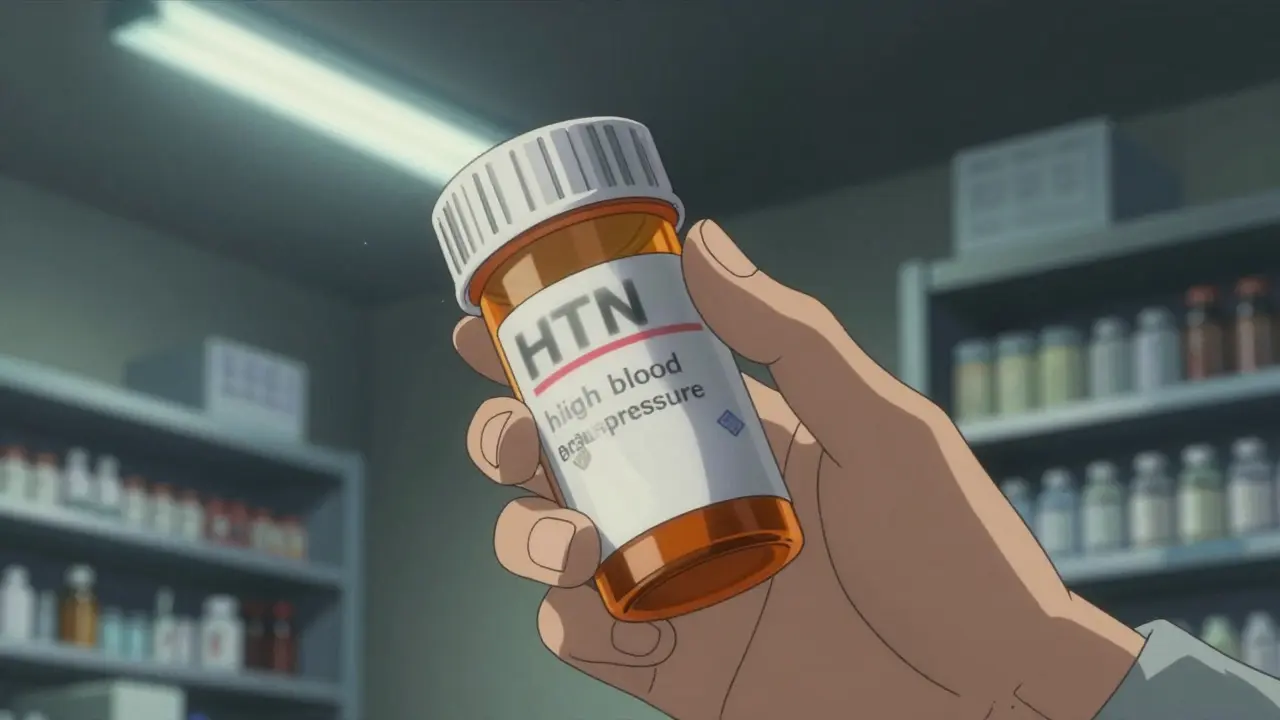
You pick up your prescription, open the bottle, and stare at the label. It’s different from last time. The font is smaller. The instructions are worded differently. The reason for the medicine? Gone. You feel confused. You’re not alone. Millions of Americans face this every time they refill a prescription - and it’s not an accident. It’s the result of a broken system.
Why No Two Prescription Labels Are the Same
There’s no federal law in the U.S. that says how a prescription label must look. The FDA requires that labels include your name, the drug name, dosage, and directions. That’s it. Everything else? Up to the pharmacy. And with over 60,000 pharmacies across the country - from small independents to big chains like CVS, Walgreens, and Walmart - you get a different design every time.One pharmacy uses bold, all-caps instructions. Another uses sentence case with plenty of white space. One includes the reason you’re taking the medicine - like “for high blood pressure.” Another just says “HTN.” One prints the pharmacy’s phone number in 10-point font. Another uses 8-point. And if you refill at a different location, even within the same chain, the label might change again because they’re using a different software system.
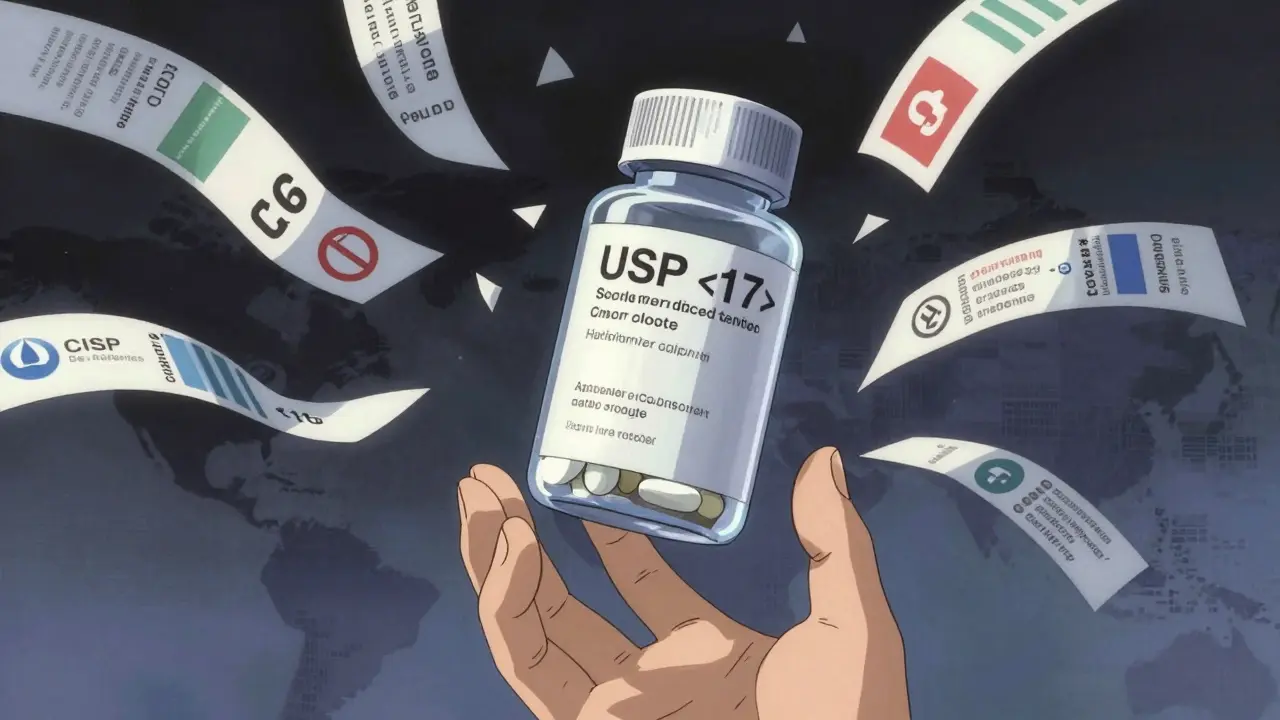
This isn’t random. It’s a patchwork of rules. The U.S. Pharmacopeial Convention (USP) released clear, science-backed guidelines in 2012 called General Chapter <17>. These standards say: use sans-serif fonts like Arial, keep line spacing at 1.5, avoid all caps, use black text on white background, and always include the reason for the medication. They even say to write “take one pill twice a day” instead of “take one tablet BID.” But here’s the catch: these are voluntary. Only 28 states have adopted them fully. The rest? They make their own rules.
What States Are Adding to the Confusion
Texas requires the prescription ID number to be at least 10-point font. California demands bilingual labels for certain medications. New York mandates that the pharmacy’s license number be printed on the label. Florida requires the prescriber’s DEA number. Some states say the label must include the dispensing date. Others don’t. One pharmacy in Seattle might follow USP standards. The one down the street in Spokane might follow Washington State’s version - which is different.It gets worse. Pharmacy management systems - the software that prints your label - vary wildly. There are about a dozen major systems used nationwide. Each one has its own default template. Switching from one pharmacy to another isn’t just changing locations - it’s switching software. And that software doesn’t always talk to the next one. So your label changes shape, size, and wording, even if you never changed doctors or medications.

Why This Isn’t Just an Inconvenience - It’s Dangerous
In 2021, the National Community Pharmacists Association found that 68% of patients had trouble understanding their prescription labels at least sometimes. One in five said they’d made a medication error because of it. One Reddit user shared how they took double their blood thinner dose because the refill label changed from “once daily” to “daily” - and they assumed it meant the same thing. Another person skipped their insulin because the label didn’t say “take with food.”Dr. Michael Cohen of the Institute for Safe Medication Practices says name confusion and unreadable labels are the #1 reason for medication errors. He estimates that if every label followed USP <17> standards, medication errors would drop by 30-40%. That’s not theoretical. A 2021 study in the Journal of the American Pharmacists Association found pharmacies using standardized labels saw a 27% drop in patient calls asking for clarification - and a 19% increase in people taking their meds correctly.
And it’s not just about reading. Older adults, people with low vision, non-English speakers, and those with learning differences are hit hardest. If your label doesn’t use high contrast, large fonts, or plain language, you’re being set up to fail.
Who’s Trying to Fix This?
The FDA doesn’t regulate patient-facing labels - only the professional ones doctors use. But pressure is building. In 2022, the Biden administration made standardized prescription labeling part of its Patient Safety Action Plan, with a goal of 90% state adoption by 2026. CVS Health, one of the biggest pharmacy chains, announced in April 2023 that it would roll out USP <17> labels across all 10,000+ locations by the end of 2024. Their pilot in 500 stores cut label-related questions by 33%.Some states are catching up. Minnesota, Oregon, and Colorado now require the reason for the medication to be included. Illinois and New Jersey have updated their rules to match USP font and spacing standards. But progress is slow. Only 15 states have full implementation. That means if you move, travel, or switch pharmacies, you’re back to guessing.
What You Can Do Right Now
You don’t have to wait for the system to fix itself. Here’s what works:- Ask for a plain-language version. Say: “Can you print this with the reason for the medicine and simple instructions?” Most pharmacists will do it - if they know to.
- Request large print, audio, or braille. By law, pharmacies must offer accessible formats. Only 38% do it consistently, but you’re entitled to it. Ask for it. If they say no, ask to speak to the pharmacist-in-charge.
- Take a photo of your label. Keep a digital copy on your phone. When you refill, compare it. If it changes, ask why.
- Use a pill organizer with printed instructions. Some come with QR codes that link to audio instructions.
- Check your pharmacy’s app. Many now let you view your label digitally - and some even let you customize the text.
One woman in Seattle started keeping a notebook next to her meds. She wrote down what each pill was for, when to take it, and how it looked on the label. “I didn’t trust the bottle anymore,” she said. “Now I trust my notes.”
The Future of Prescription Labels
The market is shifting. Smart pill bottles with Bluetooth chips are rising in popularity. Apps like Medisafe and MyTherapy now scan your physical label and turn it into a clean, consistent digital version. They can send reminders, translate instructions, and flag interactions. These tools are filling the gap left by broken labels.But the real fix? Regulation. When the FDA finally steps in - and experts say it’s coming within the next few years - it won’t be about style. It’ll be about safety. The cost of medication errors in the U.S. is $29 billion a year. Inconsistent labels are responsible for 8-12% of those errors. That’s not just a healthcare issue. It’s a financial one.
For now, you’re stuck with a system that’s outdated, fragmented, and dangerous. But you’re not powerless. You can ask. You can demand. You can protect yourself. Because your life depends on reading that label correctly - and right now, too many people can’t.
Why do prescription labels look different at different pharmacies?
There’s no federal law that standardizes how prescription labels look in the U.S. The FDA only requires basic info like your name, drug name, dosage, and directions. Everything else - font size, spacing, whether to include why you’re taking the medicine, or the pharmacy’s phone number - is decided by individual states or the pharmacy’s software system. With over a dozen different pharmacy management systems and 50 different state rules, labels vary widely even within the same chain.
Are there any standards for prescription labels?
Yes. The U.S. Pharmacopeial Convention (USP) released General Chapter <17> in 2012, which sets clear guidelines: use sans-serif fonts like Arial, 1.5 line spacing, black text on white, sentence case (not all caps), and include the reason for the medication (e.g., “for high blood pressure” instead of “for HTN”). These are evidence-based and proven to improve understanding. But they’re voluntary. Only 28 states have adopted them, and only 15 have full compliance.
Can I ask my pharmacy to change my label?
Absolutely. You have the right to request a label with plain language, larger font, or even audio or braille. Pharmacies are required by law to provide accessible formats upon request. If the technician says no, ask to speak to the pharmacist-in-charge. Many will happily re-print your label - especially if you explain you’ve had trouble understanding it before.
Why doesn’t the FDA make labels the same everywhere?
The FDA regulates the scientific information on drug packaging for doctors and pharmacists - not the labels patients see. Patient-facing labels fall under state pharmacy boards, which have their own rules. The FDA has issued draft guidance on improving patient understanding, but turning that into a federal law takes years. Industry resistance, cost concerns, and the complexity of coordinating 50 state systems have slowed action - even though medication errors cost $29 billion a year.
What should I do if I can’t read my prescription label?
Don’t guess. Call your pharmacy and ask for help. Request a large-print version, audio instructions, or a printed copy with simplified language. If you have vision problems, ask if they offer braille or talking labels. Many pharmacies now have apps where you can view your label digitally - and some let you customize the text. Keep a written note of your meds, doses, and reasons. Never rely on a single label - especially if it changes between refills.
If you’ve ever stared at a prescription label and thought, “What does this even mean?” - you’re not crazy. The system is broken. But you can take control. Ask for clarity. Demand better. Your health depends on it.

Yuri Hyuga
Wow. I’ve been on the same med for 5 years and never realized how chaotic this system is. 🤯 I thought I was just getting older and forgetful-turns out, the label changes every time like it’s playing roulette. This needs to be a federal law. No one should have to become a detective just to take their own pills. 💪
Coral Bosley
This is a goddamn outrage. I’ve missed doses because the word 'daily' was used instead of 'once daily'-and I didn’t know if that meant once a day or every day of the week. I’m not stupid. I’m just tired of being treated like a child by a system that doesn’t care if I live or die.
Steve Hesketh
Bro, I’m from Nigeria and we don’t even have this problem. Our pharmacies print one label, in one font, with the reason, the dose, and the time-clear as day. Here? You need a PhD just to read your blood pressure pill. And don’t even get me started on the tiny phone numbers-you need a magnifying glass and a flashlight to call them. This isn’t healthcare. It’s a glitch in the matrix.
But hey-I started writing my own labels on sticky notes and taping them to my fridge. Now I don’t even look at the bottle. My notes don’t change. My life doesn’t have to.
Philip Williams
It’s astonishing that the FDA doesn’t regulate patient-facing labels. The agency has the authority to mandate drug safety-yet it delegates this critical component to state boards and corporate software vendors. This is regulatory negligence with lethal consequences. The data is unequivocal: standardization reduces errors. The question isn’t whether we should act-it’s why we haven’t already.
Ben McKibbin
Let’s be real: this isn’t about ‘inconvenience.’ It’s about corporate profit. Pharmacy chains use different software because it locks you in. If your label looks different every time, you’re less likely to switch pharmacies. They’re banking on your confusion. And guess what? It’s working. I’ve seen it. I’ve been told ‘we can’t reprint it’-until I threatened to file a complaint with the state board. Then suddenly, the pharmacist ‘found’ a large-print version. This is manipulation disguised as bureaucracy.
Melanie Pearson
Why should American citizens expect consistency in healthcare? We can’t even agree on what a ‘day’ means in medical instructions. This isn’t a systemic failure-it’s a cultural one. People are too lazy to read. Too entitled to ask. Too distracted to remember. If you can’t understand a label, maybe you shouldn’t be managing your own meds. Let the professionals handle it.
Rod Wheatley
YES! I’ve been screaming this from the rooftops! I’m a nurse, and I’ve watched patients take wrong doses because ‘BID’ was used instead of ‘twice a day.’ I’ve had to re-explain labels to grandmas who can’t see the font. And guess what? Every single time, when we print the USP-compliant version? They get it. Right away. No confusion. No calls. No ER visits. Why isn’t this mandatory?! It’s not rocket science-it’s basic human decency!
Also-ask for audio labels! They exist! My mom uses one, and it reads her meds out loud. It’s like having a nurse in your pocket. Ask your pharmacy. They’ll say no-but then say yes when you say, ‘I’m filing a complaint.’
Uju Megafu
Oh my GOD. I’m not the only one?! I thought I was losing my mind. I took my thyroid med at night because the label said ‘take once daily’-and I thought ‘daily’ meant ‘when you remember’-not ‘every morning.’ I ended up in the ER with a racing heart. And when I complained? The pharmacist said, ‘Well, the system just prints what it prints.’ Like it’s not their job to make sure I don’t die?! I’m done. I’m starting a petition. And I’m tagging every pharmacy chain. This is abuse.
Jarrod Flesch
Been there. Broke my ankle last year and had 4 different labels for the same painkiller. One said 'take as needed,' another said 'take every 6 hours.' I ended up taking too much and felt like I was floating. 😅 Now I screenshot every label, save it in a folder called 'Meds That Don't Lie,' and compare before I take anything. Also, I use MyTherapy app-it scans the barcode and gives me a clean version. Life saver. 🙌
Kelly McRainey Moore
My grandma just moved to a new state and got her first new label. She cried because she couldn’t read it. I printed a big, bold version for her and taped it to the fridge. We keep a notebook now too. It’s silly, but it works. No one should feel scared to take their own medicine.
Ashok Sakra
So you’re telling me I have to write down what my pills are for? I’m not a doctor. I just want to feel better. This is too much work. Why can’t they just make it simple? I don’t care about fonts or states or USP. I just want my pain to go away.
Gerard Jordan
I’m a Black man from Chicago. I’ve had pharmacists assume I couldn’t read because I asked for a bigger font. One even said, ‘You don’t need that-just take it like the doctor said.’ I didn’t argue. I just walked out and called my cousin who works at the FDA. Two weeks later, I got a call from the pharmacy district manager apologizing. You have rights. Use them. And if they treat you like you’re dumb? Call someone who can make them care.