
Most pharmacies carry hundreds of medications, but generic medication inventory is where the real savings - and risks - lie. In 2026, 90% of prescriptions filled in the U.S. are for generic drugs, yet they make up only 20% of total drug spending. That’s not a coincidence. It’s the result of smart inventory decisions. The problem? Many pharmacies still manage generics like they’re the same as brand-name drugs. They order the same amount every month. They don’t track expiration dates closely. They wait until stock runs out before reordering. And they pay for it - in lost sales, wasted product, and lower profits.
Why Generic Stocking Is Different
Generic drugs aren’t just cheaper versions of brand-name drugs. They’re a different kind of inventory challenge entirely. When a new generic hits the market, demand for the brand-name version can drop by 70% in just six weeks. If your system doesn’t adjust automatically, you’re left with $10,000 worth of atorvastatin pills no one wants. That’s not theory - it’s what happened to a pharmacy in Ohio in early 2023. Generics move faster. They’re bought in bulk. They have tighter profit margins. And they expire sooner because manufacturers cut costs on packaging and stability testing. A bottle of metformin might cost $2 to buy but only $0.10 to dispense. If you overstock it, you lose money on shelf space, insurance, and expired product. If you understock it, patients leave for the chain pharmacy down the street.The 80/20 Rule in Action
Pharmacies don’t need to stock every generic drug in every strength. In fact, trying to do that is a sure way to drown in inventory. The 80/20 rule applies here: 80% of your generic drug costs come from just 20% of the products you carry. That means you need to focus on the high-volume, low-cost items - the ones that fly off the shelf. These are the drugs you see every day:- Metformin (for diabetes)
- Atorvastatin (for cholesterol)
- Levothyroxine (for thyroid)
- Amlodipine (for blood pressure)
- Omeprazole (for acid reflux)
- Albuterol inhalers (for asthma)
- Simvastatin, lisinopril, hydrochlorothiazide
How to Set Your Reorder Points
You can’t guess how much to order. You need math. The formula for setting your reorder point (ROP) is simple:ROP = (Average Daily Usage × Lead Time in Days) + Safety Stock
Let’s say you sell 10 bottles of metformin 500mg per week. That’s about 1.4 bottles per day. Your supplier takes 5 days to deliver. You want to keep 2 extra bottles on hand as a buffer.ROP = (1.4 × 5) + 2 = 9 bottles
So when your stock hits 9 bottles, you order. Not 10. Not 12. Nine. That’s it. Safety stock isn’t optional. It’s your insurance against delays. A snowstorm. A truck breakdown. A supplier error. Without it, you’re one bad day away from a stockout.Reorder Quantity: Don’t Just Order More
Ordering 100 bottles of metformin because you’re low doesn’t help. You might end up with 40 bottles that expire in six months. That’s waste. That’s money down the drain. Use the Economic Order Quantity (EOQ) formula to find the sweet spot:EOQ = √[(2 × Annual Demand × Ordering Cost) ÷ Holding Cost per Unit]
For most independent pharmacies, this means ordering 30-50 bottles at a time for fast-moving generics. Enough to last 3-4 weeks. Not 3 months. Not 6 months. Just enough to keep the shelf full without overloading your back room.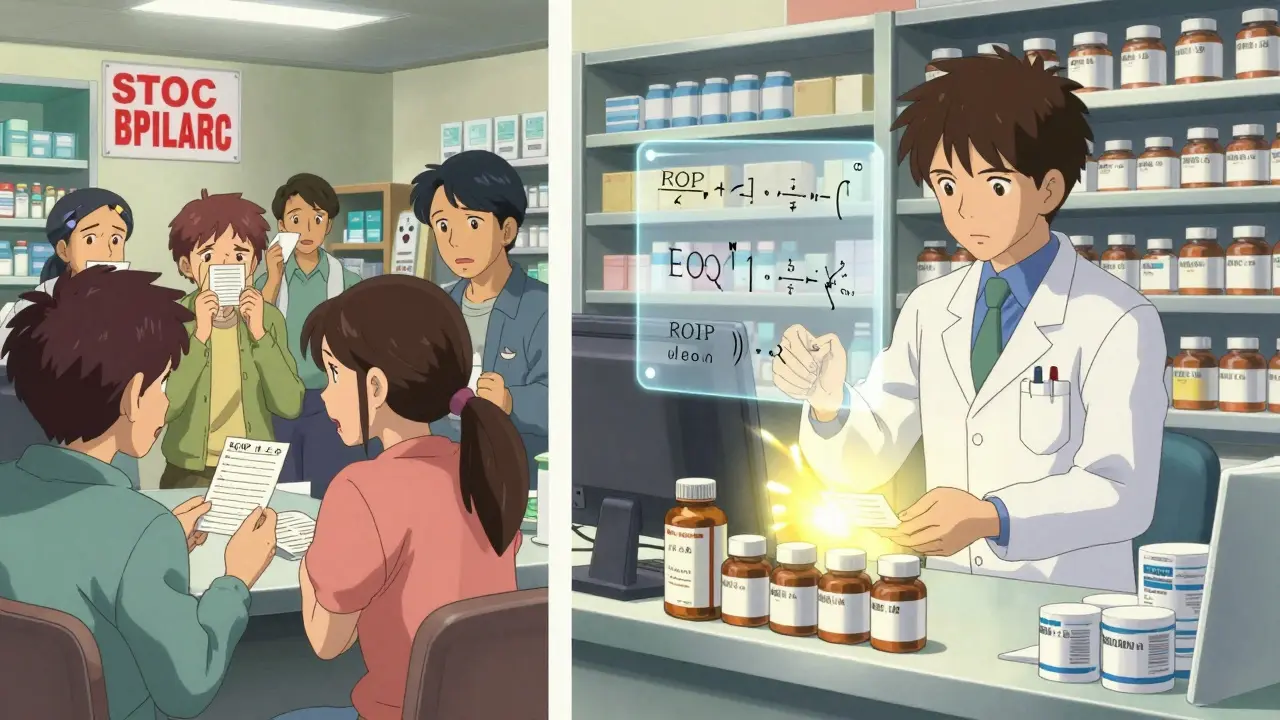
Minimum/Maximum System: Your Best Friend
The minimum/maximum method is the most reliable system for generics. Set two numbers for each drug:- Minimum: The lowest stock level before you reorder
- Maximum: The highest stock level you’ll allow
- Minimum: 8 bottles
- Maximum: 25 bottles
Track Expiration Dates Like Your Profit Depends on It
It does. Generics often have shorter shelf lives because manufacturers use cheaper packaging. A bottle of omeprazole might have a 24-month expiration. But if it sits on your shelf for 18 months, you’re risking returns, audits, and patient complaints. Use your pharmacy software to flag generics with less than 6 months left. Set up a weekly checklist:- Check for any generics expiring in the next 30 days
- Offer them as first-fill options to patients
- Return expired stock to suppliers - many will take it back if it’s within 30 days of expiration
Automate, But Don’t Blindly Trust
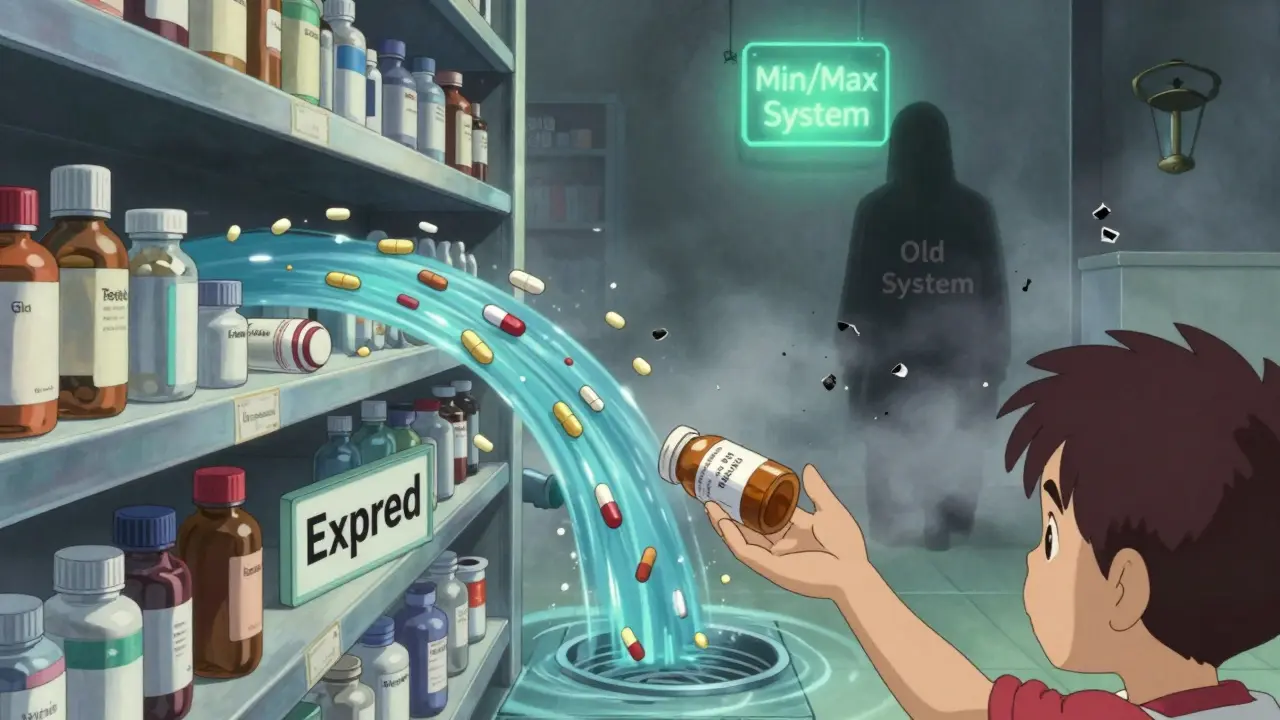
Software that auto-reorders based on historical sales is a game-changer. But it’s not magic. If you don’t update it when a new generic enters the market, it’ll keep ordering the brand-name version - even when no one wants it. Best practice: Review your inventory system every quarter. Look at:- Which generics had a spike in sales?
- Which ones dropped off?
- Did a new generic replace a brand-name drug?
Train Your Staff - It’s Not Just Tech
No software fixes bad habits. If your techs don’t log returns correctly, your inventory numbers are garbage. If they don’t know how to flag expiring stock, you’ll lose money. Create a simple 10-minute daily checklist for your team:- Check for expired generics flagged in the system
- Verify that all new shipments are entered with correct lot numbers and expiration dates
- Confirm that returned prescriptions are logged and restocked within 24 hours
- Spot-check 3 fast-moving generics to ensure min/max levels are accurate
Build Relationships With Suppliers
Not all generic suppliers are equal. Some have 2-day lead times. Others take 10. Some charge more for small orders. Others offer volume discounts. Track your supplier performance:- On-time delivery rate
- Fill rate (how often they send what you ordered)
- Price consistency
- Return policy for expired stock
What Happens When You Get It Right
A pharmacy in Seattle implemented these strategies in early 2023. Here’s what changed in 9 months:- Generic inventory costs dropped 14%
- Stockouts fell from 11 per month to 2
- Expired product waste dropped by 68%
- Customer complaints about unavailable meds dropped to zero
- Profit margin on generics increased from 18% to 27%
The Bottom Line
Generic drug inventory isn’t about having more. It’s about having the right amount - at the right time - without wasting money. It’s about knowing when to order, how much to order, and when to let go of old stock. It’s about trusting data over guesswork. If you’re still ordering generics the same way you did five years ago, you’re leaving money on the table. And you’re risking patient trust. Start small. Pick one high-volume generic. Set your min/max. Track it for 30 days. Adjust. Then do it again with another. In six months, you’ll have a system that runs itself - and keeps your pharmacy profitable.How often should I review my generic inventory levels?
Review your generic inventory levels at least once a week. Fast-moving items like metformin or omeprazole need daily checks if you’re using manual systems. For automated systems, a weekly audit is enough - but always run a full review every quarter to adjust for new generics entering the market or changes in patient demand.
What’s the ideal percentage of generics in my pharmacy inventory?
For independent pharmacies, aim for 65-75% of your total inventory value to be generic medications. This aligns with national averages and maximizes cost savings. Don’t focus on the number of SKUs - focus on the dollar value. You can carry 200 generic products but still have 80% of your inventory value tied up in just 15 high-cost items.
Can I use the same inventory system for brand-name and generic drugs?
Technically yes, but it’s not smart. Brand-name drugs have stable demand and longer lead times. Generics have volatile demand, shorter shelf lives, and faster turnover. Your system should treat them differently. Set lower max levels for generics, enable automatic alerts for expirations, and use faster reorder triggers. Most modern pharmacy software lets you tag drugs as generic and apply custom rules - use that feature.
What should I do when a new generic enters the market?
Immediately reduce your max stock level for the brand-name version by 70-80%. Increase the max for the new generic by 100-150%. Adjust your reorder point based on projected demand - don’t rely on past sales. Talk to your prescribers. Let them know the new option is available. Update your formulary. And monitor the first 30 days closely - demand can spike or stall unexpectedly.
How do I prevent overstocking slow-moving generics?
Set a very low maximum level - maybe just 5-10 units. Order only when you’re at 2-3 units. Don’t order in bulk just because the price is good. If a generic hasn’t sold in 90 days, consider removing it from your regular stock. Offer it as a special order instead. This frees up space and capital for faster-moving items.
Is it worth investing in pharmacy inventory software for generics?
Yes - if you’re filling more than 200 prescriptions a day. Software that tracks expiration dates, auto-adjusts reorder points, and flags generic transitions saves time and money. Look for systems with built-in predictive analytics for new generic launches. The average pharmacy recovers the cost of the software in 4-6 months through reduced waste and fewer stockouts.
What’s the biggest mistake pharmacists make with generic inventory?
Waiting for stock to run out before reordering. That’s reactive, not proactive. The best pharmacies reorder before they’re low - using data, not gut feeling. Another big mistake is ignoring expiration dates. Generics aren’t exempt from spoilage. A bottle of generic lisinopril that expires in 10 months is still useless after that date - and you’re paying for it every day it sits on the shelf.
Next steps: Pick one generic drug you stock regularly. Open your inventory system. Check its current min/max levels. Compare them to your actual weekly sales. Adjust them. Do it today. That’s how you start saving money - one bottle at a time.

Kerry Howarth
Set my min/max for metformin last week. Went from 15/40 to 8/25. First order came in today-exactly 17 bottles. No waste. No panic. Just math.
Joy F
Let’s be real-this isn’t inventory management, it’s pharmaceutical capitalism in drag. You’re reducing human health to a spreadsheet algorithm. The 80/20 rule? That’s just corporate efficiency masquerading as wisdom. Who decides what’s ‘high-volume’? The shareholders? Not the diabetic grandma who needs her pills at 3 p.m. on a Saturday.
Generics aren’t commodities. They’re lifelines. And when you treat them like widgets, you’re not cutting costs-you’re outsourcing compassion to a vendor with a 5-day lead time.
And don’t get me started on ‘auto-reordering.’ What happens when the algorithm doesn’t know about the new Medicaid policy that just made lisinopril free? What if a hurricane knocks out the supplier? Your ‘lean system’ becomes a death sentence for people who can’t afford to wait.
This isn’t optimization. It’s dehumanization with a bar code.
Haley Parizo
You think this is about math? Nah. This is about power. The pharmacy system was built to serve patients. Now it’s built to serve margins. You’re not managing inventory-you’re managing control. The moment you start treating a life-sustaining drug like a commodity, you’ve already lost the soul of this profession.
That Seattle pharmacy? They didn’t just ‘reduce waste.’ They optimized away human dignity. Patients don’t care about your EOQ formula. They care if their pills are there when they need them. And if they’re not? They’ll find someone who still remembers that medicine is a covenant-not a cost center.
There’s a difference between efficiency and exploitation. You’re conflating the two.
Ian Detrick
Guys. This is the most practical, actionable thing I’ve read all year. No fluff. Just straight-up pharmacy gold.
I used the min/max system on omeprazole last month. Went from 12/35 to 7/20. Cut my expired stock by 70%. Staff stopped complaining about backroom clutter. Patients noticed the consistency. My profit margin jumped. It’s not magic. It’s discipline.
Do the work. Pick one drug. Do it right. Then move to the next. That’s how you build a system that lasts.
Stop overthinking. Start organizing.
Angela Fisher
Okay but… what if the software is rigged? 🤔 I work at a chain and our system auto-flags generics for ‘low turnover’… but guess what? Every time we cut back on a generic, the brand-name version gets pushed harder by reps. And the reps? They’re paid by the drug companies. The software doesn’t know that. It just sees ‘low sales.’
What if the ‘new generic’ they’re pushing? It’s not even bioequivalent. I’ve seen the lab reports. But the corporate system says ‘switch now’ because it’s cheaper on paper.
And don’t even get me started on ‘returning expired stock.’ I’ve tried. The supplier says ‘no returns after 15 days’ even though the bottle says 24. And if you complain? You get audited for ‘inventory mismanagement.’
This whole system is a trap. It’s designed to make you feel smart while they make money. The real profit isn’t in your backroom-it’s in the boardroom. You’re just the janitor cleaning up their mess.
Trust the data? Nah. Trust your gut. And keep receipts.
Neela Sharma
India taught me this-generics are not just cheaper, they’re sacred. When your people can’t afford brand names, the generic is their only hope. But here, we treat it like a discount sale. No. It’s life. One bottle of metformin can keep a family from bankruptcy.
Min/max? Yes. But also heart. Track expiration? Yes. But also empathy. Your software can’t feel the fear in a diabetic’s voice when they ask, ‘Do you have it?’
Manage the numbers, yes. But never forget the hands that hold the bottle.
Philip Leth
Been doing the min/max thing for a year. Changed my whole shop. Used to have 300+ SKUs of generics. Now I’ve got 120. Cut my inventory costs in half. Staff actually like working here now-less clutter, less stress.
Biggest win? No more midnight panic calls because someone ran out of lisinopril. We just know. We’ve got the numbers. Simple as that.
Angela Goree
THIS IS WHY AMERICA IS LOSING! You think this is about ‘efficiency’? No! It’s about letting foreign drug manufacturers dictate what our pharmacies stock! Who approved these ‘generic’ suppliers? Are they even FDA-compliant? What if they’re shipping from China with expired pills?!
And you’re telling pharmacists to ‘trust the software’? That’s what got us into this mess! We used to have American-made drugs! Now we’re trusting algorithms written by tech bros who don’t even know what a pill looks like!
Stop outsourcing our health! Rebuild American pharmaceutical independence! Stop being sheep!
Shanahan Crowell
Just did the 30-day trial on simvastatin. Went from 10/30 to 6/20. Sold 142 bottles in 30 days. Ended with 8 left. Perfect. No waste. No stockout.
My techs are now asking me to do it for everything. We’re not just saving money-we’re building trust. Patients are saying, ‘You always have it.’ That’s worth more than any margin.
Start small. But start today.
Tiffany Channell
Everyone’s acting like this is groundbreaking. It’s not. This is basic inventory management-applied to generics. If you’re still guessing how much to order, you shouldn’t be running a pharmacy. You’re lucky you haven’t been sued yet.
The real problem? The people who wrote this article think they’re teaching something new. They’re not. They’re just documenting what every competent pharmacy has been doing for a decade.
Stop patting yourselves on the back. Just do your job.
Shruti Badhwar
In India, we manage generics with a different philosophy. We do not treat them as mere commodities. We treat them as essential public goods. Our government mandates stock levels for critical generics, and pharmacies are audited quarterly. Profit is secondary to access.
Here, you optimize for margins. We optimize for survival. One system saves money. The other saves lives.
Perhaps the real question is not how to manage inventory better-but why we allow medicine to be a market at all.