Vegan Medication Ingredient Checker
Check Your Medications
Enter a medication name to see if it contains hidden animal ingredients like gelatin, stearic acid, or lanolin. Results based on data from Pill Clarity.
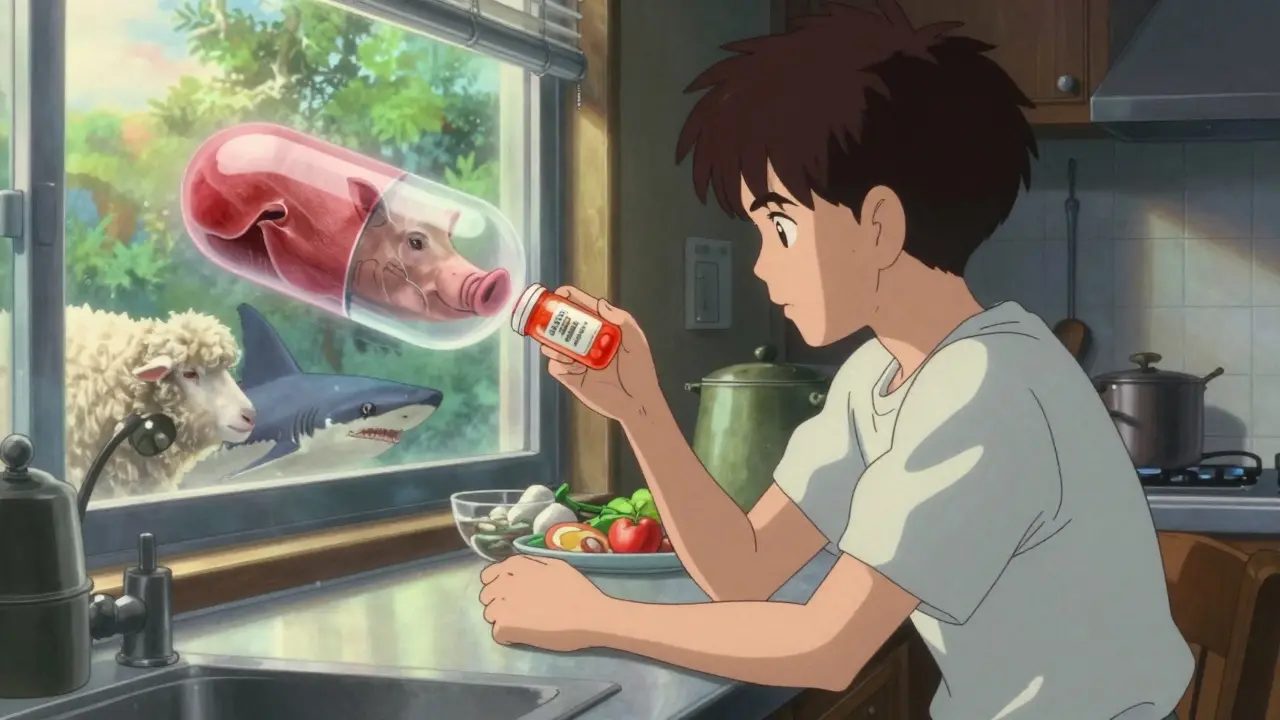
Many vegans and vegetarians assume their dietary choices extend naturally to their medications - but that’s not always true. You might eat plant-based food, avoid leather, and skip honey, yet still be taking pills filled with animal parts you never knew were there. The truth is, hidden animal ingredients are common in prescription drugs, supplements, and even over-the-counter meds. And most people have no idea.
What’s Really in Your Pills?
Gelatin is the most widespread animal-derived ingredient in medication. Around 90% of capsules - the kind you swallow every day - are made from gelatin, which comes from boiling down the bones, skin, and tendons of pigs, cows, and chickens. It’s used because it’s cheap, easy to mold, and dissolves well in the stomach. But if you’re vegan, that’s not just a moral issue - it’s a daily violation of your values. Then there’s magnesium stearate. You won’t find it listed as "pig fat" on the label. It’s just "magnesium stearate." But in about 65% of cases, it’s made from animal fats. It’s a flow agent - something that helps pills move smoothly through manufacturing machines. It doesn’t affect the drug’s function, but it’s still animal-based. Vitamin D3 is another big one. Most supplements use lanolin, which is waxy oil taken from sheep’s wool. That’s not a plant. It’s not even a meat product - it’s literally grease scraped off live animals. Dr. Vegan’s research shows that plant-based D3 from green algae exists and works just as well. But unless you specifically ask for it, you’re probably getting the sheep-derived version. Other sneaky ingredients include:- Lanolin - in creams, patches, and D3 supplements
- Glycerin - can come from animal fat or plants; rarely labeled
- Stearic acid (E570) - often from cow, sheep, or pig fat
- Squalane - originally from shark liver oil (though plant versions now exist)
- Glucosamine and chondroitin - pulled from shellfish or cow cartilage
Medications That Definitely Contain Animal Parts
Some drugs aren’t just contaminated - they’re made from animal tissue. These aren’t fillers. These are the active ingredients.- Armour Thyroid - made from dried pig thyroid glands. It’s used for hypothyroidism. The synthetic alternative, levothyroxine, is vegan. But many doctors still prescribe Armour because it contains both T3 and T4 hormones. There’s no perfect vegan substitute that mimics its exact blend.
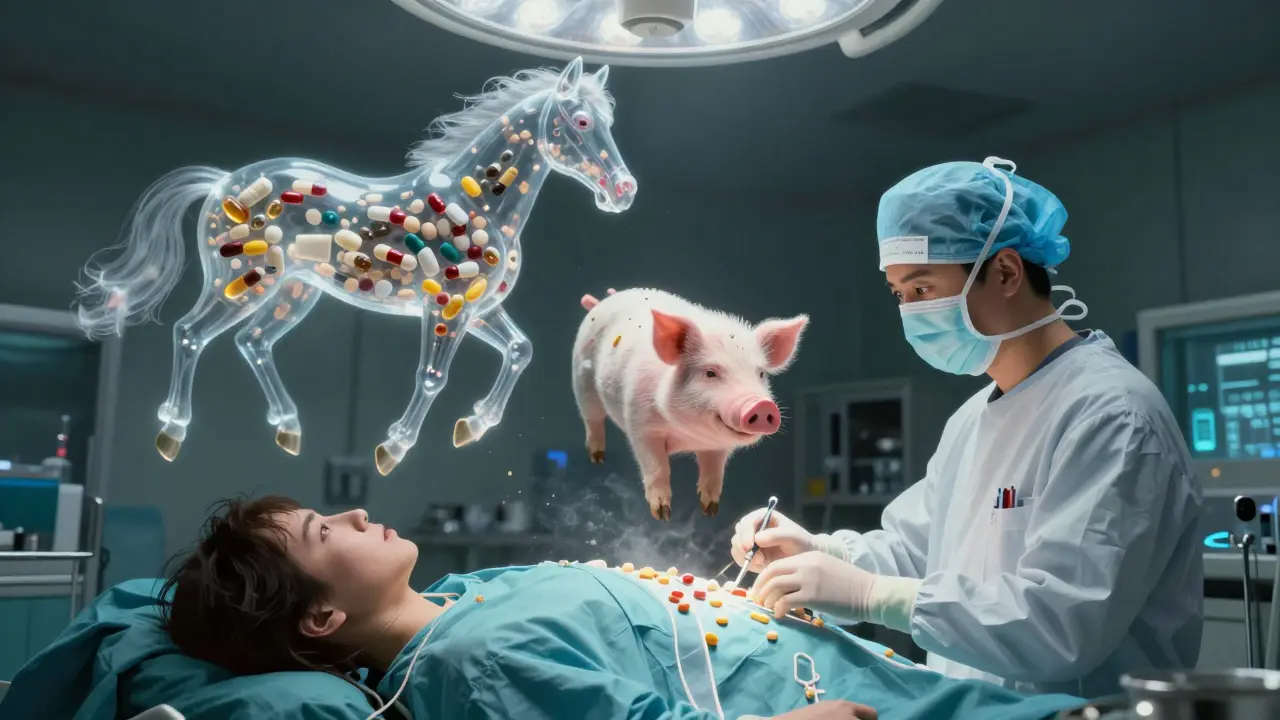
- Premarin - estrogen pills made from the urine of pregnant mares. Yes, you read that right. Horses are kept pregnant for months, their urine collected, and the hormones extracted. Synthetic estrogen alternatives exist, but they’re not identical.
- Heparin - a blood thinner made from pig intestines. It’s critical for surgery patients and those with clotting disorders. No vegan version exists yet.
- Creon and Viokace - pancreatic enzymes from pig pancreas. Used for people with cystic fibrosis or pancreas damage. No plant-based alternative is approved.
- Vascepa - a fish oil-based drug for heart disease. Even though it’s marketed as "heart-healthy," it’s literally fish fat in a capsule.
- Propofol - an IV anesthetic that contains egg phospholipids. Used in hospitals. Vegans have no choice but to accept it during surgery unless alternatives are developed.
These aren’t edge cases. They’re standard treatments. And if you’re vegan, you’re often faced with a brutal choice: take the medication you need - even if it’s made from animals - or risk your health.
Why Don’t Labels Say This?
Food labels in the U.S. have to list allergens and animal sources. But drugs? Not even close. The FDA doesn’t require manufacturers to disclose animal-derived ingredients unless they’re allergens. That means gelatin, stearic acid, and lanolin can appear as vague chemical names with zero explanation. A 2022 report from the Transparent Label Campaign found that 50% of supplements contain hidden animal byproducts not listed on the label. That’s not a glitch - it’s the system. Pharmaceutical companies argue that these ingredients are necessary for stability, absorption, or manufacturing. And sometimes, they’re right. But that doesn’t excuse the lack of transparency. Consumers deserve to know what they’re ingesting.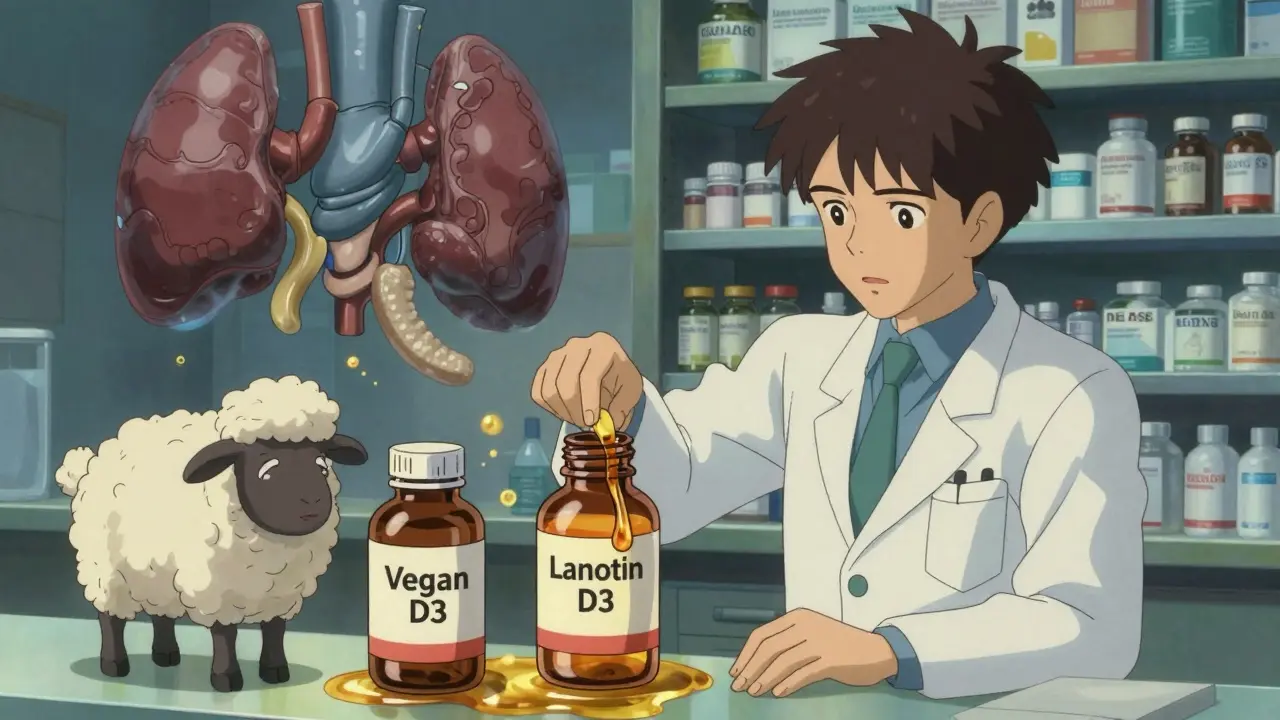
What Can You Do?
You can’t avoid all animal ingredients - not yet. But you can take control.- Ask your pharmacist - Don’t assume. Ask: "Is this medication free from gelatin, magnesium stearate, lanolin, and other animal-derived ingredients?" Pharmacists are trained to check this now. Many have access to databases like Pill Clarity.
- Check the capsule - If it’s a hard capsule, it’s likely gelatin. Softgels? Almost always gelatin. Look for "vegetarian capsule" or "cellulose-based" on the label. Those are plant-derived.
- Switch to vegan D3 - Ask for algae-based Vitamin D3. Brands like Vitashine and Nordic Naturals offer them. They’re just as effective.
- Use Pill Clarity - Formerly VeganMed, this platform now certifies medications as animal-free. Their database lets you search by drug name and see verified alternatives. Thousands of patients use it monthly.
- Speak clearly to your doctor - Don’t say "I’m vegan." Say: "I need medications that contain no animal-derived ingredients, including gelatin, stearic acid, or lanolin." That gets their attention.
- Check the Viva Organization’s A-Z list - It’s a free, simple guide to hidden animal ingredients in medicines. Print it. Keep it in your wallet.
What Has No Vegan Alternative?
Some medications have no plant-based substitute - not because science can’t make one, but because the animal version works too well, and regulators haven’t approved alternatives.- Heparin - Still no vegan blood thinner approved for widespread use.
- Pancreatic enzymes - Pig-derived enzymes are the only ones that fully replace human enzyme function.
- Propofol - No other IV anesthetic matches its speed and safety profile.
For these, the choice is stark. You can refuse the drug - and risk serious health consequences. Or you can accept it. There’s no middle ground. That’s why advocacy matters. More people demanding change is how alternatives get developed.
The Bigger Picture
About 3% of U.S. adults are vegan. That’s 10 million people. And that number is growing. Yet pharmaceutical companies still treat vegan needs as a niche. They don’t design plant-based capsules because they don’t have to. Labels don’t change because there’s no law forcing them to. But pressure is building. Pill Clarity’s rebrand in 2023 wasn’t just a name change - it was a signal. The movement isn’t just about vegans anymore. It’s about people with allergies, religious restrictions, and ethical concerns. Transparency is becoming a standard, not a bonus. In 2024, the American Pharmacists Association is rolling out guidelines for pharmacists to help patients navigate this. That’s huge. It means your pharmacist will soon be trained to answer these questions - not brush them off.Final Thoughts
You don’t have to be perfect. You don’t have to avoid every animal ingredient to be a true vegan. But you deserve to know what’s in your medicine. And you have the right to ask for alternatives. Start small. Check your Vitamin D3. Ask about your capsule. Talk to your pharmacist. Use Pill Clarity. Share this info with others. The system won’t change overnight - but it’s changing. And you’re part of that change.Are all capsules made from gelatin?
No. About 90% of capsules are made from gelatin, but many now use plant-based cellulose instead. Look for "vegetarian capsule," "vegan capsule," or "cellulose" on the label. These are made from wood pulp or cotton and are completely animal-free.
Can I get vegan Vitamin D3?
Yes. Most Vitamin D3 comes from lanolin (sheep wool), but plant-based D3 is made from algae. Brands like Vitashine, Garden of Life, and Nordic Naturals offer vegan D3 supplements. They work just as well and are more sustainable. Always check the label - "D3 from algae" means it’s vegan.
Is there a vegan alternative to Armour Thyroid?
The active ingredient in Armour Thyroid comes from pig thyroid glands. There is no direct vegan equivalent that contains both T3 and T4 hormones. However, synthetic levothyroxine (T4 only) is vegan and widely available. Many people do well on it, but some need the T3 from Armour. Talk to your doctor about whether switching is safe for you.
Why don’t drug labels list animal ingredients?
The FDA doesn’t require it. Unlike food, drugs aren’t required to disclose animal-derived ingredients unless they’re allergens. Gelatin, stearic acid, and lanolin are considered "inactive ingredients," so they’re not labeled. This lack of transparency is why groups like Pill Clarity and the Transparent Label Campaign are pushing for change.
What should I say to my pharmacist to get vegan meds?
Say: "I need medications free from animal-derived ingredients, including gelatin, magnesium stearate, lanolin, glycerin, and stearic acid." Be specific. Pharmacists have access to databases that can check each ingredient. Don’t just say "I’m vegan" - that’s too vague. Give them the exact terms they need to search.
Is there a vegan alternative to heparin?
No, there is currently no approved vegan alternative to heparin. It’s made from pig intestines and is essential for preventing blood clots during surgery and in certain medical conditions. Research is ongoing, but no plant-based version has been approved for clinical use yet. If you need heparin, you may have to use it despite ethical concerns.
Where can I find a list of vegan medications?
Pill Clarity (formerly VeganMed) maintains a verified database of animal-free medications. You can search by drug name to see if alternatives exist. PETA also offers a free list of animal-derived ingredients to watch for. Both are reliable starting points for checking your prescriptions.

Ayan Khan
It’s sobering to realize how deeply embedded animal products are in systems we assume are neutral. The pharmaceutical industry operates on efficiency, not ethics - and that’s not inherently wrong, but it’s not neutral either. We’re conditioned to trust labels, yet the absence of disclosure is itself a form of messaging. If a substance is inert, why hide its origin? If it’s harmless, why not label it? The real issue isn’t just veganism - it’s transparency in medicine. We treat our bodies as sacred, yet we accept opacity in what we ingest. That contradiction deserves more than a footnote in a Reddit post.
It’s not about perfection. It’s about dignity. You don’t have to be 100% vegan to deserve to know what’s in your pill. And if the system won’t tell you, then we must demand it - not as a niche request, but as a fundamental right to informed consent.
Emily Hager
While I appreciate the thoroughness of this piece, I must respectfully challenge the underlying assumption that veganism should dictate pharmaceutical policy. Medicine is not a moral philosophy; it is a science. To impose ethical constraints on life-saving treatments - such as heparin derived from porcine intestines - is not only impractical, but potentially dangerous. The notion that a synthetic alternative must exist before a life-saving medication is acceptable is a form of ideological absolutism masquerading as compassion. One cannot have it both ways: reject animal products while simultaneously relying on animal-derived insulin, vaccines, and antibiotics. The inconsistency is glaring.
Melissa Starks
Okay I’m gonna be real - I’ve been vegan for 8 years and I had NO IDEA about half of this. Like, I thought it was just gelatin capsules and maybe some D3. But heparin from PIG INTESTINES?? And propofol with EGG? I’m not even mad, I’m just… stunned. I’ve had surgeries before. I didn’t even think to ask. I just trusted the system. And now I feel kinda betrayed. But also empowered? Like, I’m gonna start asking my pharmacist EVERY TIME I get a script. I’m printing that Viva list. I’m telling my mom. I’m telling my doctor. I’m telling my coworkers. This isn’t just about ethics - it’s about agency. You shouldn’t have to Google ‘is my blood thinner made from pigs’ to feel safe in your own body. And if the FDA won’t force disclosure? Then we will. We will scream it until they listen. And if you’re reading this and you’re not vegan? You still need to know this. Because someone you love might need this info someday. And you won’t be able to help them if you don’t know.
Also - I just checked my vitamin D3. It’s from sheep. I’m switching tomorrow. No more excuses.
Lauren Volpi
Wow. So now we’re regulating medicine based on someone’s dietary preferences? Next they’ll ban aspirin because it’s tested on rabbits. This isn’t about health - it’s about virtue signaling. People are dying because they won’t take heparin because it’s ‘not vegan.’ That’s not activism. That’s a cult. And Pill Clarity? Sounds like a startup that got funded by a guy who owns a hemp store. I get it - you want to feel pure. But medicine isn’t a yoga mat. You can’t ‘manifest’ a better drug. If you want alternatives, fund the research. Don’t guilt-trip doctors and pharmacists into playing ethics police. This is why people hate woke culture. It turns medical necessity into a moral test. And that’s terrifying.
Kal Lambert
Ask your pharmacist. Always. They’re trained for this now. Most have access to databases. No guesswork needed. Simple as that.
Also - vegan D3 from algae exists. Just ask for it. No drama.
Melissa Stansbury
I just called my pharmacy and asked about my blood pressure med - turns out the capsule is gelatin. They were super helpful. They said they can switch me to a cellulose one. No extra cost. No hassle. I cried. Not because I’m emotional - because I didn’t know I had a choice. I thought I was stuck. I thought I had to choose between health and ethics. But I didn’t. I just didn’t know how to ask. So if you’re reading this and you’re scared or confused - you’re not alone. Just call. Just ask. Say the words. ‘I need this without animal products.’ It’s not weird. It’s normal. And they’re ready for you. I’m so glad I did. I feel like I finally took back control.
cara s
It is a fascinating, albeit deeply unsettling, phenomenon that the regulatory framework governing pharmaceuticals in the United States has not evolved in tandem with the expanding demographic of individuals who adhere to plant-based lifestyles. The absence of mandatory labeling for animal-derived excipients - particularly when such substances are functionally inert - constitutes a profound epistemological lacuna in patient autonomy. One cannot meaningfully consent to a treatment if the composition of its delivery vehicle remains undisclosed. The FDA’s stance, while legally defensible, is ethically indefensible. The fact that 50% of supplements contain unlisted animal byproducts - as cited by the Transparent Label Campaign - is not merely a regulatory oversight; it is a systemic failure of informed consent. One might argue that this is a matter of personal responsibility - yet one cannot responsibly investigate the composition of every pharmaceutical without access to standardized, transparent data. The onus, therefore, must shift from the consumer to the manufacturer and the state. We are not asking for miracles. We are asking for labeling. Just like food.
Amadi Kenneth
Wait - wait - this is all a setup. I’ve been thinking about this. Gelatin? Lanolin? Heparin? All part of a larger agenda. Who profits from you being confused? Big Pharma. They want you to think you’re powerless. They want you to swallow the gelatin capsule and say nothing. But here’s the truth: they’re using pig fat to track your DNA. They’re embedding nano-chips in the stearic acid. You think it’s about religion? No. It’s about control. The same people who told you vaccines had microchips? They’re the same ones who made sure D3 came from sheep. Why? So they can monitor your immune response. They’re testing you. Every time you take a pill, they’re logging your bio-data. And Pill Clarity? That’s a front. It’s run by the same people who own the drug companies. They want you to think you’re fighting them - but you’re just giving them more data. Don’t trust the system. Don’t trust the pharmacist. Don’t trust the ‘vegan’ label. Burn your pills. Go live in the woods. Only then will you be free.
Shameer Ahammad
It is a matter of profound moral and intellectual disarray that the vegan community continues to elevate the issue of pharmaceutical ingredients to the level of ethical imperative, while simultaneously ignoring the far more pervasive and ethically indefensible exploitation of human labor in the global supply chains that produce the very supplements and plant-based foods they consume. The hypocrisy is staggering. You will not eat honey because bees are ‘exploited,’ yet you will gladly purchase organic kale harvested by undocumented workers paid $3 an hour. You will boycott leather, yet wear sneakers manufactured in factories with forced overtime. You demand transparency in your medication - commendable - yet remain willfully blind to the exploitation embedded in your ‘clean’ lifestyle. Veganism, as currently practiced, is not a moral stance - it is a performative luxury. The real revolution is not in switching to algae-based D3. It is in confronting the global systems of inequality that sustain your privilege. But that requires discomfort. And discomfort, as we know, is anathema to the modern vegan.
Alexander Pitt
Check your prescription. Ask for the ingredient list. Use Pill Clarity. If it’s gelatin - ask for cellulose. If it’s D3 - ask for algae. If it’s magnesium stearate - ask if it’s plant-based. Most pharmacists can switch it. No extra cost. No drama. Just ask. And if they say no - ask again. And if they still say no - call the manufacturer. They have to tell you. You have a right to know. You’re not being difficult. You’re being informed.