
When someone is diagnosed with Huntington’s disease, it’s not just a medical label-it’s a life-changing moment that ripples through families, careers, and future plans. Unlike many illnesses that come and go, Huntington’s is a relentless, inherited brain disorder with no cure. It doesn’t just steal movement; it slowly erodes thinking, emotions, and independence. The good news? Knowing what’s coming doesn’t mean you’re powerless. With the right understanding of the Huntington's disease genetics, the nature of chorea, and early care planning, people can live better, longer, and with more control.
How Huntington’s Disease Is Passed Down
Huntington’s disease doesn’t skip generations. If one parent has it, each child has exactly a 50% chance of inheriting the faulty gene. There’s no way around it. It doesn’t matter if you’re male or female-your risk is the same. This isn’t a random mutation. It’s a precise genetic error passed down like a family heirloom, but one that destroys brain cells instead of preserving memories. The problem lies in a single gene called HTT, found on chromosome 4. Inside this gene, a tiny three-letter code-CAG-is repeated too many times. In healthy people, it repeats 10 to 26 times. In someone with Huntington’s, it repeats 40 or more. The higher the number, the earlier the symptoms start. A repeat count of 50 to 60 often means symptoms appear before age 20. This is called juvenile Huntington’s, and it’s usually inherited from the father. Why does it come from the dad more often? Because when sperm cells are made, the CAG repeats tend to grow longer. When eggs are made, they usually stay stable or change only a little. So if your dad has Huntington’s, your risk isn’t just 50%-it’s also more likely that the disease will hit you younger. About 85% of childhood cases come from the father’s side. This isn’t just science. It’s personal. People who grow up with a parent who has Huntington’s often face a heavy choice: get tested or live in uncertainty. Only about 20% of at-risk individuals get tested before symptoms show. Many wait until they notice tremors, mood swings, or trouble remembering names. The emotional toll is real. One caregiver on the HDSA forum said, “The hardest part isn’t the chorea-it’s watching my family plan for my decline while I’m still here.”What Chorea Really Looks Like
Chorea is the most recognizable sign of Huntington’s. The word comes from the Greek for “dance,” and that’s exactly what it looks like-uncontrollable, jerky, dance-like movements. Fingers tap. Shoulders shrug. Feet shuffle. These aren’t tics you can hold back. They don’t happen all the time, and they vanish during sleep. But when they’re active, they make simple tasks impossible. Pouring coffee? Your hand might fling the cup. Walking down the hall? Your legs might twist unexpectedly. Doctors measure chorea using something called the Unified Huntington’s Disease Rating Scale (UHDRS). It rates each body part from 0 (no movement) to 4 (constant, severe jerking). Early on, you might score a 1 or 2-just a slight fidgeting in your hands. By mid-stage, it spreads to your face, neck, and torso. In late stages, chorea can become so violent that it leads to falls, broken bones, or exhaustion. Then, something surprising happens: the chorea often fades. That’s not improvement. It’s because the brain is losing more neurons. The muscles that once jerked uncontrollably are now too weak to move at all. What replaces chorea is stiffness, slowness, and rigidity. This shift is why people often mistake early HD for Parkinson’s. But Parkinson’s tremors are steady and rhythmic. Huntington’s chorea is wild, random, and unpredictable. The only FDA-approved drug specifically for chorea is tetrabenazine (Xenazine). It reduces movements by about 25-30% on average. But it comes with a cost: depression in 22% of users, and drowsiness in 18%. That’s why many people avoid it. A newer drug, deutetrabenazine (Austedo), works similarly but with fewer side effects-and now makes up 65% of the chorea treatment market. In 2023, the FDA also approved valbenazine (Ingrezza), offering another option with a 28% improvement in chorea scores. Still, drugs don’t fix the root problem. They just quiet the noise. Many patients find more relief in physical therapy, especially aquatic therapy. One study showed water-based exercises improved balance 35% better than land-based ones. But here’s the catch: 68% of families say they can’t afford recommended therapies. Out-of-pocket costs can hit $5,000 a year.
Why Care Planning Isn’t Optional
Huntington’s isn’t a sprint. It’s a marathon that lasts 15 to 20 years. And you can’t run it alone. The most important thing you can do isn’t taking a pill-it’s planning. Early stage (first 5 years after diagnosis): This is when you still drive, work, and make decisions. That’s why this is the time to get your legal and financial house in order. Only 37% of people in general medical care complete advance directives. At specialized Huntington’s centers, that number jumps to 82%. A living will, healthcare proxy, and power of attorney aren’t just paperwork-they’re your voice when you can’t speak. Mid-stage (5 to 15 years): You’ll need help with daily tasks. Dressing, eating, bathing. Occupational therapy helps you adapt. Speech therapy keeps you communicating longer. By year 10, nearly half of patients need speech therapy because their words become slurred and hard to understand. The PREDICT-HD study found that people who started therapy early kept their independence longer. Late stage (15+ years): Full-time care becomes necessary. At this point, 89% of patients live in residential facilities. The average annual cost? $125,000. Medicare doesn’t cover long-term care. Medicaid often becomes the only option. But getting approved takes time. Planning ahead means you’re not scrambling when your body gives out. Specialized Huntington’s centers-there are 53 in the U.S.-do something most hospitals don’t: they coordinate care. Neurologists, psychiatrists, therapists, social workers, and genetic counselors all meet together. They talk to each other. They update your plan every three months. Studies show people who get this kind of care live 2.3 years longer and have fewer hospital stays for pneumonia or suicide.Who’s Getting Help-and Who’s Not
There’s a huge gap between what’s possible and what’s happening. Only 38% of U.S. neurologists follow the official Huntington’s care guidelines. In rural areas, it takes over two years to get a full care team assembled. In cities, it’s about 14 months. That delay can cost you months of mobility, speech, and mental clarity. Access is worse in Europe. Only 28% of patients there get comprehensive care. In the U.S., it’s 45%. That means more than half of people with Huntington’s are managing alone-juggling appointments, medications, and emotional breakdowns without a team. One reason? Money. Insurance doesn’t pay well for multidisciplinary care. Only 53% of specialty centers hold quarterly team meetings because they can’t afford the time or staff. Clinics that do hold them see better outcomes. But they’re the exception, not the rule. And then there’s the emotional side. Families often avoid talking about the future. “We’ll deal with it when the time comes,” they say. But the time comes faster than you think. A 2022 survey found that 87% of caregivers say coordinating care is their biggest stressor. They spend 15 or more hours a week just scheduling appointments, calling insurers, and fighting for services.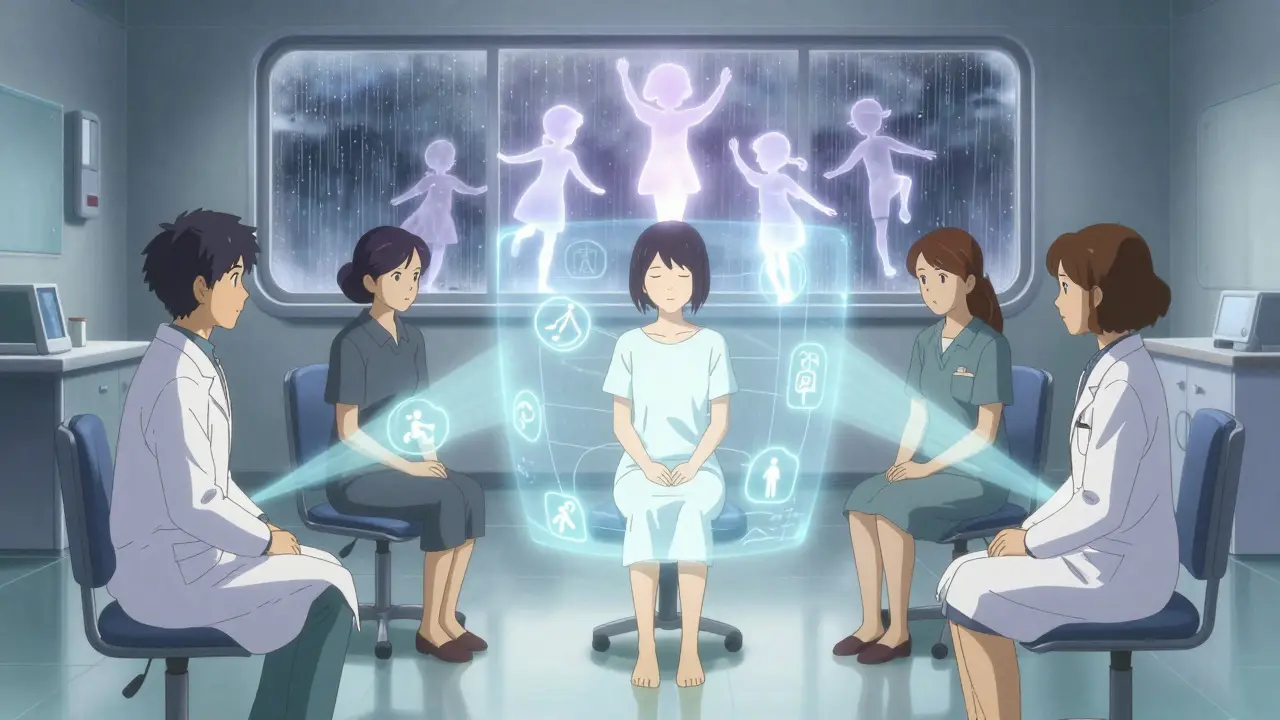
What’s Changing-And What’s Still Missing
Hope is on the horizon. In 2023, Wave Life Sciences reported a drug that reduced the toxic Huntington’s protein by 38% in early trials. Roche’s tominersen, after a pause, is being tested again with safer doses. Gene therapies are in development. But even if one of these works, it won’t help the 40,000 Americans already living with symptoms. Dr. Rachel Andre at Johns Hopkins put it plainly: “Even with successful gene therapies, comprehensive care planning will remain critical.” That’s because medicine doesn’t fix loneliness, fear, or the loss of identity. Care planning does. The Huntington’s Disease Society of America is pushing to expand specialty centers to cover 85% of U.S. patients by 2025. That’s ambitious. Right now, 62% have access. That means nearly 16,000 people are still falling through the cracks. What you can do today:- If you’re at risk: Get genetic counseling before testing. Don’t do it alone.
- If you’re diagnosed: Start care planning within six months. Don’t wait for symptoms to get worse.
- If you’re a caregiver: Build your team now-neurologist, therapist, social worker. Don’t wait until you’re overwhelmed.
- If you’re a doctor: Refer to a Huntington’s specialty center. Don’t assume general neurology is enough.
Is Huntington’s disease always inherited?
Yes. Huntington’s disease is caused by a single faulty gene passed from parent to child. If one parent has the mutated HTT gene, each child has a 50% chance of inheriting it. In rare cases (under 1%), someone develops Huntington’s without a family history due to a brand-new mutation, but this is extremely uncommon.
Can you get tested for Huntington’s before symptoms appear?
Yes. A blood test can detect the expanded CAG repeat in the HTT gene. But testing is not taken lightly. Most people who are at risk choose to meet with a genetic counselor first to understand the emotional, financial, and family implications. Only about 20% of at-risk individuals get tested before symptoms start.
Is chorea the only symptom of Huntington’s?
No. Chorea is the most visible symptom, but Huntington’s affects the whole brain. Cognitive decline-trouble planning, remembering, or making decisions-is common. Psychiatric symptoms like depression, anxiety, irritability, and obsessive behaviors often appear before movement problems. In later stages, swallowing and speaking become difficult, and weight loss is common due to increased energy use from constant movement.
How long do people live after being diagnosed with Huntington’s?
On average, people live 15 to 20 years after symptoms begin. Juvenile cases progress faster, often leading to death within 10 years. The cause of death is usually complications like pneumonia from swallowing problems, heart failure, or suicide. Comprehensive care planning can extend life by up to 2.3 years and reduce these risks.
Are there any new treatments for Huntington’s on the horizon?
Yes. Several experimental therapies are in clinical trials. Wave Life Sciences’ SELECT-HD drug reduced the toxic huntingtin protein by 38% in early testing. Roche’s tominersen is being tested again with lower doses after a pause. While these aren’t cures, they represent the first real hope of slowing the disease. However, none are approved yet, and even if they work, they won’t reverse damage already done.
Why is care coordination so important in Huntington’s?
Huntington’s affects movement, thinking, emotions, and physical health-all at once. No single doctor can manage all of that. A care team that includes neurologists, therapists, social workers, and counselors can track changes faster, adjust plans quickly, and prevent emergencies like falls or aspiration pneumonia. Patients in coordinated care programs live longer and have fewer hospital visits.
Can lifestyle changes help with Huntington’s symptoms?
Yes. Regular exercise, especially balance-focused activities like tai chi or water therapy, helps maintain mobility. A high-calorie diet fights weight loss caused by constant movement. Speech therapy improves communication. Mental health support reduces depression and anxiety. These don’t stop the disease, but they help people stay independent longer and improve daily life.
How do you find a Huntington’s specialty center?
The Huntington’s Disease Society of America (HDSA) maintains a list of Centers of Excellence across the U.S. You can search by state on their website. These centers offer coordinated care, genetic counseling, therapy, and access to clinical trials. If you don’t live near one, ask your neurologist to refer you to the nearest center-even for a one-time consultation can help guide your care plan.

Teresa Rodriguez leon
The genetic inevitability of this disease is terrifying. I watched my mom decline over 12 years-every twitch, every forgotten word, every time she couldn’t button her shirt. It’s not just the body failing. It’s the person slipping away while still sitting right there. No drug fixes that.
Manan Pandya
Thank you for this meticulously detailed breakdown. The distinction between chorea and Parkinsonian tremors is often misunderstood-even by some clinicians. The UHDRS scale is underutilized in primary care, and the data on aquatic therapy’s 35% improvement in balance is compelling. I’ve recommended hydrotherapy to three patients in the past six months; all reported better sleep and reduced fall risk.
Paige Shipe
Let me be clear: if you have a parent with Huntington’s and you haven’t gotten tested, you’re not being brave-you’re being irresponsible. You’re gambling with your future, your children’s future, and your partner’s peace of mind. Genetic counseling isn’t optional. It’s survival. And if you think insurance will cover your care later, you’re delusional. Start planning now or prepare to bankrupt your family.
David Chase
USA 4 LIFE!! 🇺🇸 Only 45% get proper care here? That’s a national disgrace. In Germany, they’ve got HD clinics on every corner. We pay taxes for this crap and get NOTHING. Why are we letting bureaucrats kill our people? 🤬 We need a war on this disease-not another conference. Fund the centers. Fire the lazy neurologists. And stop pretending this is just a "rare disorder." It’s a crisis.
Nicole K.
I don’t understand why people don’t just get tested. If you know you’re going to get it, why not just end it early? That’s what I’d do. Why suffer for 20 years? It’s not fair to your kids to be a burden.
Fabian Riewe
My aunt had HD. She never got tested until she couldn’t walk. But the year she started aquatic therapy? She danced in the pool with her grandkids. Smiled more. Laughed. Didn’t fix the disease-but gave her back her joy. That’s worth more than any drug. If you’re reading this and you’re scared? Start with water. It’s cheaper than meds and kinder than fear.
Amy Cannon
It is of paramount importance to recognize that the sociocultural dimensions of Huntington’s disease are frequently overlooked in biomedical discourse. In many communities, particularly those with collectivist familial structures, the burden of care is disproportionately shouldered by women-often without institutional support or psychological respite. The notion of "care planning" as an individualized, clinical exercise fails to account for the communal trauma inflicted by this condition. Furthermore, the commodification of therapeutic interventions-such as the commercial dominance of Austedo-raises ethical questions regarding access, equity, and the prioritization of profit over personhood.
Himanshu Singh
Man I never knew about the dad thing. My uncle had it and he got it from his dad. I always thought it was random. Now I get why my cousin’s symptoms came so early. I’m getting tested next month. Scared as hell but I need to know.
Jasmine Yule
To the person who said "just end it early"-I’m so sorry you think that way. My mom didn’t choose to live with HD. She chose to love us, even when she forgot our names. She chose to hold my baby’s hand even when she couldn’t hold her own spoon. You don’t get to decide when someone’s life is worth living. That’s not strength. That’s fear dressed up as logic. ❤️
Greg Quinn
There’s a quiet horror in watching someone lose their mind while their body still moves. Chorea is the dance of a soul screaming without a voice. The drugs mute the motion, but not the silence inside. Maybe the real cure isn’t in genes or drugs-but in learning how to sit with someone who’s disappearing, and still saying, "I see you. I’m still here." We’re not just treating a disease. We’re learning how to love in slow motion.
Lisa Dore
Just got back from my first visit to the HDSA center. They had a social worker, a PT, a neurologist, AND a therapist all in one room. I cried. For the first time, I didn’t feel like I was fighting the system alone. If you’re reading this and you’re scared-call them. Don’t wait. They don’t bite. They just show up. And that’s more than most of us ever get.