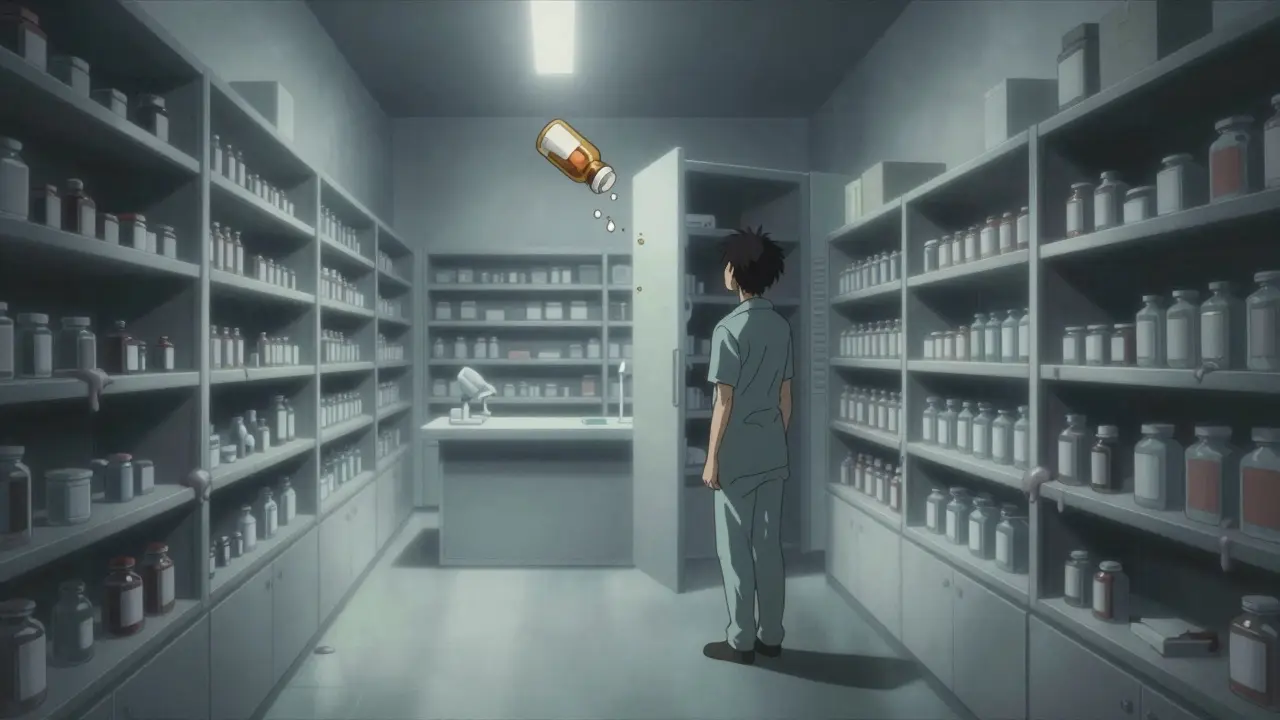
Imagine walking into a pharmacy in May 2026 and finding the shelf empty for a medication you’ve taken daily for years. It’s not just an inconvenience; it’s a crisis. For millions of Americans, this scenario has become uncomfortably familiar. The root cause isn’t usually a lack of medical knowledge or production capability-it’s a fragile pharmaceutical supply chain that is a complex global network responsible for sourcing, manufacturing, and distributing life-saving medications. When one link breaks, the whole system stalls.
The era of "just-in-time" efficiency is dead. We are now in the age of resilience. Building a resilient pharmaceutical supply chain means designing systems that can anticipate, absorb, and recover from disruptions without stopping the flow of critical drugs. This shift is no longer optional; it is a matter of national security and public health.
Why Our Current System Is Breaking Down
To fix the problem, we first need to understand why it exists. For decades, the industry prioritized cost reduction over reliability. This led to a heavy reliance on foreign manufacturing for Active Pharmaceutical Ingredients (APIs) which are the biologically active components of a drug that provide its therapeutic effect. According to data from the U.S. Food and Drug Administration (FDA), approximately 80% of APIs consumed in the United States are manufactured overseas. China and India alone account for 68% of this global API production.
This concentration creates a single point of failure. When geopolitical tensions rise, natural disasters strike, or pandemics erupt, these bottlenecks turn into walls. The COVID-19 pandemic was the wake-up call. It exposed how vulnerable we were when essential medicines depended on distant factories with limited visibility. Now, as we look at the landscape in 2026, the stakes are even higher. The U.S. Department of Defense has explicitly labeled these vulnerabilities as "critical national security risks." You cannot have a secure nation if you cannot guarantee access to basic antibiotics or insulin.
The Three Pillars of Supply Chain Resilience
Resilience isn’t a single action; it’s a framework. A 2023 report by Mathematica Inc., commissioned by the U.S. Department of Health and Human Services, defines resilience through three core capabilities: preparedness, response, and recovery. Let’s break down what this looks like in practice.
- Preparedness (Anticipation): This is about foresight. Companies must map their suppliers not just to Tier 1, but deep into the 12-15 tiers of sub-suppliers. If your raw material comes from a specific region in China, do you know who supplies the chemicals to that factory? Leading firms use AI-driven monitoring to spot risks before they happen.
- Response (Absorption): When a disruption hits-say, a port closure or a regulatory shutdown-the system must keep running. This requires buffer stocks. For essential medicines, maintaining 60-90 days of inventory is becoming the new standard, replacing the leaner models of the past.
- Recovery (Adaptation): How quickly can you pivot? This involves having dual-sourcing strategies. If Supplier A fails, can Supplier B ramp up immediately? Dual-sourcing for 70-80% of critical components is a key metric for top-performing companies.

Technology: The Engine of Modern Resilience
You can’t build a 2026 supply chain with 1990s tools. Technology is the primary driver of modern resilience. Two innovations stand out: Continuous Manufacturing which is an integrated production process where materials move continuously through equipment rather than being processed in discrete batches and AI-enabled optimization.
Traditional batch manufacturing is slow, energy-intensive, and prone to waste. Continuous manufacturing changes the game. According to the Center for Strategic and International Studies (CSIS), these systems reduce facility footprints by 30-40%, cut energy consumption by 20-25%, and lower material waste by 15-20%. More importantly, they are faster to deploy. A modular continuous manufacturing facility can be operational in 12-18 months, compared to 3-5 years for traditional plants.
However, adoption has been slow. As of early 2025, the FDA had granted only 12 approvals for continuous manufacturing processes, despite thousands of batch approvals. This regulatory lag is changing. New guidance aims to cut approval timelines from 24-36 months down to 12-18 months. By 2027, analysts predict that 45-50% of new manufacturing capacity will use continuous methods.
AI plays a crucial role too. Predictive analytics can forecast disruption risks with 85-90% accuracy 60-90 days in advance. This allows companies to reroute shipments or adjust production schedules before a shortage occurs.
| Feature | Traditional Model | Resilient Model (2026 Standard) |
|---|---|---|
| Sourcing Strategy | Single-source, lowest cost | Dual-source, regional diversification |
| Inventory Levels | Just-in-time (minimal stock) | Buffer stock (60-90 days for essentials) |
| Manufacturing Method | Batch processing | Continuous & Modular manufacturing |
| Risk Visibility | Tier 1 suppliers only | End-to-end (12-15 tiers) via AI |
| Cost Impact | Lower COGS initially | 8-12% higher COGS, but 23% better continuity |
The Policy Landscape: Government Intervention
The market alone won’t solve this. The cost of building resilience adds 8-12% to the cost of goods sold. Without incentives, many companies hesitate to invest. That’s why government policy is shifting aggressively.
In August 2025, executive orders were signed to strengthen America’s pharmaceutical supply chains. One major initiative targets the creation of a Strategic Active Pharmaceutical Ingredients Reserve which is a government-maintained stockpile of critical drug ingredients to ensure availability during emergencies. The goal is to cover 90 days of supply for 150 essential medicines by 2027. This mirrors the Strategic Petroleum Reserve but for drugs.
Additionally, the CHIPS and Science Act allocated $1.2 billion for pharmaceutical manufacturing infrastructure, with an additional $800 million proposed in the 2025 budget. These funds aim to boost domestic production, which currently sits at just 28% for essential medicine APIs. Sterile injectables and antibiotics remain particularly weak, with domestic production at 12% and 17% respectively.
But caution is needed. Experts warn that tariffs alone cannot fix the problem. Dr. Robert Chen of the National Academies of Sciences notes that forcing all production back to the U.S. could increase costs by 20-30% without necessarily improving resilience if it leads to single-sourcing domestically. The sweet spot is a balanced approach: strategic domestic capacity for critical items, combined with diversified global networks.
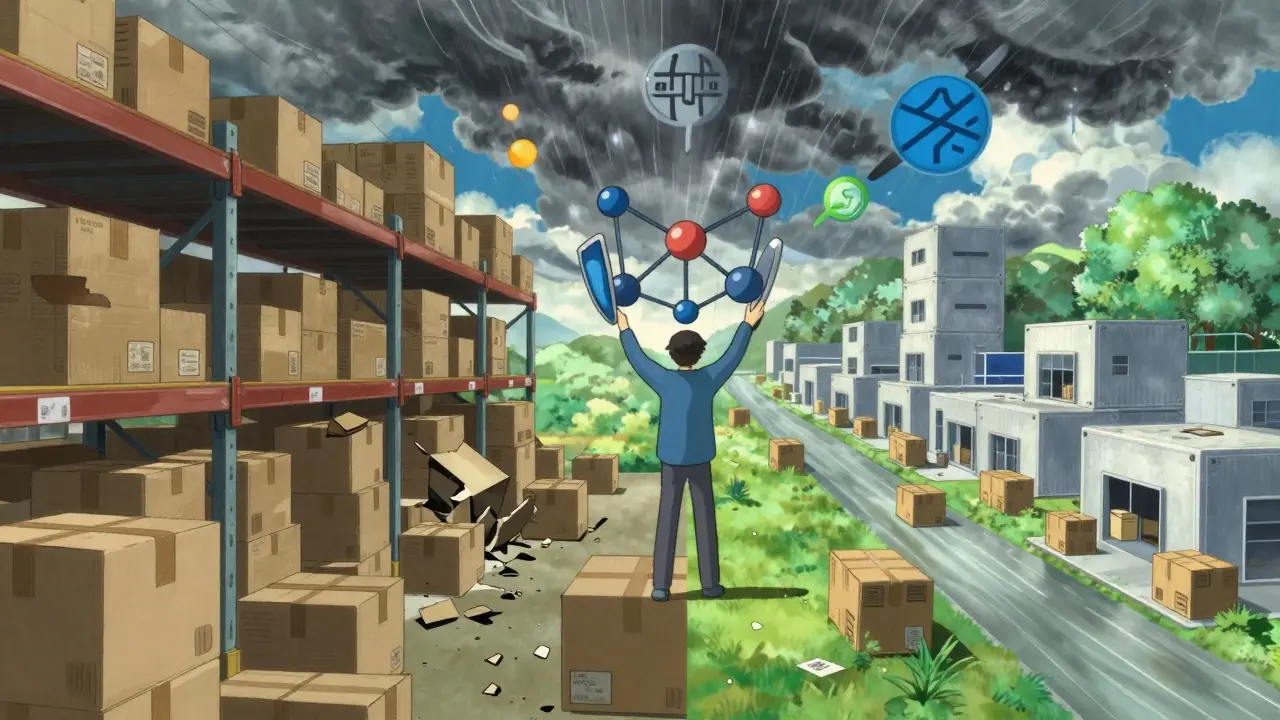
Implementing Resilience: A Step-by-Step Guide
If you are a leader in pharma or healthcare logistics, where do you start? PwC’s 2024 framework suggests a four-phase approach:
- Phase 1: Vulnerability Assessment (3-6 months): Map your entire supply chain. Identify which products are critical and which suppliers are high-risk. Use data integration tools to close visibility gaps.
- Phase 2: Strategic Scenario Planning (2-4 months): Run simulations. What happens if a port closes? What if a key supplier goes bankrupt? Develop contingency plans for each scenario.
- Phase 3: Investment Prioritization (1-3 months): Allocate budget. Top performers invest 8-10% of their annual supply chain budget into resilience initiatives. Focus on high-impact areas like dual-sourcing and technology upgrades.
- Phase 4: Cross-Functional Execution (Ongoing): Break down silos. Supply chain teams must work closely with procurement, quality control, and regulatory affairs. Cross-functional alignment can reduce decision-making time by 40-60% during a crisis.
A common pitfall is organizational silos. Seventy-eight percent of surveyed companies report this as a major challenge. Ensure that your resilience strategy has executive sponsorship. Projects with strong leadership support are 3.2 times more likely to succeed.
The Future Outlook: Challenges and Opportunities
By 2030, regional manufacturing networks are expected to supply 65-70% of U.S. pharmaceutical needs, up from 55% in 2023. Domestic production is projected to rise to 35-40%. However, significant hurdles remain.
Workforce shortages are a major concern. By 2027, there could be 250,000 unfilled skilled manufacturing positions. Training programs must scale up alongside infrastructure investments. Regulatory harmonization is another gap; currently, only 35% of manufacturing standards are aligned across major markets, creating friction for global producers.
Despite these challenges, the outlook is positive. The global pharmaceutical supply chain resilience market is growing rapidly, projected to reach $9.7 billion by 2027. Companies that act now will not only avoid the $14.7 million in revenue losses associated with major disruptions but will also gain a competitive edge in market access during crises.
The question is no longer whether we can afford to build resilient supply chains. The real question is whether we can afford not to.
What is the biggest threat to pharmaceutical supply chains today?
The biggest threat is over-reliance on a few countries for Active Pharmaceutical Ingredients (APIs). With China and India producing 68% of global APIs, any geopolitical tension, natural disaster, or regulatory change in these regions can cause immediate shortages worldwide.
How does continuous manufacturing improve supply chain resilience?
Continuous manufacturing reduces facility size, energy use, and waste. It also allows for faster deployment of new production lines (12-18 months vs. 3-5 years for traditional plants), enabling companies to scale up production quickly in response to demand spikes or disruptions.
Is it cheaper to source APIs domestically or internationally?
Currently, international sourcing is often cheaper due to established economies of scale in countries like China and India. However, building resilience adds 8-12% to the cost of goods sold. While this increases upfront costs, it avoids much larger revenue losses (up to $14.7 million per event) caused by supply disruptions.
What is the Strategic Active Pharmaceutical Ingredients Reserve?
It is a U.S. government initiative launched via executive order in 2025 to create a stockpile of critical drug ingredients. The goal is to maintain a 90-day supply for 150 essential medicines by 2027, ensuring availability during emergencies or global supply shocks.
How much should a pharmaceutical company invest in supply chain resilience?
Leading companies allocate 8-10% of their annual supply chain budget to resilience initiatives. Average investors spend 5-7%. This investment typically yields a 1.8x return within 36 months through avoided disruption costs and improved market stability.
Can AI really predict supply chain disruptions?
Yes. AI-powered predictive analytics can forecast disruption risks with 85-90% accuracy 60-90 days in advance. This allows companies to proactively adjust inventory levels, switch suppliers, or reroute logistics before a shortage impacts patients.
What percentage of U.S. APIs are produced domestically?
As of 2025, the U.S. produces only 28% of essential medicine APIs domestically. This number is low for critical categories like sterile injectables (12%) and antibiotics (17%), highlighting the need for increased domestic manufacturing capacity.
What are the main barriers to adopting continuous manufacturing?
The main barriers are high capital requirements ($50-150 million per facility) and regulatory adaptation. Historically, FDA approval for continuous processes was slower and more complex than for batch processes, though recent guidance aims to streamline this.
How does dual-sourcing help prevent drug shortages?
Dual-sourcing involves qualifying two or more suppliers for critical components. If one supplier faces a disruption (e.g., factory fire, political ban), the other can ramp up production immediately, preventing stockouts. Top companies dual-source 70-80% of critical inputs.
Will tariffs solve the pharmaceutical supply chain crisis?
Experts caution that tariffs alone are insufficient. While they may encourage some onshoring, they can also raise costs by 20-30% and create new vulnerabilities if domestic capacity is limited. A balanced strategy combining targeted incentives, technology adoption, and global diversification is more effective.
