
Imagine you have been off your medication for just one week. You feel like yourself again, or perhaps you are struggling with withdrawal and crave the relief that drug used to provide. So, you decide to take your usual dose. It feels safe because it worked before. But here is the terrifying reality: your body has changed. That same dose could now be fatal.
This phenomenon, known as lost pharmacological tolerance, is a dangerous reduction in the body's ability to process drugs after a period of abstinence, is the silent killer behind many preventable overdoses. It affects opioids, benzodiazepines, and even some antidepressants. The gap between what your brain expects and what your lungs can handle closes rapidly-sometimes within days. Understanding this mechanism is not just medical trivia; it is the difference between life and death when restarting therapy.
The Biology of Lost Tolerance
To understand why restarting at previous doses is so dangerous, we need to look at how your body adapts to drugs. When you take a medication regularly, your body compensates. If you take an opioid, your receptors downregulate, meaning they become less sensitive to avoid constant overstimulation. Your liver enzymes might also ramp up to metabolize the drug faster. This is tolerance.
When you stop taking the drug, these adaptations reverse. Receptors resensitize. Liver enzyme production slows down. According to guidelines from the Washington State Department of Health, a state agency providing public health guidelines including opioid overdose prevention protocols, tolerance to short-acting opioids like heroin can vanish in as little as three to five days. For longer-acting medications like methadone, it may take seven to ten days. During this window, your body is essentially back to baseline-or even more sensitive than before.
If you introduce a full maintenance dose into this reset system, the drug hits your central nervous system with unprecedented force. The result isn't just a "high"; it is respiratory depression. Your breathing slows until it stops. This mismatch is why people who have been clean for months or years can still die from an overdose if they relapse with their old dosage habits.
High-Risk Medication Classes
Not all medications carry the same risk, but several classes require extreme caution during restarts. Knowing which drugs fall into this category helps you assess your personal risk level.
| Medication Class | Tolerance Loss Speed | Primary Risk | Recommended Restart Approach |
|---|---|---|---|
| Opioids (e.g., Oxycodone, Methadone) | Rapid (3-10 days) | Respiratory Depression | Start at 25-50% of previous dose; monitor breathing |
| Benzodiazepines (e.g., Xanax, Valium) | Moderate to Rapid | Sedation, Respiratory Failure | Gradual reintroduction under supervision |
| MAOIs (e.g., Phenelzine) | Slow (Weeks) | Serotonin Toxicity | Wait 2 weeks washout before switching serotonergic drugs |
| Antipsychotics (e.g., Quetiapine) | Moderate | Hypotension, Dizziness | Start low, increase slowly to avoid fainting |
Opioids present the most immediate threat due to their direct impact on breathing. However, mixing them with other sedatives creates a synergistic effect that multiplies the danger. Benzodiazepines, alcohol, and sleep aids all depress the central nervous system. Combining these with an opioid after a break is a recipe for disaster. Even non-opioid medications like antipsychotics can cause severe postural hypotension-a sudden drop in blood pressure when standing-if restarted at full strength too quickly.
The "Start Low, Go Slow" Protocol
Medical professionals universally agree on one strategy: reduce the initial dose significantly. The Calgary Clinical Pharmacology service recommends starting at the lowest possible effective dose and titrating up slowly. This approach minimizes the shock to your system while allowing you to gauge your new tolerance levels.
- Consult a Professional: Never restart prescription medications without talking to your doctor or pharmacist. They can adjust your prescription based on how long you have been off the drug.
- Reduce the Dose: For opioids, experts suggest starting at 25% to 50% of your last maintenance dose. If you were taking 40mg of oxycodone, do not start with 40mg. Start with 10mg or 20mg.
- Monitor Closely: Have someone with you for the first few doses. They should watch for signs of excessive sedation, slow breathing (below 12 breaths per minute), or pinpoint pupils.
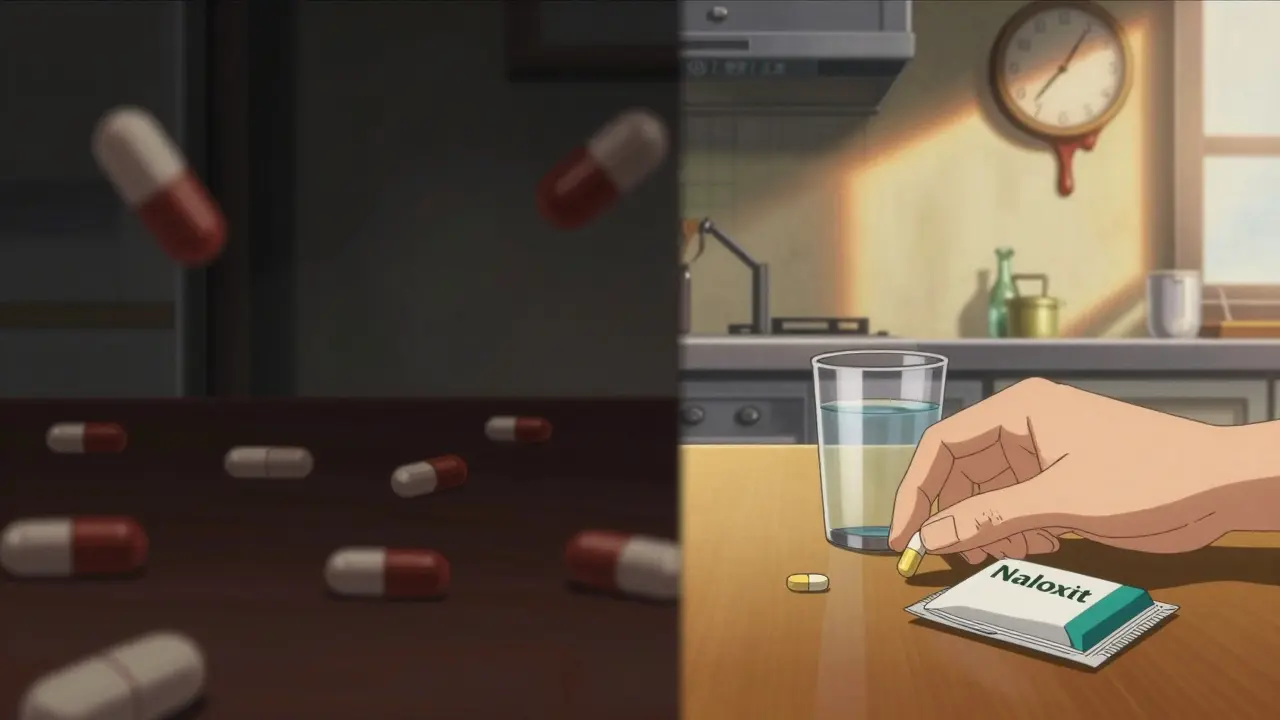
- Have Naloxone Ready: If you are restarting opioids, naloxone (Narcan) must be accessible. This is non-negotiable. Share your plan with a friend or family member so they know how to use it.
- Avoid Polysubstance Use: Do not mix your medication with alcohol, cannabis, or other sedatives during the restart phase. Your body cannot predict how it will react to combinations.
This protocol applies whether you are restarting after a hospital stay, jail time, or a self-imposed break. The context doesn't change the biology. Your tolerance is gone, regardless of why you stopped.
Critical Windows and High-Risk Scenarios
Certain life events create perfect storms for overdose risk. Understanding these scenarios can help you prepare.
Post-Incarceration and Post-Hospitalization: Data from the Washington State Department of Health shows that 62% of fatal opioid overdoses occur within 72 hours of discharge from incarceration or treatment facilities. Why? Because you likely didn't have access to your usual supply, or you were given a tapering dose that left you with zero tolerance. The urge to return to previous habits is strong, but the physical capacity to handle them is absent.
Relapse After Long Abstinence: Many people believe that being clean for years makes them safe. This is false. While your psychological addiction may be managed, your physiological tolerance resets quickly upon re-exposure. Philip Seymour Hoffman’s tragic death highlighted this exact risk: he had been abstinent for 23 years but died from an overdose of his prescribed dosage. His body simply couldn't handle the load anymore.
Switching Medications: Changing from one drug to another requires careful timing. For example, if you stop a Monoamine Oxidase Inhibitor (MAOI) and switch to an SSRI or SNRI, you must wait at least two weeks. Restarting serotonergic drugs too soon can lead to serotonin toxicity, a potentially fatal condition characterized by high fever, agitation, and muscle rigidity.

Tools for Safety and Support
You don't have to navigate this alone. Several resources exist to help manage the risks associated with medication restarts.
- Naloxone Kits: Available over the counter in many pharmacies. Keep one at home and one in your car. Learn how to administer it before you need it.
- Fentanyl Test Strips: If you are using illicit substances, test every batch. Fentanyl is often mixed into pills or powder without warning, drastically increasing potency and overdose risk.
- Medical Detox Programs: These programs provide supervised environments where medications are restarted safely. Success rates are significantly higher compared to unsupervised attempts.
- Support Networks: Inform trusted friends or family members about your restart plan. Their presence provides both emotional support and a critical safety net.
Recent advancements include wearable respiratory monitors currently in Phase 3 trials by companies like OpiSafe Technologies. These devices detect dangerous breathing patterns and automatically administer naloxone. While not yet widely available, they represent the future of overdose prevention.
Common Mistakes to Avoid
Even well-intentioned individuals make errors during medication restarts. Here are the most common pitfalls:
- Assuming "Just One Time" is Safe: Thinking you can handle a single dose of your old amount is a gamble with your life. Tolerance loss is cumulative and unpredictable.
- Ignoring Drug Interactions: Other medications you take for chronic conditions can interact with your restarting drug. Always check with a pharmacist.
- Skipping the Washout Period: Especially important with MAOIs and certain antidepressants. Rushing this step can lead to severe chemical imbalances.
- Using Alone: Isolation increases the lethality of an overdose. If no one is there to call 911 or administer naloxone, the outcome is often fatal.
The goal is not to judge past choices but to protect future ones. By respecting the science of tolerance and adhering to strict safety protocols, you can restart your medication journey with confidence and security.
How quickly does tolerance to opioids disappear?
Tolerance to short-acting opioids like heroin can decrease significantly within 3 to 5 days of abstinence. For long-acting opioids like methadone, it may take 7 to 10 days. During this time, your body becomes much more sensitive to the drug's effects, making previous doses potentially lethal.
What is the safest way to restart opioid medication?
The safest approach is to consult a healthcare provider and start at 25% to 50% of your previous maintenance dose. Monitor your breathing closely, avoid mixing with other sedatives, and ensure naloxone is readily available. Never restart at your full previous dose immediately.
Can I overdose on benzodiazepines after a break?
Yes. Like opioids, tolerance to benzodiazepines drops rapidly after discontinuation. Restarting at previous doses can lead to severe sedation, respiratory depression, and increased risk of overdose, especially if combined with alcohol or other CNS depressants.
Why is restarting medication after jail particularly dangerous?
Incarceration often involves forced abstinence or reduced medication access, leading to rapid tolerance loss. Studies show that 62% of fatal opioid overdoses occur within 72 hours of release from correctional facilities because individuals resume pre-incarceration dosing levels despite diminished physiological tolerance.
Do I need naloxone if I am restarting prescribed painkillers?
Yes. Even prescribed opioids carry overdose risk when tolerance is lost. Having naloxone on hand is a critical safety measure. It can reverse an overdose by blocking opioid receptors and restoring normal breathing. Ensure friends or family know how to use it.
How long should I wait before restarting MAOIs?
If switching from an MAOI to another serotonergic medication, you typically need a washout period of at least two weeks to prevent serotonin toxicity. Conversely, stopping other antidepressants before starting an MAOI also requires a specific waiting period. Always follow your doctor's precise timeline.
