
You’re tired. Your bones ache after a long day. Maybe you’ve heard the whispers about immune support, but you’re not sure if that’s just hype or real science. The truth? You might be low on Vitamin D, a nutrient your body actually needs to function like a well-oiled machine. But here’s the catch: getting enough from sunlight alone is tricky, especially if you live in Seattle or any other city with gray skies for half the year. That’s why buying Vitamin D supplements online has become a smart move for millions of people. But with so many options-softgels, gummies, liquids, and tablets-it’s easy to feel overwhelmed. Let’s cut through the noise.
First off, Vitamin D isn’t just one thing. It comes in two main forms: Vitamin D2 (ergocalciferol) and Vitamin D3 (cholecalciferol). Most experts agree that D3 is more effective at raising blood levels because it’s closer to what your skin makes when exposed to UVB rays. So when you shop online, look for "D3" on the label. Got it? Good. Now let’s talk about where to buy it safely and how to pick the right product for your needs.
Where to Buy Vitamin D Online: Trusted Retailers in 2026
If you want convenience without sacrificing quality, several major retailers stand out. These aren’t random websites popping up overnight-they’re established names with thousands of reviews, secure checkout systems, and return policies that protect you if something goes wrong.
- Walgreens: Offers a wide range of formats including softgels, chewables, and even liquid drops. You can order online and pick up in-store or get same-day delivery in select areas. No prescription needed.
- Puritan’s Pride: Known for rigorous testing-up to 15 inspections per batch. Their Vitamin D3 250 mcg is a customer favorite. Made in the USA with global ingredients.
- Nature Made: A brand trusted by pharmacists. Their Vitamin D3 2000 IU Softgels are widely available and often recommended by healthcare providers.
- Walmart: Fast shipping options, including next-day delivery for many items. Great for bulk buys if you’re stocking up.
- Thrive Market: Eco-conscious shoppers love this platform. Free shipping on most orders, plus member discounts. Focuses on clean-label products.
- CVS Pharmacy: Has a dedicated vitamin section online. Customer service can help answer questions about dosage and interactions.
All these platforms sell over-the-counter supplements, meaning no doctor’s note required. But just because they’re accessible doesn’t mean you should skip due diligence. Quality varies wildly between brands, and some cheaper options may contain fillers or inconsistent dosages.
How to Choose the Right Vitamin D Supplement
Not all Vitamin D pills are created equal. Here’s what to look for before adding anything to your cart:
- Form Matters: Softgels absorb better than tablets for most people. Gummies are tasty but may have lower potency and added sugar. Liquids offer precise dosing, which is great for kids or those who hate swallowing pills.
- Dosage Clarity: Labels should clearly state International Units (IU) or micrograms (mcg). For reference, 400 IU = 10 mcg. The average adult needs between 600-800 IU daily, but deficient individuals may need 1000-4000 IU under medical supervision.
- Third-Party Testing: Look for seals from USP, NSF, or ConsumerLab. These organizations verify purity and potency. Puritan’s Pride and Nature Made both undergo strict internal testing, but third-party validation adds another layer of trust.
- Ingredient List: Avoid unnecessary additives like artificial colors, preservatives, or excessive fillers. Clean labels signal higher manufacturing standards.
- Brand Reputation: Stick with companies that have been around for years. New startups might promise miracles, but established brands have track records-and accountability.
Pro tip: If you’re unsure about dosage, ask your doctor. They can run a simple blood test to check your current levels. Self-diagnosing deficiency based on fatigue alone could lead to over-supplementation, which carries risks too.
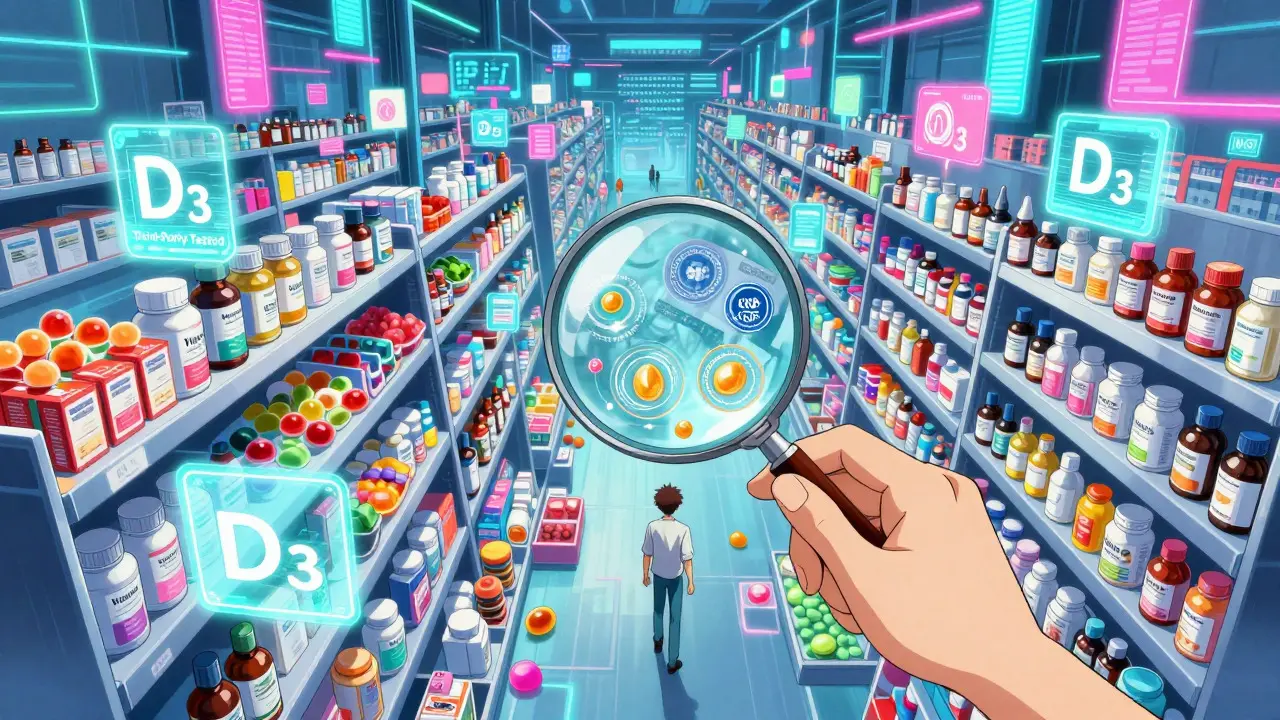
Understanding Dosage: How Much Do You Really Need?
This is where things get personal. There’s no one-size-fits-all answer. Factors like age, skin tone, geographic location, diet, and existing health conditions play huge roles. Darker skin produces less Vitamin D from sunlight. Older adults synthesize it less efficiently. People with obesity may store Vitamin D in fat tissue, making it less available in the bloodstream.
The National Institutes of Health recommends: - Infants (0-12 months): 400 IU/day - Children & Adults (1-70 years): 600 IU/day - Adults over 70: 800 IU/day - Pregnant/Breastfeeding women: 600 IU/day
But again, these are minimums. Many functional medicine practitioners suggest aiming for serum levels between 30-50 ng/mL, which often requires higher supplemental doses. Always consult a professional before jumping into high-dose regimens.
| Brand | Format Options | Testing Standards | Price Range (per 30 caps) | Best For |
|---|---|---|---|---|
| Nature Made | Softgels, Tablets | USP Verified | $5-$8 | Reliability & Trust |
| Puritan’s Pride | Softgels, Gummies, Liquid | In-house + Third-party | $4-$7 | Value & Variety |
| Thrive Market | Gummies, Drops | Clean Label Certified | $6-$9 | Eco-Conscious Shoppers |
| Walgreens | All Formats | Standard Retail QC | $5-$10 | Convenience & Pickup |
Common Mistakes When Buying Vitamin D Online
Even savvy shoppers slip up. Here’s what to avoid:
- Ignoring Expiration Dates: Supplements lose potency over time. Check the “best by” date before buying large quantities.
- Chasing High Doses Without Testing: More isn’t always better. Toxicity is rare but possible above 10,000 IU/day long-term.
- Skippping Reviews: Read recent customer feedback. Pay attention to comments about taste, digestion issues, or effectiveness.
- Buying From Unknown Sellers: Amazon third-party sellers vary in reliability. Stick to official brand stores or reputable pharmacies.
- Assuming All Forms Are Equal: As mentioned, absorption rates differ. Don’t assume a gummy works the same as a softgel unless tested otherwise.
Also, beware of marketing buzzwords like “mega strength” or “instant boost.” Real nutrition takes consistency, not quick fixes.

Why Online Shopping Beats In-Store for Vitamin D
Let’s be honest: walking aisle after aisle comparing labels is exhausting. Online shopping lets you filter by form, dosage, price, and reviews instantly. You can read detailed ingredient lists, compare side-by-side, and set reminders for refills. Plus, subscription services auto-deliver supplies so you never run out mid-month.
Delivery speed matters too. Walmart and Thrive Market offer same-day or next-day shipping in many regions. CVS and Walgreens provide drive-up pickup, saving you parking hassles. This flexibility fits busy schedules perfectly.
And don’t forget cost savings. Bulk purchases online often come with discounts. Some sites offer loyalty programs or first-time buyer coupons. Over time, those add up significantly compared to retail markup.
Final Thoughts Before You Click ‘Buy’
Vitamin D supplementation is straightforward once you know what to look for. Prioritize D3 over D2. Choose reputable brands with transparent testing. Match the format to your lifestyle. And always verify dosage with a healthcare provider if you’re treating a diagnosed deficiency.
Don’t fall for flashy packaging or exaggerated claims. Stick to facts, read reviews, and prioritize safety. Your body will thank you-not tomorrow, but months down the line when your energy stabilizes, your mood improves, and your bones stay strong.
Ready to take control? Start small. Pick one trusted retailer, try a moderate dose, monitor how you feel, and adjust accordingly. Knowledge is power-but action creates results.
Is it safe to buy Vitamin D online?
Yes, as long as you purchase from reputable retailers like Walgreens, CVS, Nature Made, or Puritan’s Pride. Avoid unknown third-party sellers on marketplaces unless verified. Look for third-party testing certifications (USP, NSF) to ensure purity and accurate labeling.
What’s the difference between Vitamin D2 and D3?
Vitamin D3 (cholecalciferol) is derived from animal sources and raises blood levels more effectively than D2 (ergocalciferol), which comes from plants. Most experts recommend D3 for supplementation due to superior bioavailability.
Can I take too much Vitamin D?
Yes. While rare, excessive intake (>10,000 IU/day long-term) can cause hypercalcemia, leading to nausea, kidney stones, or heart rhythm problems. Always follow recommended doses and consult a doctor if taking high amounts.
Do I need a prescription to buy Vitamin D?
No. Vitamin D supplements are sold over-the-counter (OTC) at all major retailers. No prescription is required, though consulting a healthcare provider helps determine optimal dosage for your specific needs.
Which form of Vitamin D absorbs best?
Softgels generally offer the highest absorption rate followed by liquid drops. Tablets and gummies may have slightly lower bioavailability depending on formulation. Individual digestive differences also affect uptake.
How do I know if I’m deficient in Vitamin D?
Symptoms include chronic fatigue, bone pain, muscle weakness, frequent illness, and low mood. However, the only way to confirm deficiency is through a blood test ordered by a healthcare provider. Serum 25(OH)D levels below 20 ng/mL indicate deficiency.
Are there vegan options for Vitamin D3?
Traditional D3 comes from lanolin (sheep’s wool). Vegan alternatives use lichen-derived D3 or stick with D2. Brands like Garden of Life and Nordic Naturals offer certified vegan D3 supplements made from sustainable lichens.
Should I take Vitamin D with food?
Yes. Vitamin D is fat-soluble, meaning it absorbs better when taken with meals containing healthy fats. Taking it with breakfast or lunch enhances uptake compared to empty stomach consumption.
