When you pick up a prescription for a generic medication, you expect it to be cheap. But too often, the price at one pharmacy is $12, at another it’s $45, and your insurance says you owe $30 - even though you have coverage. This isn’t a glitch. It’s the reality of a broken system where list prices, rebates, and negotiated rates hide the real cost from patients. The good news? You don’t have to guess anymore. There are tools now that let you see exactly what you’ll pay before you even walk into the pharmacy.
Why Generic Drug Prices Vary So Much
Generic drugs are supposed to be affordable alternatives to brand-name pills. But the price you see isn’t the price the pharmacy pays. It’s layered with markups, rebates, and contracts between drug manufacturers, pharmacy benefit managers (PBMs), and insurers. A pill might have a wholesale acquisition cost (WAC) of $2, but after rebates and discounts, the net price could be $0.50. That’s not what shows up on your receipt. Pharmacies often use Maximum Allowable Cost (MAC) lists set by PBMs to cap what they pay - but those prices aren’t public. So when you see a $15 price tag, you’re not seeing the true cost. You’re seeing what the system decided you should pay - not what it actually cost to make or buy the drug.Real-Time Benefit Tools (RTBTs) for Prescribers
Doctors and clinics are starting to use tools that show drug prices right in their electronic health records. These are called Real-Time Benefit Tools, or RTBTs. Platforms like CoverMyMeds and Surescripts connect directly to your insurance plan and show the exact out-of-pocket cost for any medication - including generics - before the prescription is even written. One doctor in Seattle reported that using RTBT cut her patients’ out-of-pocket costs by 37% just by switching them to cheaper alternatives they could actually afford. These tools also flag patient assistance programs and suggest generic equivalents. They’re not perfect - sometimes formulary changes aren’t updated fast enough, and specialty drugs still lack data - but they’re getting better. By 2025, about 42% of U.S. physician practices were using them, up from just 15% in 2022.GoodRx and Other Consumer Apps
If you’re not seeing a doctor right now, you can still check prices yourself. GoodRx is the most popular app for this. It compares prices across thousands of pharmacies - including CVS, Walgreens, and local independents - and gives you coupons that can drop the cost of a 30-day supply of a generic drug from $50 to $4. But here’s the catch: the price you see online doesn’t always match what the pharmacy charges when you show up. A 2025 Trustpilot review summed it up: “The app shows $4, but when I get there, they say $15.” Why? Because those coupons are based on cash prices, not your insurance rate. If you’re on Medicare or a private plan, the pharmacy might not honor the coupon. Still, for people without insurance or with high deductibles, GoodRx can save hundreds a year. Other apps like SingleCare and RxSaver work similarly, and some even let you compare prices for multiple medications at once.
State Laws Are Changing the Game
In 2025, 23 states had passed laws requiring more drug price transparency. California forces manufacturers to report price hikes over 16% in two years. Minnesota went further: it created a Prescription Drug Affordability Board that can cap prices for high-cost drugs. One patient in Minnesota used the state’s transparency portal and found a 92% price difference between two pharmacies for the same generic medication - saving $287 a year. These laws don’t fix everything, but they’re pushing companies to be more honest. Some states now require pharmacies to display prices upfront or give you a printed price list before you pay. The federal government tried to do something similar with the Medicare Two Dollar Drug List Model, but it was canceled in March 2025. Still, state-level action is filling the gap.What You Can Do Right Now
You don’t need to wait for a law or a doctor’s visit to save money. Here’s what works today:- Before picking up a prescription, check GoodRx, SingleCare, or RxSaver. Enter the drug name, dose, and your zip code.
- Call the pharmacy and ask: “What’s the cash price?” Then ask: “What’s my insurance price?” Sometimes cash is cheaper.
- Ask your pharmacist if they accept manufacturer coupons or patient assistance programs. Many generics have them.
- If you’re on Medicare, use the Medicare Plan Finder tool to compare your plan’s formulary costs.
- Ask your doctor: “Is there a cheaper generic alternative?” or “Can we try a different medication that’s covered better?”
One patient in Washington State saved $300 a year just by switching from a brand-name statin to a generic - and asking her pharmacist to check for coupons. She didn’t need a fancy app. She just asked questions.
The Big Limitation: Net Prices Are Still Hidden
The biggest problem with all these tools? They mostly show you the list price - the Wholesale Acquisition Cost (WAC). The real price - what the insurer or PBM actually paid after rebates - stays secret. That’s why a drug might cost $100 on the shelf but only cost $5 for the insurer. This gap makes it hard to know if you’re getting the best deal. Experts like Dr. Dan Arnold from Avalere Health say transparency without net pricing is like showing the menu price but hiding the tip. It helps a little, but it doesn’t fix the system. Still, even partial transparency is better than nothing. And as more data becomes available through the 2025 Drug-price Transparency for Consumers Act (S.229), which would require drug ads to list WAC prices, things are slowly improving.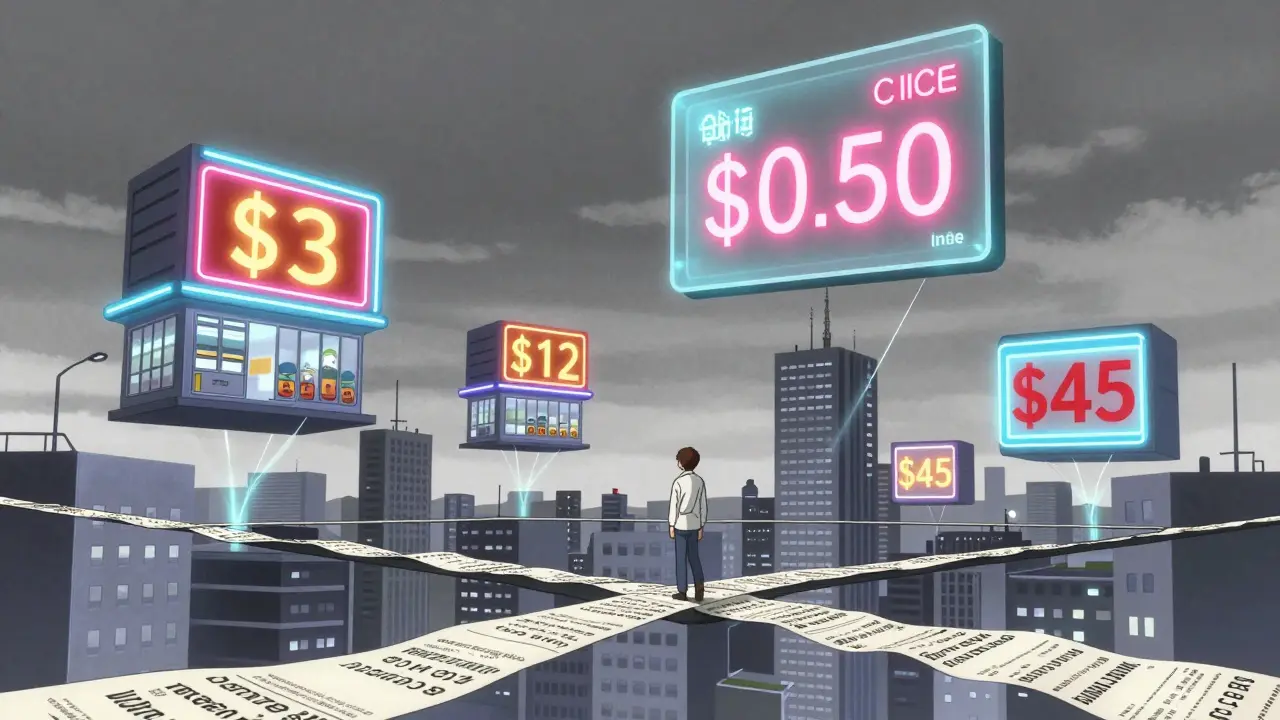
What’s Coming Next
By the end of 2025, the Centers for Medicare & Medicaid Services (CMS) plans to release new technical rules that will force health plans to report how much they actually paid for drugs - net of rebates. If that happens, we might finally see a clearer picture. Meanwhile, more pharmacies are integrating RTBTs into their systems, and apps are adding features like price alerts and savings history. The market for these tools is growing fast - projected to hit nearly $5 billion by 2029. But progress is uneven. Independent clinics still struggle with setup costs and training. Rural pharmacies often lack the tech to support real-time pricing. And not every patient knows these tools exist.Final Thought: Knowledge Is Power
You can’t control drug manufacturing costs. But you can control what you pay. The tools are here. The data is getting better. And the more people ask for prices, the more pharmacies will be forced to show them. Don’t assume your insurance will save you. Don’t assume the pharmacy will tell you the truth. Check. Compare. Ask. That one extra minute could save you hundreds a year.Why is the price of my generic drug so different at different pharmacies?
Generic drug prices vary because pharmacies negotiate different contracts with pharmacy benefit managers (PBMs). What you pay isn’t based on the drug’s actual cost - it’s based on what your insurance plan allows, what the pharmacy pays, and whether they’re offering a cash discount. Some pharmacies use Maximum Allowable Cost (MAC) lists to cap payments, but those prices aren’t public. That’s why the same pill can cost $4 at one store and $40 at another.
Can I use GoodRx with my insurance?
Usually, no. GoodRx coupons are designed for cash payments, not insurance. If you use a GoodRx coupon, the pharmacy won’t bill your insurance, and that purchase won’t count toward your deductible. But sometimes, the cash price with GoodRx is cheaper than your insurance copay. Always ask the pharmacist to compare both options before you pay.
Do all pharmacies honor GoodRx coupons?
Most major chains like CVS, Walgreens, and Rite Aid do. But many independent and rural pharmacies don’t participate in the GoodRx network. Even if they say they do, their system might not recognize the coupon - especially for older or less common generics. Always call ahead or check the GoodRx app for a list of participating locations near you.
What if I can’t afford my medication even with coupons?
Many drug manufacturers offer free or low-cost patient assistance programs. Sites like RxAssist.org list programs by drug name. You can also ask your pharmacist or doctor - they often have forms or contacts to help. Some states have prescription drug affordability boards that can cap prices for high-cost medications. Don’t skip your meds - there are options.
Are price transparency tools reliable?
They’re improving, but not perfect. Real-Time Benefit Tools used by doctors are more accurate because they pull data directly from your insurer. Consumer apps like GoodRx rely on crowdsourced or outdated data. Formularies change daily, and rebates aren’t always reflected. Always verify the price at the pharmacy before you pay. Use these tools as guides, not guarantees.
Next Steps
If you’re a patient: Start using GoodRx or a similar app for your next refill. Compare prices before you leave the house. Ask your pharmacist for the cash price and your insurance price side by side.If you’re a caregiver or senior on Medicare: Use the Medicare Plan Finder tool to see which plan covers your meds cheapest. Switch plans during open enrollment if needed.
If you’re a clinician: Talk to your EHR vendor about enabling Real-Time Benefit Tools. Even a 10-second price check during a visit can change a patient’s ability to afford their meds.
Price transparency isn’t magic. But it’s the first step toward fairness. The system won’t fix itself. But you can start fixing it - one prescription at a time.

Meghan Hammack
This changed my life. I was paying $80 for my blood pressure med until I used GoodRx. Now I pay $3.50. I told my mom, my sister, my neighbor - everyone needs to know this. No one should choose between food and medicine.
Johanna Baxter
why is no one talking about how pharmacies just lie to your face? i showed up with a $4 coupon and they said ‘sorry, can’t use it’ like it was my fault. i cried in the parking lot. again.
Alicia Hasö
Let me tell you something - this isn’t just about money. It’s about dignity. When you’re forced to shop around for your insulin like it’s a grocery item, you start to feel like a burden. But here’s the truth: you’re not. You’re a human being trying to survive a broken system. And tools like RTBTs and GoodRx? They’re not magic - but they’re the first real weapon patients have ever had. Use them. Share them. Fight for more transparency. Your life depends on it.
Jacob Paterson
Wow. Another ‘just use GoodRx’ post. Did you even read the part where 40% of rural pharmacies don’t honor it? Or that the coupons are often for cash-only prices that don’t apply to Medicare? You’re not helping. You’re just spreading misinformation like it’s a life hack.
Ian Long
GoodRx works for me - but only if I call ahead. I learned the hard way. One time I drove 20 miles, showed the coupon, and they said ‘we don’t take that.’ So now I call. I ask for the cash price. I ask for the insurance price. I compare. It takes 90 seconds. It saves me $120 a month. Worth it.
Micheal Murdoch
There’s a deeper truth here: we’ve been taught to trust the system. That insurance will protect us. That pharmacies are neutral. But they’re not. They’re nodes in a profit machine we can’t see. The real revolution isn’t the app - it’s the mindset shift. Stop assuming. Start asking. Demand to know the net price. Even if they can’t give it to you, make them feel the pressure. Change doesn’t come from laws alone. It comes from millions of people saying, ‘I want to know the truth.’
Matthew Maxwell
If you’re using GoodRx, you’re not solving the problem - you’re enabling it. You’re opting out of the insurance system, which weakens the collective bargaining power of everyone else. You think you’re saving money? You’re just making the system worse for the rest of us. Stop being selfish.
Angela Stanton
RTBTs are a joke. 😒 My doctor’s EHR shows $12 for my med, but the pharmacy says $48. The PBM’s API is 3 days behind. The ‘real-time’ part is a lie. Also, why do all these tools use jargon like ‘MAC lists’ and ‘WAC’ like we’re supposed to care? 🤷♀️ #PharmaIsARipoff
Patty Walters
just wanted to say - i use singlecare and it’s been a game changer. also, always ask if they have a patient assistance program. my pharmacist gave me a form last month and now i get my thyroid med for free. no app needed. just ask. 🙏
Ashley Kronenwetter
While consumer-facing tools offer a temporary reprieve, the structural issues - opaque PBM negotiations, lack of net price disclosure, and fragmented formulary data - remain unaddressed. Until federal legislation mandates comprehensive transparency, including rebate disclosures, these apps serve as band-aids on a hemorrhaging system.
Jerian Lewis
People keep saying ‘just use GoodRx.’ But what if you’re 72 and don’t have a smartphone? Or you’re on Medicaid and the coupon doesn’t work? Or you live in a town with one pharmacy? This isn’t a solution. It’s a distraction.
Heather Wilson
Let’s be real - this whole ‘transparency’ movement is performative. The same companies that profit from the current system fund these apps. GoodRx is owned by a PBM. The ‘savings’ are marketing gimmicks designed to make you feel better while the real costs get buried deeper. The 92% price difference in Minnesota? That’s the exception, not the rule. Most people don’t even know how to check. And those who do? They’re the lucky ones. The rest are left paying $100 for a $2 pill while the executives get bonuses. This isn’t reform. It’s PR.
tali murah
Oh wow. So now we’re supposed to be grateful for a coupon that might not work at the pharmacy you’re standing in? Congratulations. You’ve turned healthcare into a scavenger hunt. Meanwhile, the people who need help the most - the elderly, the disabled, the uninsured - are being told to ‘call ahead’ like it’s a pizza delivery. This isn’t empowerment. It’s cruelty dressed up as innovation.
Kiruthiga Udayakumar
I live in India, but I read this because my cousin in Texas is struggling with her diabetes meds. She used GoodRx and saved $200/month. I told her: ‘Even if the system is broken, you can still fight it.’ You don’t need to fix the whole thing - just your next prescription. That’s power.