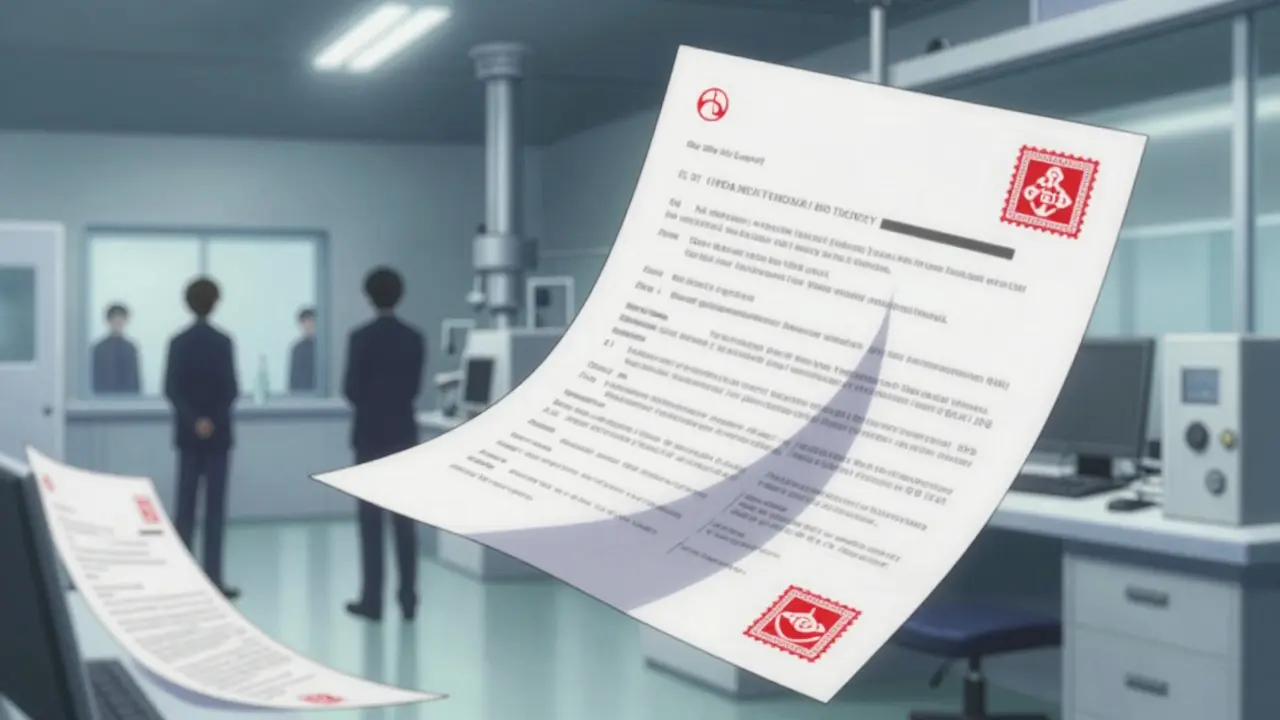
Imagine receiving a formal letter from the U.S. Food and Drug Administration (FDA) that details every mistake your facility made during an inspection. This isn't just a polite suggestion; it is a warning letter, which serves as a formal notification issued by the FDA to manufacturers who violate regulations under the Federal Food, Drug, and Cosmetic Act. For pharmaceutical companies, this document can halt production, delay product launches, and cost millions in remediation. Understanding how these letters work, why they are issued, and how to respond effectively is critical for anyone involved in drug manufacturing.
The FDA uses warning letters as its primary tool for addressing significant violations observed during facility inspections. These letters are not random penalties but targeted responses to specific breaches of Current Good Manufacturing Practice (CGMP). If you run a manufacturing facility, knowing what triggers a warning letter and how to avoid one is part of your daily operational reality. Let's break down exactly what happens when the FDA steps in.
What Triggers an FDA Warning Letter?
An FDA warning letter is issued when evidence shows that a firm has violated the FD&C Act or related regulations in a way that warrants regulatory action. According to the FDA's Compliance Program Guidance Manual, these letters address violations of such significance that they cannot be ignored. The agency’s Office of Compliance within the Center for Drug Evaluation and Research (CDER) manages this process, ensuring consistency since the practice began in the 1970s.
In fiscal year 2023 alone, the FDA issued 327 warning letters to pharmaceutical manufacturers globally. This represents a 12.7% increase from the previous year. The most common citations reference 21 CFR parts 210 and 211, which govern pharmaceutical CGMP. Specific examples include exposing skin in ISO 5 areas during aseptic processing or using non-sterile tape on filling lines. These aren't minor oversights; they are direct threats to product safety and efficacy.
- Aseptic Processing Failures: Many letters cite inadequate controls in sterile environments, such as improper media fill programs or contamination risks.
- Data Integrity Issues: With 67% of recent letters mentioning data integrity, the FDA is closely watching electronic records and governance.
- Quality Unit Oversight: Inadequate oversight by quality units appears in nearly 58% of warning letters, highlighting systemic management failures.
The Structure and Content of a Warning Letter
Every warning letter follows a standardized format designed to leave no ambiguity about what went wrong. You will typically find three core sections in these documents. First, there is a detailed description of the observed violations with specific examples. Second, the letter includes exact regulatory citations referencing Code of Federal Regulations (CFR) sections. Finally, it outlines required corrective actions with specific documentation requirements.
For instance, a recent letter to Oasis Medical, Inc. required complete results of examinations for reserve samples and thorough investigations including corrective and preventive actions (CAPA). The FDA usually allows 15 working days for an initial response. However, complex issues may require extended timelines approved by the agency. Once issued, these letters are published on the FDA's website within 15 business days, creating a permanent public record that affects your company's reputation.
| Action Type | Severity Level | Public Record? | Typical Outcome |
|---|---|---|---|
| Form 483 | Advisory | No (usually) | Immediate correction requested |
| Warning Letter | Moderate/High | Yes | Mandatory corrective action plan |
| Consent Decree | Critical | Yes | Court-supervised operations |
| Import Alert | High | Yes | Products refused entry |

Why Warning Letters Matter More Than Form 483s
Many people confuse a Form 483 with a warning letter, but they serve different purposes. A Form 483 lists inspectional observations and deficiencies found during an inspection. It is essentially a list of things that need fixing. A warning letter, however, is a step up the enforcement ladder. It indicates that the violations are significant enough to warrant formal regulatory action.
According to analysis by Gardner Law, warning letters are issued in approximately 18.3% of domestic drug facility inspections where violations are observed. Foreign facilities face an even higher rate at 22.7%. The key advantage of a warning letter is its specificity. It tells you exactly what regulatory requirements you failed to meet. However, there is a downside: inconsistent application. A Government Accountability Office report found that similar CGMP violations received warning letters at some facilities while others only got Form 483 observations.
This inconsistency can be frustrating for manufacturers. Yet, warning letters excel at addressing repeat violations across company networks. For example, a letter to Glenmark Pharmaceuticals explicitly referenced similar CGMP violations at other facilities in their network. This shows the FDA is looking at the bigger picture of your quality culture, not just isolated incidents.
The Financial and Operational Impact
Receiving a warning letter is expensive. A 2023 survey by the Pharmaceutical Compliance Monitor found that 68% of companies halted new product submissions during remediation. The average delay in regulatory timelines was 8.7 months. One executive at a mid-sized generic manufacturer reported that a warning letter for inadequate visual inspection systems cost $4.2 million in immediate remediation and delayed a product launch by 14 months, resulting in $28 million in lost revenue.
Small manufacturers feel this impact even more sharply. On the r/Pharmaceutical subreddit, users frequently discuss the disproportionate burden on smaller facilities. One user noted that a 15-person facility had to hire three full-time consultants at $250 per hour just to draft a response, nearly bankrupting the company. Industry benchmarking by EY shows that effective responses typically require 6-12 months of intensive effort, with median costs of $1.8 million for domestic facilities and $2.7 million for foreign ones.
However, successful remediation can lead to positive outcomes. Teva Pharmaceuticals' remediation of a warning letter at their Plant 27 facility in Israel resulted in a 30% reduction in product defects and eventual removal from import alert status within 11 months. The lesson here is clear: ignoring the problem is costly, but addressing it thoroughly can improve your overall quality systems.

How to Respond Effectively
Responding to a warning letter requires a structured approach. The FDA's 2022 Guidance for Industry emphasizes that effective responses must include complete investigation results, root cause analyses supported by data, and verification of corrective action effectiveness through prospective monitoring. Here is a practical checklist for building your response:
- Conduct a Thorough Root Cause Analysis: Don't just fix the symptom. Use tools like fishbone diagrams or 5 Whys to identify the underlying system failure.
- Assemble a Cross-Functional Team: Include experts in microbiology, quality assurance, and regulatory affairs. Each brings a unique perspective needed for a comprehensive solution.
- Document Everything: The FDA wants proof. Ensure your CAPA system is robust and that all changes are documented according to written procedures.
- Verify Effectiveness: Implement prospective monitoring to show that the corrective actions actually prevent recurrence. Data is your best friend here.
- Communicate Clearly: Submit your response within the 15-day window if possible, or request an extension with a justified timeline. Be transparent and cooperative.
Common challenges include underestimating the documentation required for CAPA systems. A recent letter to Exela Pharma Sciences cited failures to establish written procedures for production and process control. Avoid this pitfall by integrating your quality management system early in the remediation process.
Future Trends in FDA Enforcement
The landscape of FDA enforcement is evolving. The issuance rate of pharmaceutical warning letters has grown from 14.2 per month in 2018 to 27.3 per month in 2023, a 92.3% increase. Geographic analysis reveals that Indian pharmaceutical manufacturers received 38.7% of all warning letters in 2022, followed by U.S. manufacturers at 31.5%.
Looking ahead, the FDA's Risk-Based Certificate of Pharmaceutical Product Pilot Program, launched in October 2023, will likely increase scrutiny for facilities supplying global markets. Additionally, the FDA's 2023-2027 Strategic Plan states the agency will prioritize inspections of facilities with previous CGMP violations, aiming to reduce repeat violations by 25% by 2027. Evaluate Pharma predicts a 15-20% annual increase in warning letters through 2026 as the agency implements Drug Quality and Security Act requirements.
Despite these trends, the long-term viability of the warning letter system remains strong. FDA internal metrics show that 94.7% of companies achieve regulatory compliance within 24 months of receiving a warning letter. However, resource constraints pose a risk. An FDA Office of Inspector General report found that 31% of follow-up inspections were delayed beyond the targeted 6-month timeframe due to staffing shortages. This means violations could persist longer than intended, making proactive compliance more important than ever.
What is the difference between a Form 483 and a warning letter?
A Form 483 is an advisory document listing inspectional observations and deficiencies found during an inspection. It is not always public. A warning letter is a formal regulatory action issued for significant violations of the FD&C Act. It is publicly posted on the FDA website and requires a mandatory corrective action plan. Warning letters are more severe and carry greater reputational and financial consequences.
How long do I have to respond to an FDA warning letter?
The FDA typically allows 15 working days for an initial response. However, if the issues are complex and require more time for thorough investigation and remediation, you can request an extended timeline. The agency may approve this if you provide a justified schedule for completing the corrective actions.
Are FDA warning letters public?
Yes, FDA warning letters are published on the FDA's Warning Letters webpage within 15 business days of issuance. This creates a permanent public record that can impact your company's reputation, investor confidence, and relationships with partners.
What are the most common reasons for receiving a warning letter?
The most common reasons include inadequate investigation of out-of-specification (OOS) results, inadequate quality unit oversight, failures in aseptic processing controls, and data integrity issues. Sterile products often face scrutiny regarding media fill programs and contamination prevention.
Can a warning letter lead to criminal prosecution?
While a warning letter itself is not a criminal charge, it is an intermediate enforcement step. If a company fails to address the violations outlined in the warning letter, the FDA may escalate to more severe actions such as consent decrees, product seizures, injunctions, or even criminal prosecution in cases of intentional fraud or serious public health threats.
How much does it cost to remediate an FDA warning letter?
Costs vary significantly based on the complexity of the violations. Industry benchmarks suggest median costs of $1.8 million for domestic facilities and $2.7 million for foreign facilities. Small manufacturers may spend hundreds of thousands on consultants alone. Additional costs include delayed product launches and potential loss of market share.

Jake Williams
Another day, another government agency trying to micromanage American industry while Indian manufacturers get a free pass because they're cheaper. It's insulting how we pay for the privilege of being inspected while others just send their garbage over the border and hope nobody notices. The FDA is basically a toll booth for domestic companies now.
Nilesh Mandani
The statistical increase in warning letters from India is often misinterpreted as incompetence rather than volume disparity. When you have hundreds of facilities producing generic drugs for the global market, the sheer surface area for error expands significantly. It is not necessarily about quality culture but about scale and resource allocation in developing economies versus established ones. We must look at the systemic pressures on these manufacturers before jumping to nationalistic conclusions about integrity or safety standards.
Guy Birtwhistle
Sure, blame the geography instead of the actual compliance failures. It's funny how people want to defend bad data integrity practices by citing economic conditions. If you can't keep your records straight, no amount of philosophical justification will stop the FDA from shutting you down. Keep your boundaries clean and your logs cleaner.
Kenny Pines
I mean, if you're gonna fail an inspection, at least make it interesting? 😂 But seriously, the $4.2 million remediation cost is wild. I'd rather take the hit than hire three consultants who charge more per hour than my rent. Maybe just don't expose skin in ISO 5 areas? Seems like common sense to me 🤷♂️
Liz and Nick
ugh this is so boring why do i care about tape on filling lines its not like anyone dies immediately its just paperwork drama and corporate greed masking as safety protocols honestly the whole system is rigged against small players and the big pharma companies just laugh all the way to the bank while we read this dry article
Brian Fibelkorn
Your dismissal of regulatory frameworks demonstrates a profound ignorance of the epistemological necessity of standardized control environments. The citation of 21 CFR parts 210 and 211 is not merely bureaucratic theater but a fundamental requirement for ensuring the ontological stability of pharmaceutical products. To suggest that data integrity issues are trivial is to ignore the very fabric of scientific reproducibility and patient safety paradigms.
David Rangkhal
let's try to stay calm here everyone has different perspectives on compliance costs and enforcement trends 🌟 maybe we can agree that transparency helps everyone improve their processes without getting too heated about nationalities or specific companies involved in these cases
Chelsea Grdina
As someone who works in regulatory affairs across multiple continents, I find the distinction between Form 483s and Warning Letters to be incredibly nuanced yet critically important for maintaining trust with stakeholders. The emotional toll on facility managers during these periods cannot be understated, especially when public perception shifts overnight due to online publications. We need more collaborative approaches where the FDA acts as a partner in improvement rather than just an enforcer, considering the complex supply chains involved today.
Sarah Kwiatkowski
It's actually really encouraging to see that 94.7% of companies achieve compliance within 24 months. That shows resilience and adaptability in the industry. Instead of focusing solely on the penalties, we should highlight the successful remediation stories like Teva's Plant 27 which improved defect rates significantly. Learning from mistakes is what drives progress forward!
Brian LeClercq
The notion that 'proactive compliance' is the solution is a quaint fantasy for those who haven't stared into the abyss of bureaucratic inefficiency. The FDA's own staffing shortages mean that violations persist longer than intended, creating a perverse incentive structure where cutting corners pays off until the random inspector arrives. This isn't a guide to remediation; it's a manual for surviving a lottery where the prize is bankruptcy and the odds are stacked by underfunded regulators playing catch-up with a growing list of infractions.