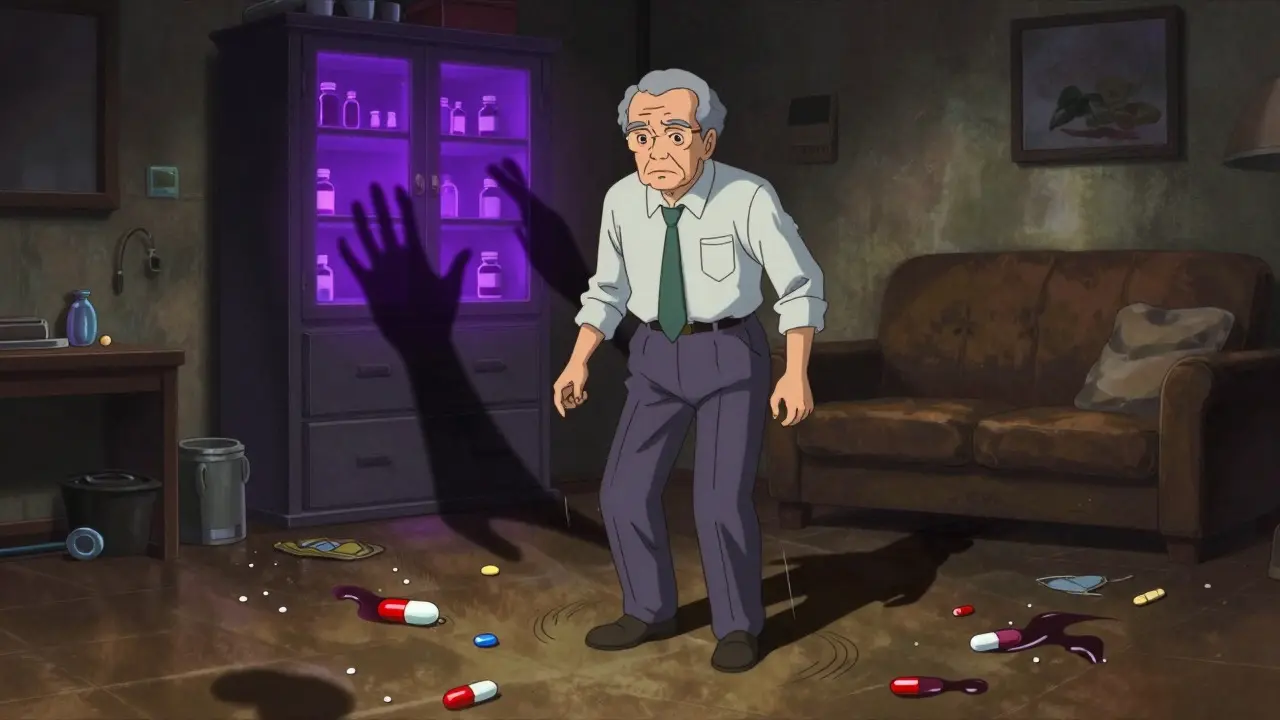
Did you know that a simple trip on the carpet or a dizzy spell from standing up too fast can be linked to the pills in your medicine cabinet? For many adults over 65, the biggest threat to staying upright isn't just weak muscles or poor vision-it's the very drugs prescribed to keep them healthy. According to the Centers for Disease Control and Prevention (CDC), falls are the leading cause of injury-related deaths among Americans aged 65 and older, with 36,000 fatalities reported in 2020 alone. What makes this crisis particularly alarming is that a significant portion of these incidents involves fall risk-increasing drugs, or FRIDs, which impair balance, lower blood pressure, or cloud judgment.
If you or a loved one is managing multiple prescriptions, understanding how specific classes of medication affect stability is not just helpful; it’s essential for safety. The good news is that most of these risks are manageable through careful monitoring and regular check-ins with healthcare providers. By identifying the high-risk categories and knowing when to question a prescription, you can significantly reduce the chance of a life-altering fall.
Key Takeaways
- Benzodiazepines and antidepressants are among the highest-risk drug classes, often doubling the likelihood of falling.
- Combining opioids with benzodiazepines or gabapentinoids creates a synergistic effect that can increase fall risk by up to 150% compared to taking either drug alone.
- The Beers Criteria serves as the gold standard guide for identifying medications that should be avoided or used with extreme caution in older adults.
- Regular medication reviews by pharmacists or doctors can reduce fall rates by 20-30%, making it the single most effective clinical intervention available.
- Orthostatic hypotension-a sudden drop in blood pressure upon standing-is a common side effect of blood pressure meds and diuretics that directly leads to dizziness and falls.
Understanding the Mechanism: How Pills Cause Falls
It might seem counterintuitive that medicines meant to help can actually hurt. However, the mechanism is straightforward. Many medications act on the central nervous system or the cardiovascular system, both of which are critical for maintaining balance. When a drug causes sedation, confusion, or a drop in blood pressure, the body’s ability to react quickly to an uneven surface or a change in posture is compromised.
One of the most dangerous mechanisms is orthostatic hypotension. This occurs when your systolic blood pressure drops by at least 20 mm Hg or your diastolic pressure drops by 10 mm Hg within three minutes of standing up. If you’ve ever felt lightheaded after getting out of bed, you may have experienced a mild version of this. In older adults, whose baroreceptors (pressure sensors) are less sensitive, this drop can lead to fainting or stumbling. Medications like beta-blockers and diuretics are frequent culprits here, especially during dose adjustments.
Cognitive impairment is another silent driver. Some drugs don’t just make you sleepy; they alter how your brain processes spatial awareness. This is particularly true for anticholinergic drugs, which block a chemical called acetylcholine that is vital for memory and attention. When this pathway is disrupted, reaction times slow down, and coordination suffers, creating a perfect storm for accidental slips and trips.
High-Risk Medication Categories Explained
Not all drugs carry the same weight in terms of fall risk. Research published in JAMA Health Forum and systematic reviews in PubMed have identified several categories that consistently show strong associations with falls. Here is a breakdown of the most concerning groups:
| Medication Class | Common Examples | Primary Mechanism of Risk | Risk Level Indicator |
|---|---|---|---|
| Benzodiazepines | Lorazepam, Diazepam, Alprazolam | Sedation, impaired coordination, delayed reaction time | High (OR 1.42) |
| Antidepressants (SSRIs/TCAs) | Fluoxetine, Amitriptyline, Nortriptyline | Dizziness, hyponatremia, anticholinergic effects | Very High (OR 2.02 for SSRIs) |
| Opioids | Morphine, Oxycodone, Hydrocodone | Sedation, respiratory depression, constipation-induced straining | High (Synergistic with Benzos) |
| Antihypertensives | Lisinopril, Carvedilol, Hydrochlorothiazide | Orthostatic hypotension, dehydration | Moderate to High |
| First-Gen Antihistamines | Diphenhydramine (Benadryl) | Strong anticholinergic effects, next-day drowsiness | High |
Benzodiazepines are often prescribed for anxiety or insomnia but remain a top concern for geriatricians. While short-acting versions are sometimes considered safer, studies suggest that even these formulations pose significant danger because they still suppress central nervous system activity. Long-acting benzos are particularly risky because their effects linger well into the next day, affecting morning mobility.
Antidepressants, specifically Selective Serotonin Reuptake Inhibitors (SSRIs), have seen a massive increase in prescribing rates. A meta-analysis found that SSRIs double the rate of falling among older adults. Tricyclic antidepressants (TCAs) like amitriptyline are even more problematic due to their "dirty" pharmacology-they affect multiple receptor systems simultaneously, leading to dry mouth, blurred vision, and severe blood pressure drops.
Don't overlook over-the-counter options. First-generation antihistamines like diphenhydramine are widely available but carry heavy anticholinergic loads. For a senior, a single night of using these for sleep can result in grogginess and confusion the following day, drastically increasing the risk of a fall during routine activities like walking to the bathroom.

The Danger of Polypharmacy and Drug Interactions
Taking one risky medication is concerning; taking four or five is a different story entirely. This phenomenon, known as polypharmacy, is increasingly common among seniors managing chronic conditions like diabetes, heart disease, and arthritis. The National Council on Aging (NCOA) warns that residents taking four or more prescription drugs face a compounded risk, not just because of individual side effects, but because of unpredictable interactions.
Consider the combination of an opioid painkiller and a benzodiazepine. Dr. C. Seth Landefeld, a prominent geriatrician, noted that this pairing increases fall risk by 150% compared to either medication alone. Why? Both drugs depress the central nervous system. When combined, the sedative effects aren't just additive; they are synergistic. Your breathing slows, your reflexes dull, and your alertness plummets. Add a third agent, such as a gabapentinoid for nerve pain, and the risk escalates further.
This is why the American Geriatrics Society (AGS) strongly recommends against prescribing these combinations without rigorous justification. Yet, in practice, patients often see multiple specialists who prescribe different drugs without full visibility into the patient's entire regimen. This fragmented care model leaves gaps where dangerous interactions can hide undetected for months or years.
The Role of the Beers Criteria in Safety
How do doctors decide which meds are too risky? They rely heavily on the Beers Criteria. First published in 1991 and updated biennially, this list is maintained by the AGS and identifies medications that are potentially inappropriate for older adults. The 2023 update continues to highlight fall-risk medications as a critical area of focus.
The Beers Criteria doesn't just say "avoid this drug." It provides nuanced guidance. For example, it might recommend avoiding long-acting benzodiazepines while allowing short-acting ones only if no safer alternative exists. It also flags specific combinations, such as opioids plus benzodiazepines, as strongly recommended to avoid. This tool acts as a checklist for clinicians, ensuring that every prescription is weighed against the patient's age and fall history.
However, having a guideline isn't enough if it isn't used. A 2022 study found that only 42% of primary care physicians routinely assess medication-related fall risk. This gap highlights a systemic issue: busy clinics, limited appointment times, and a lack of standardized protocols can prevent best practices from being implemented. That’s why patient advocacy is so important-you need to ask the questions your doctor might skip due to time constraints.

Practical Steps for Medication Review
You don’t need to be a pharmacist to start protecting yourself. The CDC’s STEADI program emphasizes that reviewing medications is the single most effective clinical intervention for reducing fall risk. Here is how you can take action today:
- Create a Master List: Write down every medication you take, including supplements, vitamins, and over-the-counter remedies. Include the name, dose, and frequency. Bring this list to every medical appointment.
- Ask About Orthostatic Hypotension: Request a blood pressure check while sitting and again after standing for three minutes. If there’s a significant drop, ask if any of your blood pressure meds or diuretics need adjustment.
- Question Sedatives: If you are taking a benzodiazepine or sleeping pill, ask if a non-drug therapy (like cognitive behavioral therapy for insomnia) could replace it. Even if a drug is necessary, ask if the lowest possible dose is being used.
- Check for Anticholinergics: Ask your pharmacist to run an anticholinergic burden score on your profile. High scores correlate strongly with cognitive decline and fall risk.
- Utilize Pharmacist-Led Reviews: Programs like HomeMeds, developed by the University of South Florida, have shown that pharmacist-led reviews can reduce fall rates by 22%. Ask your local pharmacy if they offer free medication consultations for seniors.
Remember, deprescribing-safely stopping or reducing a medication-is a legitimate medical strategy. Dr. Michael Steinman, co-author of the Beers Criteria, notes that reducing or eliminating fall-risk-increasing medications can decrease fall rates by 20-30%. It’s not about ignoring your health conditions; it’s about balancing treatment benefits against the tangible risk of breaking a hip or suffering a head injury.
Frequently Asked Questions
Which specific drugs have the highest odds ratio for causing falls?
According to a 2018 systematic review, Selective Serotonin Reuptake Inhibitors (SSRIs) have the highest odds ratio at 2.02, meaning users are twice as likely to fall compared to non-users. Benzodiazepines follow closely with an odds ratio of 1.42. Tricyclic antidepressants also carry very high risk due to their multi-system side effects.
Is it safe to stop taking my blood pressure medication if I feel dizzy?
Never stop blood pressure medication abruptly without consulting your doctor, as this can cause rebound hypertension. Instead, report the dizziness. Your provider may adjust the dose, switch to a different class of medication, or recommend timing changes (e.g., taking the dose at bedtime rather than in the morning) to minimize daytime orthostatic hypotension.
What is the difference between short-acting and long-acting benzodiazepines regarding fall risk?
Long-acting benzodiazepines (like diazepam) stay in the system longer, leading to residual sedation the next day. Short-acting ones (like lorazepam) wear off faster. However, research indicates that even short-acting agents significantly increase fall risk, so neither is considered "safe" for older adults without close monitoring. The goal is usually to use the lowest effective dose for the shortest duration possible.
How often should seniors have their medications reviewed?
Ideally, at least once a year, or whenever a new medication is added, a condition changes, or a fall occurs. The CDC STEADI program recommends reviewing medications with all patients 65 and older during routine visits. If you are on four or more medications, semi-annual reviews are advisable to catch potential interactions early.
Do over-the-counter supplements count toward polypharmacy risk?
Yes. Supplements like melatonin, valerian root, or high-dose magnesium can have sedative or blood-pressure-lowering effects. These can interact with prescription drugs to enhance dizziness or sedation. Always include your supplement list when discussing fall risk with your healthcare team.
