Why Your First Biologic Injection Matters More Than You Think
You’ve just been prescribed a biologic therapy. Maybe it’s for rheumatoid arthritis, psoriasis, or Crohn’s disease. The doctor hands you a sleek pen device and says, "Give yourself this shot once a week." It sounds simple enough until you realize that unlike a pill, there is no undo button here. A missed spot, a dirty needle, or a rushed technique can lead to pain, wasted medication, or worse-infection.
Self-administered biologic therapies are complex, large-molecule drugs derived from living organisms that require precise administration methods have revolutionized treatment for millions. But they come with a steep learning curve. Research shows that nearly half of patients stop their biologic therapy within the first year. Why? Often, it’s not because the drug didn’t work, but because the patient struggled with the injection process itself. Proper training isn't just a formality; it is the difference between successful long-term health management and dangerous complications.
The Reality of Current Training Gaps
If you think your training session was thorough, you might be surprised by the data. A 2022 study published in PubMed revealed that while 91.7% of patients reported receiving formal self-injection training, the average time spent on this critical skill was shockingly short-just under 38 minutes according to patients, and even less (30.4 minutes) according to healthcare providers. That’s barely enough time to open the box, let alone master a sterile procedure.
Even more concerning, a 2021 study found that approximately one-third of patients received either no training at all or only verbal instructions. Imagine being told how to perform surgery over the phone without ever seeing it done. Yet, 11.5% of biologic-naïve patients were sent home with no training whatsoever. This gap creates a perfect storm for errors. When patients lack confidence, they hesitate. When they hesitate, they rush. And when they rush, they compromise safety.
Tell, Show, Try: The Three Pillars of Safe Injection
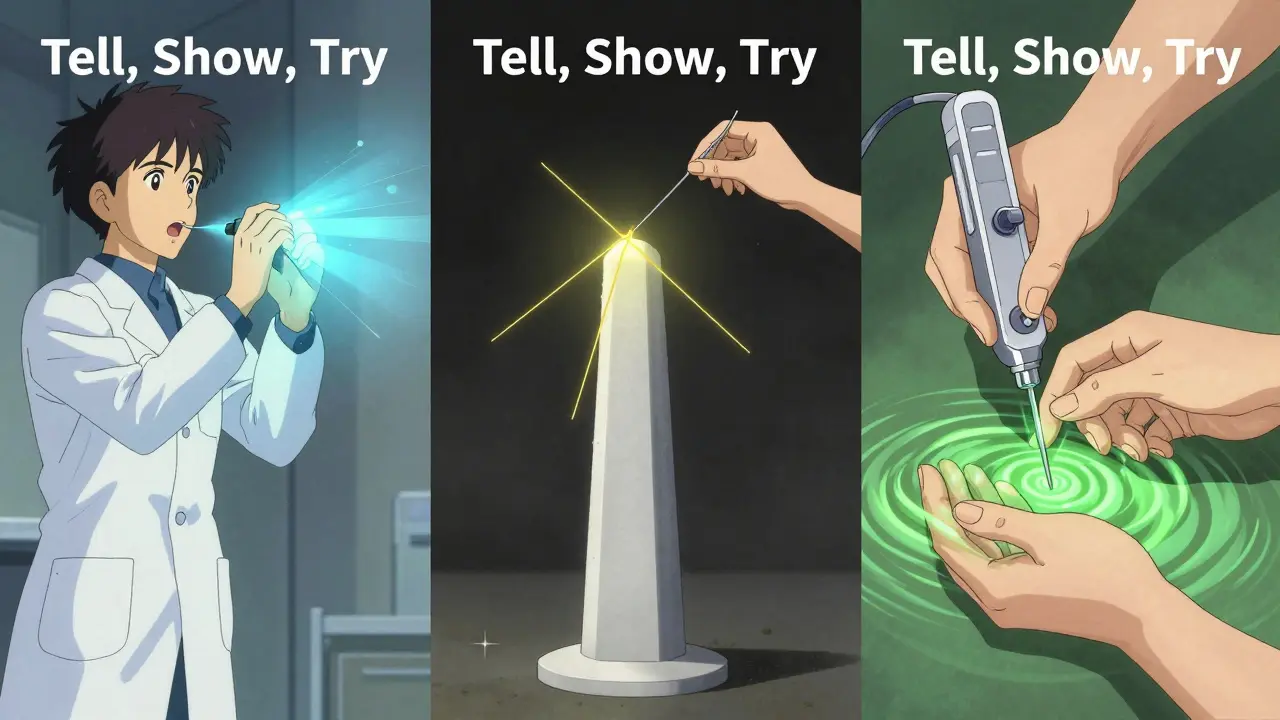
Effective training must move beyond handing you a pamphlet. Experts identify three essential components: 'tell,' 'show,' and 'try.' Unfortunately, only 27% of patients receive all three. Here is what each step should look like:
- Tell: Verbal instruction from a healthcare provider explaining the mechanism, site selection, and potential side effects. This sets the mental framework.
- Show: A live demonstration using a trainer device or the actual biologic injection. You need to see the angle, the pressure, and the hold time required.
- Try: Hands-on practice with a trainer device. This is non-negotiable. You must feel the click of the activation and the resistance of the skin before you use the real medication.
Modern devices often feature concealed needles to reduce anxiety, which is helpful, but they also hide visual cues that confirm proper insertion. Without practicing the 'try' phase, you cannot build the muscle memory needed to ensure the needle is fully engaged. Skipping this step increases the risk of incomplete dosing, meaning you’re paying for medicine you aren’t getting.
How Poor Technique Leads to Infection
We often fear the unknown side effects of new drugs, but we overlook the very real risk of infection caused by improper technique. The CDC’s 2022 injection safety guidelines emphasize that improper technique can increase infection risk by 37% due to compromised sterile fields. This doesn’t mean you will get infected every time, but the odds shift significantly against you if you cut corners.
Infection risks typically stem from three areas:
- Skin Preparation: Failing to clean the injection site with an alcohol swab and letting it dry completely introduces bacteria directly into the tissue. Redness exceeding 2cm diameter or local warmth are early warning signs.
- Needle Reuse: Never reuse a needle. Even if it looks fine, microscopic barbs develop after the first use, tearing skin tissue and creating entry points for pathogens.
- Hand Hygiene: Washing hands for only a few seconds is insufficient. The CDC recommends 20 seconds with soap and water to remove transient flora that can contaminate the injection site.
Outpatient skin and soft tissue infections related to injectable medications account for 12.7% of cases linked to improper self-injection technique. While specific rates for biologics are underreported, the principle remains: your immune system is already suppressed by the condition you’re treating, making hygiene paramount.
Beyond Mechanics: The Emotional Barrier
Here is what most training programs miss: fear. Needle phobia is real, and it affects performance. Studies show that emotional factors contribute to 57% of early treatment discontinuations, even among patients who know exactly how to mechanically operate the device. If you are shaking or holding your breath, your hand stability suffers.
Successful patients don’t just follow steps; they create rituals. A Dove Medical Press study found that 100% of patients who maintained therapy had established routines anchoring time, place, and process. Furthermore, 77.8% used ritual elements as emotional coping strategies. This might sound abstract, but it means developing a consistent pre-injection routine that calms your nervous system.
Try this: Pick a specific chair, a specific time of day, and perhaps a calming activity like listening to a favorite song right before you inject. This conditions your brain to associate the act with safety rather than stress. Additionally, the "breathing room" technique-where a provider places their hand over yours during the first few injections-can prevent premature device removal in 88% of anxious patients. If you are doing this alone, focus on deep, slow breathing to steady your hands.
Best Practices for Home Administration
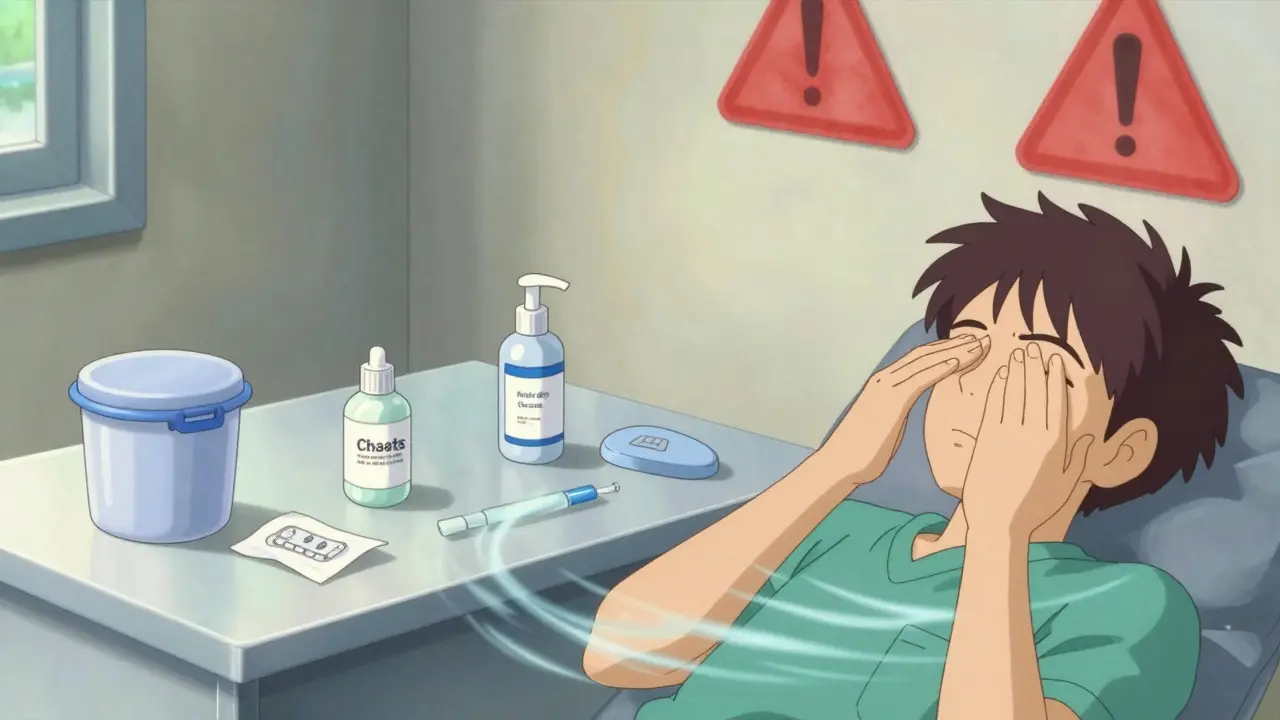
To minimize risks and maximize efficacy, treat your home injection area like a mini-clinic. Here are concrete steps to improve your safety profile:
| Step | Action Required | Why It Matters |
|---|---|---|
| Environment Setup | Ensure adequate lighting and a clean, flat workspace. | Prevents fumbling and ensures visibility of the dose window. |
| Site Rotation | Rotate between thigh, abdomen, and upper arm. Keep sites at least 1 inch apart. | Prevents lipodystrophy (fat tissue damage) and reduces pain. |
| Hygiene Protocol | Wash hands for 20 seconds; clean site with alcohol; let dry. | Reduces bacterial load and prevents localized infection. |
| Device Handling | Do not shake the pen. Inspect for cracks or leaks. | Shaking can damage protein structures; cracks compromise sterility. |
| Disposal | Use an FDA-cleared sharps container immediately after use. | Prevents accidental needle sticks and community contamination. |
Distributing training over multiple short sessions increases retention of critical steps by 62% compared to single-event training. If your provider rushes you, ask for a follow-up video call or utilize digital resources provided by manufacturers. Just-in-time training tools, accessible via smartphone apps right before you inject, have shown a 48% reduction in technique errors during the first six months.
Recognizing Warning Signs Early
Even with perfect technique, reactions can occur. You need to distinguish between normal irritation and signs of infection. Normal injection site reactions include mild redness, itching, or swelling that resolves within a few days. However, you should contact your healthcare provider immediately if you notice:
- Purulent discharge: Any pus or fluid leaking from the site.
- Expanding redness: Redness that spreads beyond the immediate injection point.
- Fever: A temperature above 100.4°F (38°C) accompanied by chills.
- Severe Pain: Pain that worsens over time rather than fading.
Early intervention can prevent minor issues from becoming systemic infections, which are particularly dangerous for immunocompromised individuals.
How long should I keep the needle in my skin?
The hold time varies by device, but most biologic pens require you to keep the needle in place for 5 to 10 seconds after pushing the activation button. Do not pull it out immediately. Consult your specific medication’s guide, as removing it too soon can result in an incomplete dose.
Can I reuse the needle if I drop it?
Absolutely not. If a needle touches any surface other than your skin, it is contaminated. Even if it looks clean, microscopic particles or bacteria may be present. Always discard it in a sharps container and use a new device.
What if I’m too scared to inject myself?
Fear is common. Ask your provider about the "teach-back" method where you demonstrate the technique on them or a trainer device repeatedly until you feel confident. Consider using virtual coaching platforms or asking a trusted family member to stay nearby during your first few attempts.
Is it safe to store biologics in the fridge?
Most biologics require refrigeration between 36°F and 46°F (2°C to 8°C). However, always check the label. Some can be stored at room temperature for a limited period. Never freeze them, as freezing destroys the protein structure and renders the drug ineffective.
How do I dispose of empty biologic pens?
Empty pens still contain sharp needles. They must be placed in an FDA-cleared sharps container. Do not throw them in regular household trash or recycling bins. Many pharmacies offer mail-back programs for safe disposal.
